South Korea, US defence chiefs meet in Philippines over OPCON transfer
Synopsis
South Korea wants wartime command back before 2030 — the US says conditions haven't been met yet. The first face-to-face between Defence Minister Kang Shin-chul and Defence Secretary Pete Hegseth in Cebu puts the OPCON standoff centre stage, with the annual Security Consultative Meeting already delayed to December and speculation mounting that further slippage is possible.
Key Takeaways
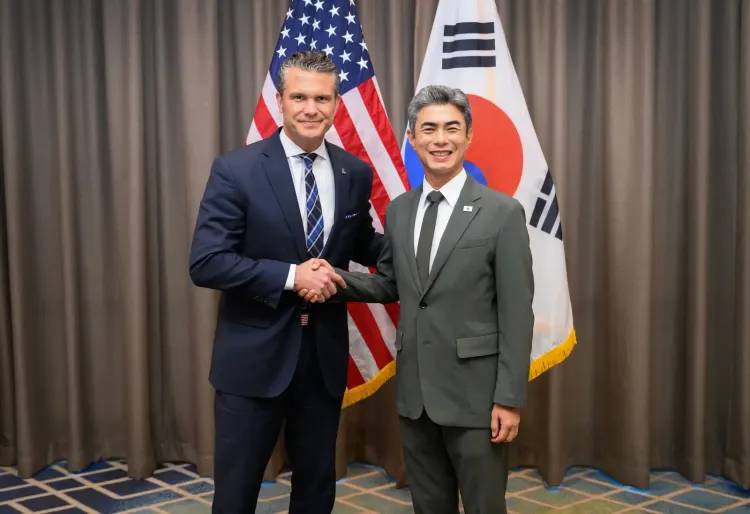
Defence Minister Kang Shin-chul and US Defence Secretary Pete Hegseth met in Cebu, Philippines on 28 October 2026 — their first one-on-one since Kang took office in September.
Seoul is pushing to announce a target year for OPCON transfer at the upcoming Security Consultative Meeting (SCM) , aiming to complete the handover before 2030 .
Washington has cautioned against rushing the timeline, insisting that 'conditions-based' benchmarks — including Full Operational Capability (FOC) verification — must be fully met.
US Forces Korea Commander Gen.
Xavier Brunson recently said 'conditions have changed' and cited 'new standards', widening the two sides' gap on FOC verification.
This year's SCM , normally held in late October or early November, has already been delayed to December .
Seoul's Jang Bogo N nuclear-powered submarine programme — targeting at least three 8,000-ton vessels by the late 2030s — was also expected to feature in the Cebu discussions.
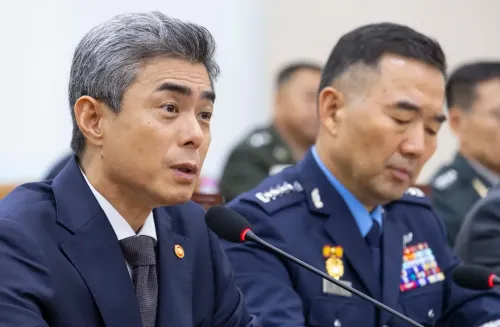
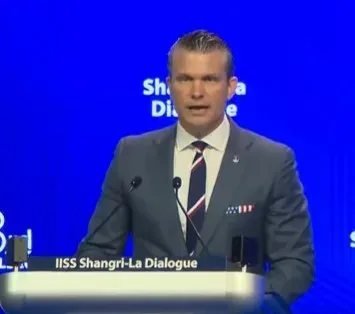
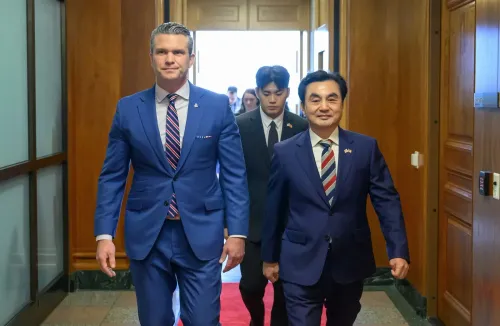
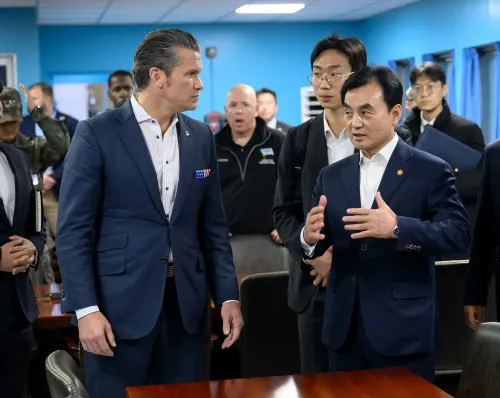
The defence chiefs of South Korea and the United States held face-to-face talks in Cebu, Philippines on Wednesday, 28 October 2026, with the timing of the wartime operational control (OPCON) transition from Washington to Seoul emerging as the central point of contention. The meeting between South Korea's Defence Minister Kang Shin-chul and US Defence Secretary Pete Hegseth took place on the sidelines of the ASEAN Defence Ministers' Meeting (ADMM) Plus, according to Seoul's defence ministry.
First One-on-One Since Kang Took Office
Wednesday's bilateral marked the first in-person meeting between the two defence chiefs since Kang assumed office in September. The encounter, held at a high-profile multilateral venue, signalled the urgency both sides attach to resolving outstanding alliance questions. Further details of the discussions were expected to be released later in the day.
The OPCON Divide
Seoul is pressing to reclaim wartime OPCON — the authority to command combined forces during a conflict — before President Lee Jae Myung's five-year term concludes in 2030. South Korea is pushing to have a target handover year formally announced at the upcoming Security Consultative Meeting (SCM), the premier annual defence dialogue between the two allies.
Washington, however, has pushed back against what it characterises as a politically driven timeline. The US position holds that the 'conditions-based' transition plan — agreed upon by both sides — must be fully satisfied before any handover. A key condition requires Seoul to demonstrate that its forces possess the core capabilities needed to independently lead combined operations once OPCON is transferred.
The allies are presently verifying the 'full operational capability' (FOC) of South Korean forces, the second of three phases under the conditions-based framework. While Seoul officials contend those benchmarks have already been met, Washington disagrees. US Forces Korea Commander General Xavier Brunson recently stated that 'conditions have changed' and that there were 'new standards' to uphold — remarks that have widened the apparent gap between the two capitals.
SCM Delay Fuels Uncertainty
The OPCON standoff has stoked speculation that the next round of SCM talks could slip into early next year. This year's SCM — which typically convenes in late October or early November — has already been postponed to December, an unusually late scheduling that has drawn scrutiny in Seoul's defence establishment.
Speaking to reporters before departing for Cebu on Tuesday, Kang said he would 'closely consult' with his US counterpart on the OPCON transfer and other alliance issues, including addressing the divergence over FOC verification 'if needed.'
Nuclear Submarine Programme Also on the Agenda
Beyond OPCON, the two ministers were also expected to discuss South Korea's push to develop a nuclear-powered submarine programme with US backing. Seoul launched the Jang Bogo N project in May with a stated goal of constructing at least three 8,000-ton vessels by the late 2030s. The programme received a green light from the Donald Trump administration following a bilateral summit between the two nations' leaders in October last year.
On the margins of the ADMM Plus gathering, Kang was also scheduled to hold a series of bilateral meetings with counterparts from other participating nations. He is set to address the ADMM Plus plenary on Thursday, where he plans to highlight what Seoul describes as the illegitimate nature of North Korea's recent land mine explosion near the inter-Korean border, as well as Seoul's broader peace efforts on the Korean Peninsula.
With the SCM date still unsettled and Washington and Seoul at odds over FOC verification, how the two sides frame their joint statement — if one is issued — will be closely watched as a signal of how much daylight remains in the alliance on OPCON.
Point of View
Not merely a transition milestone. The SCM delay to December, combined with Seoul's 2030 deadline pressure, means the two capitals are heading into a high-stakes negotiation with little room for face-saving ambiguity on either side.
NationPress
28 Oct 2026
Frequently Asked Questions
What is the OPCON transfer and why is it disputed between South Korea and the US?
OPCON, or wartime operational control, refers to the authority to command combined South Korean and US forces during a conflict — a power currently held by Washington. Seoul wants it transferred back before President Lee Jae Myung's term ends in 2030, but the US insists that agreed 'conditions-based' requirements, including a full operational capability verification of South Korean forces, must be satisfied first. The two sides disagree on whether those conditions have been met.
What did South Korea's Defence Minister Kang Shin-chul say ahead of the Cebu meeting?
Speaking to reporters before departing for Cebu on Tuesday, Kang said he would 'closely consult' with US Defence Secretary Pete Hegseth on the OPCON transfer and other alliance issues, including addressing the gap over FOC verification 'if needed.' It was the first one-on-one meeting between the two since Kang took office in September.
Why has the Security Consultative Meeting (SCM) been delayed to December?
The SCM, which typically takes place in late October or early November, has been pushed back to December amid the ongoing impasse over OPCON transition conditions. The delay has fuelled speculation that the talks could slip further into early next year if the FOC verification dispute is not resolved.
What is South Korea's Jang Bogo N nuclear submarine project?
The Jang Bogo N project, launched by South Korea in May, aims to build at least three 8,000-ton nuclear-powered submarines by the late 2030s. The programme received backing from the Donald Trump administration following a bilateral summit between the two countries' leaders in October last year.
What is South Korea planning to raise at the ADMM Plus plenary?
Defence Minister Kang is scheduled to address the ADMM Plus plenary on Thursday, where he intends to highlight what Seoul describes as the illegitimate nature of North Korea's recent land mine explosion near the inter-Korean border and to outline Seoul's peace efforts on the Korean Peninsula.