CM Bhajanlal Pushes Ram Jal Setu, Yamuna Water Deal
Synopsis
The Rajasthan CMO announced on 1 June 2026 that Chief Minister Bhajanlal Sharma's government is fast-tracking the Ram Jal Setu Link Project and the Yamuna Water Agreement as priority measures under a state development roadmap focused on ensuring water availability.
Key Takeaways
The Chief Minister's Office of Rajasthan announced on 1 June 2026 that water security is the first priority in the state's development roadmap.
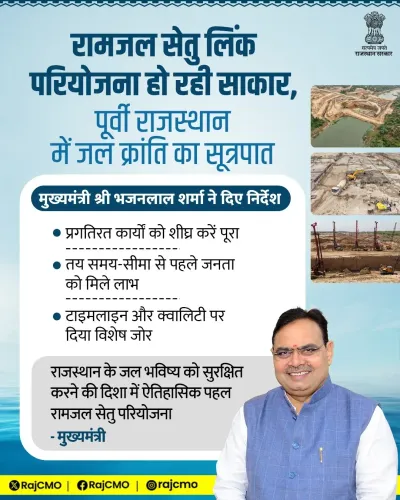
The government is fast-tracking the Ram Jal Setu Link Project , a proposed inter-basin river-linking initiative for water-scarce Rajasthan.
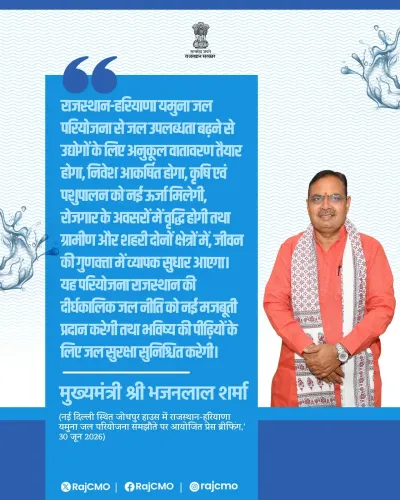
The Yamuna Water Agreement , governing allocation among Rajasthan, Haryana, Delhi and Uttar Pradesh, is being pushed for ground-level implementation.
Primary beneficiaries include farmers in arid districts and rural households dependent on stressed groundwater sources.
Key upcoming milestones include central funding approvals for Ram Jal Setu and Upper Yamuna River Board review meetings.
The dual push continues a decades-old Rajasthan pattern of seeking inter-state and inter-basin water transfers to supplement the Indira Gandhi Canal .
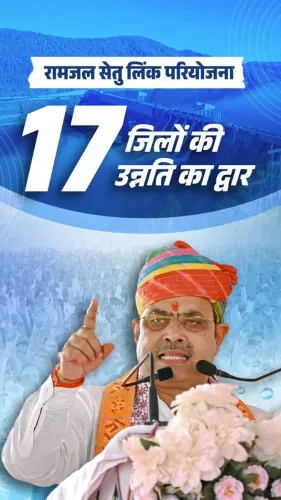
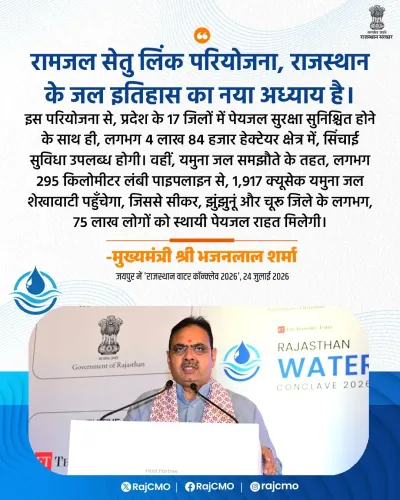
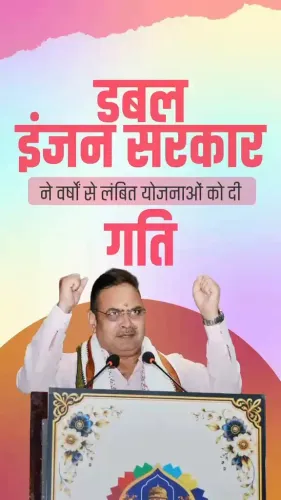
The Chief Minister's Office of Rajasthan announced on Monday, 1 June 2026 that the state government is fast-tracking two major water-security initiatives — the Ram Jal Setu Link Project and the Yamuna Water Agreement — as part of a broader development roadmap for the state.
Context
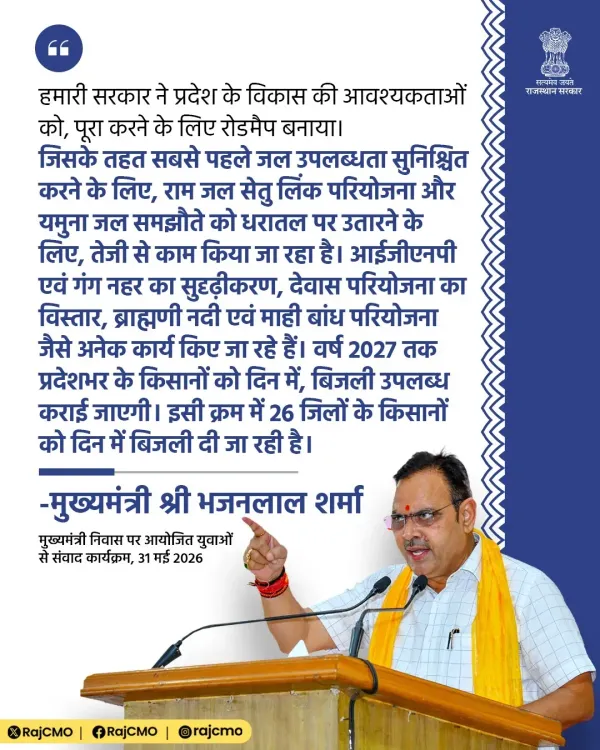
The post, attributed to Chief Minister Bhajanlal Sharma and shared under the hashtag #आपणो_अग्रणी_राजस्थान ('Our Pioneering Rajasthan'), states that the government has drawn up a roadmap to meet the state's development needs. The post reads: 'Our government has prepared a roadmap to fulfil the development needs of the state, under which work is being done rapidly to first ensure water availability by grounding the Ram Jal Setu Link Project and the Yamuna Water Agreement.'
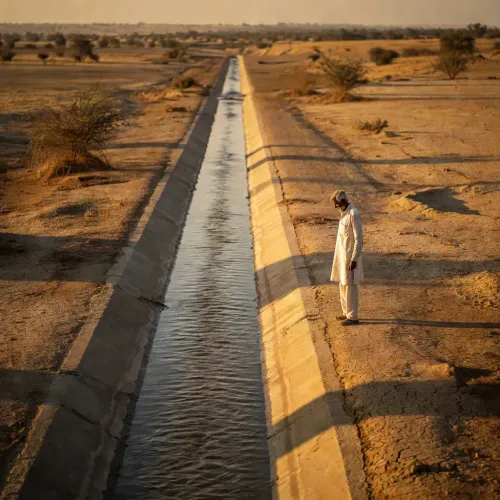
Rajasthan is one of India's most water-scarce states, with large tracts of its territory classified as arid or semi-arid. Successive governments have relied on canal infrastructure and inter-state water-sharing arrangements to meet agricultural and domestic demand.
Policy Backdrop
The Ram Jal Setu Link Project is a proposed inter-basin river-linking initiative aimed at augmenting water supply to water-deficit regions of Rajasthan. River-linking as a national strategy traces its origins to the National Perspective Plan of the 1980s and 1990s, which identified surplus-to-deficit basin transfers as a long-term solution to India's uneven water distribution.
The Yamuna Water Agreement governs the allocation of Yamuna river waters among Rajasthan, Haryana, Delhi and Uttar Pradesh. Rajasthan has historically sought a larger share through central mediation and bilateral negotiations with co-riparian states. The current government's emphasis on operationalising both instruments simultaneously signals a renewed push to convert long-standing policy commitments into on-ground infrastructure.
The state has previously depended heavily on the Indira Gandhi Canal — one of the world's longest irrigation canals — to supply water to its western districts. Officials and planners have consistently argued that additional surface-water sources are needed to keep pace with growing agricultural and urban demand.
Stakeholders and Impact
The most direct beneficiaries of successful implementation would be farmers in arid and semi-arid districts of Rajasthan, who face recurring crop losses due to water scarcity, and rural households that depend on groundwater sources already under stress from over-extraction. Reliable surface-water supply through link projects and river agreements could reduce dependence on rapidly depleting aquifers.
Urban centres in the state also stand to gain from improved water availability, particularly as population growth and industrial activity increase demand. Neighbouring states party to the Yamuna compact — Haryana, Delhi and Uttar Pradesh — will be closely watching any renegotiation or revised allocation that may accompany Rajasthan's push to operationalise the agreement.
What's Next
The immediate milestones to watch include central government funding approvals and any revised cost-sharing formulas for the Ram Jal Setu component, as well as scheduled review meetings of the Upper Yamuna River Board, the statutory body that oversees Yamuna water allocation among the signatory states.
If both initiatives advance on the stated timeline, they could redefine Rajasthan's water-security architecture for the coming decades — reducing the state's vulnerability to monsoon variability and providing a more stable foundation for agricultural planning across its drought-prone districts.
Point of View
Where neighbouring states will scrutinise any shift in Yamuna allocations. Whether the pace of implementation matches the urgency of the announcement will be the real test of this roadmap.
NationPress
15 Oct 2026
Frequently Asked Questions
What is the Ram Jal Setu Link Project in Rajasthan?
The Ram Jal Setu Link Project is a proposed inter-basin river-linking initiative designed to transfer water from surplus river basins to water-deficit regions of Rajasthan, aiming to augment supply beyond what the Indira Gandhi Canal currently provides.
What is the Yamuna Water Agreement and how does it affect Rajasthan?
The Yamuna Water Agreement is an inter-state pact that allocates Yamuna river waters among Rajasthan, Haryana, Delhi and Uttar Pradesh. Rajasthan seeks to operationalise its share under this agreement to supplement existing surface-water sources.
Who is Bhajanlal Sharma and what is his water policy for Rajasthan?
Bhajanlal Sharma is the BJP Chief Minister of Rajasthan since December 2023. His government has identified water availability as the top development priority, fast-tracking the Ram Jal Setu Link Project and the Yamuna Water Agreement as key instruments.
Why is water scarcity such a big issue in Rajasthan?
Rajasthan is largely arid or semi-arid, with limited rainfall and rapidly depleting groundwater. The state has historically depended on the Indira Gandhi Canal and inter-state water agreements, but growing agricultural and urban demand has made additional surface-water sources a pressing need.
What is the Upper Yamuna River Board and why does it matter for Rajasthan?
The Upper Yamuna River Board is the statutory body that oversees Yamuna water allocation among signatory states including Rajasthan. Its review meetings are a key forum where Rajasthan can push for implementation of its allocated share under the Yamuna Water Agreement.