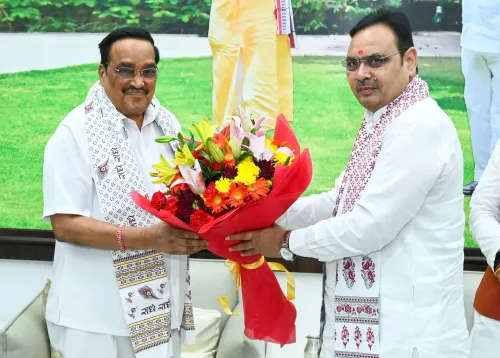
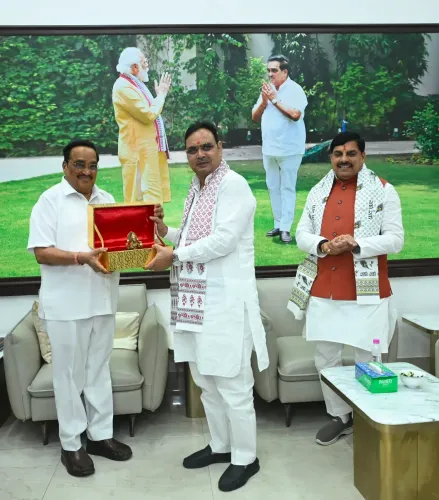
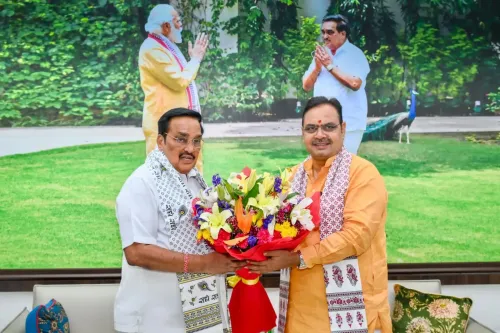
CM Bhajanlal meets Jal Shakti Minister over Rajasthan water projects
Synopsis
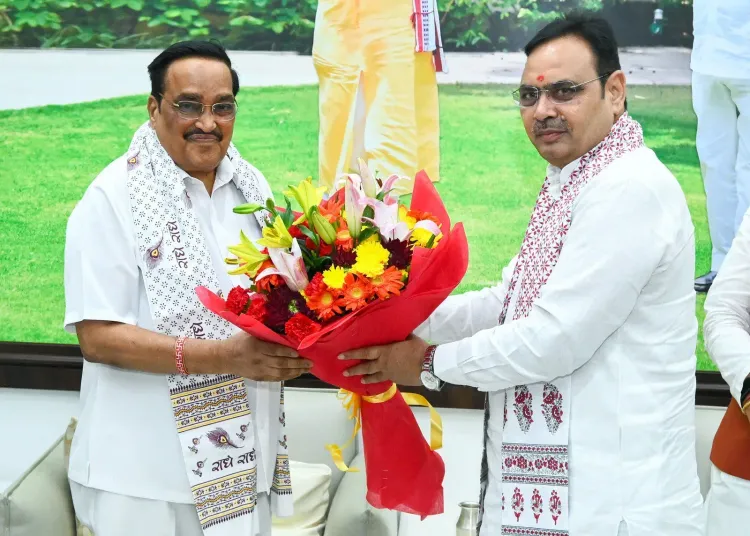
Chief Minister Bhajanlal Sharma met Union Jal Shakti Minister C. R. Patil in New Delhi on 7 July 2026, holding positive talks on the Jal Jeevan Mission, the Yamuna Water Project, and the Ram Jal Setu Link Project as Rajasthan pushes to advance its water infrastructure agenda.
Key Takeaways
CM Bhajanlal Sharma visited New Delhi and met Union Jal Shakti Minister C.
Patil on 7 July 2026 .
Discussions covered the Jal Jeevan Mission , the Yamuna Water Project , and the Ram Jal Setu Link Project .
The Jal Jeevan Mission , launched in 2019 , aims to provide tap-water connections to every rural household in India.
Rajasthan is a water-scarce state that depends heavily on central support for drinking-water and river-interlinking projects.
The meeting is part of routine central-state coordination under the Jal Shakti framework for funding and project clearances.
Progress on fund releases and project approvals will be the key indicator to watch following this dialogue.
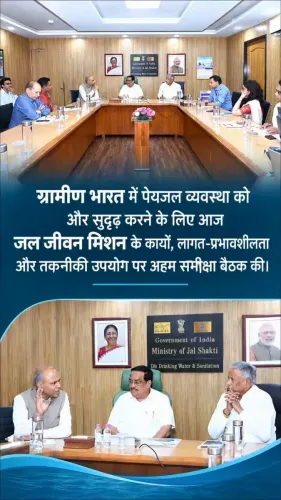
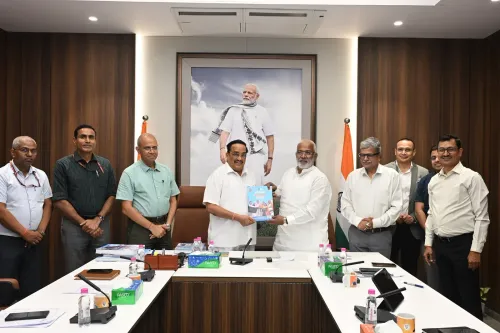
The Chief Minister's Office of Rajasthan announced on Tuesday, 7 July 2026 that Chief Minister Bhajanlal Sharma met Union Minister of Jal Shakti C. R. Patil during a visit to New Delhi, holding discussions on several critical water infrastructure projects for the state.
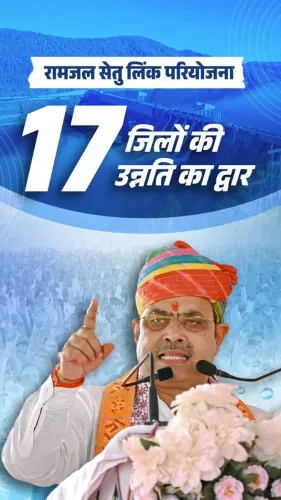
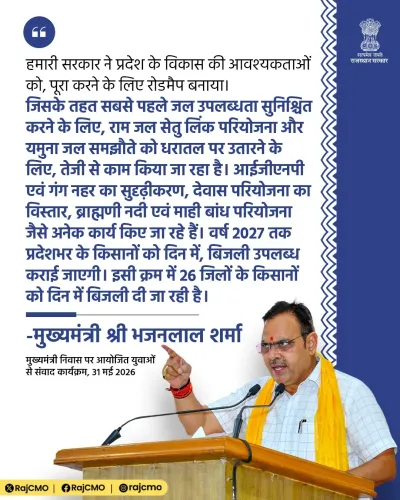
The CMO stated that the Chief Minister held a 'सकारात्मक संवाद' ('positive dialogue') with the Union Minister, covering the Jal Jeevan Mission, the Yamuna Water Project, and the Ram Jal Setu Link Project, along with future action plans for the state's water sector.
Context
Rajasthan is one of India's most water-scarce states, with large swathes of its western and central regions dependent on groundwater that is rapidly depleting. The state has historically relied on central government support to advance drinking-water supply schemes and inter-state river-allocation arrangements.
The meeting between CM Bhajanlal Sharma and Minister C. R. Patil is part of the standard administrative coordination that state governments undertake with the Union Ministry of Jal Shakti to advance funding, clearances, and project timelines.
Policy Backdrop
The Jal Jeevan Mission, launched by the Government of India in 2019, aims to provide functional household tap connections to every rural home in the country. Rajasthan, with its vast rural population and arid geography, remains one of the key focus states for the mission's implementation.
The Yamuna Water Project pertains to Rajasthan's allocation from the Yamuna river system, which involves multi-state water-sharing arrangements. The Ram Jal Setu Link Project is a proposed intra-state and inter-basin water transfer initiative aimed at channelling surplus river flows to water-deficit regions of the state. The precise implementation status of the Ram Jal Setu Link Project is not yet part of established public records.
Stakeholders and Impact
The primary beneficiaries of these projects are rural households and farmers in arid regions of Rajasthan who face acute water scarcity for both drinking and agricultural needs. Successful execution of the Jal Jeevan Mission targets in Rajasthan would translate into piped water access for millions of families currently dependent on tankers, hand-pumps, or distant sources.
The Yamuna Water Project and river-linking proposals, if progressed, could also ease irrigation pressures in districts that fall outside the command area of existing canal networks. Central-state coordination at the ministerial level is a prerequisite for unlocking funds and inter-departmental clearances for such large-scale infrastructure.
What's Next
Observers will watch for formal announcements on fund releases, project approvals, or revised timelines for the Jal Jeevan Mission targets in Rajasthan following this engagement. Any forward movement on the Ram Jal Setu Link Project or the Yamuna Water Project allocation would require further inter-ministerial and inter-state deliberations.
Such high-level bilateral meetings typically precede formal proposals being tabled before the relevant central bodies, making the outcome of this dialogue a key indicator of Rajasthan's water infrastructure pipeline in the months ahead.
Point of View
A challenge that cuts across party lines and electoral cycles. With the Jal Jeevan Mission entering a critical phase of target completion, state governments are under pressure to demonstrate physical progress on ground-level connections. The inclusion of the Ram Jal Setu Link Project in the agenda suggests Rajasthan is also positioning itself for the next generation of river-interlinking investments. Bilateral ministerial engagement of this kind is a standard but necessary step in unlocking the bureaucratic and financial clearances that large water infrastructure demands.
NationPress
6 Oct 2026
Frequently Asked Questions
What did CM Bhajanlal Sharma discuss with Jal Shakti Minister C. R. Patil?
CM Bhajanlal Sharma discussed the Jal Jeevan Mission, the Yamuna Water Project, and the Ram Jal Setu Link Project, along with future water infrastructure plans for Rajasthan.
What is the Jal Jeevan Mission?
The Jal Jeevan Mission is a central government scheme launched in 2019 to provide functional household tap-water connections to every rural home in India.
What is the Ram Jal Setu Link Project?
The Ram Jal Setu Link Project is a proposed water transfer initiative aimed at channelling river flows to water-deficit regions of Rajasthan; its precise implementation status is not yet part of established public records.
Why is Rajasthan seeking central support for water projects?
Rajasthan is one of India's most water-scarce states, with depleting groundwater and large arid regions, making central funding and clearances essential for large-scale water supply and river-linking projects.
When did CM Bhajanlal Sharma meet the Jal Shakti Minister?
The meeting took place on 7 July 2026 during CM Bhajanlal Sharma's visit to New Delhi.