Jal Shakti Minister Paatil Reviews JJM Progress in UP
Synopsis
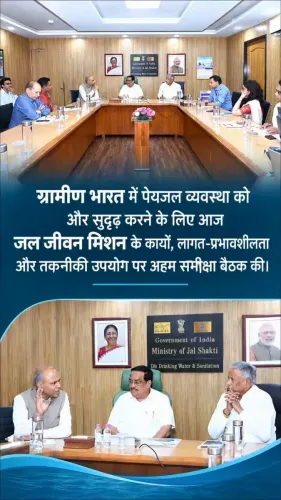
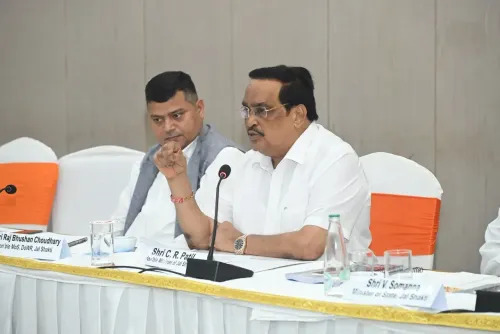
Union Jal Shakti Minister C. R. Paatil met UP Jal Shakti Minister Swatantra Dev Singh on 23 July 2026 to review Jal Jeevan Mission implementation in Uttar Pradesh, focusing on time-bound completion of remaining rural tap connections and sustained clean water supply.
Key Takeaways
Union Jal Shakti Minister C.
Paatil chaired a review meeting with UP Jal Shakti Minister Swatantra Dev Singh and senior officials on 23 July 2026 .
The meeting assessed progress of the Jal Jeevan Mission in Uttar Pradesh , India's most populous state.
Key agenda items included effective mission implementation, sustained safe drinking water availability in rural areas, and time-bound completion of pending works.
Minister Paatil described delivering clean water to every rural household as both a resolve and a duty under PM Narendra Modi's leadership.
The Jal Jeevan Mission , launched in 2019 , aims to provide functional household tap connections to all rural households through centre-state coordination.
Both central and state governments reaffirmed commitment to continuous, coordinated action to close remaining coverage gaps in Uttar Pradesh .
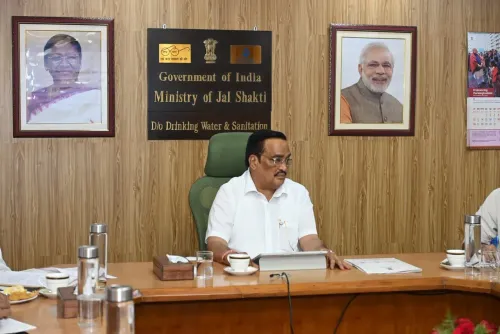
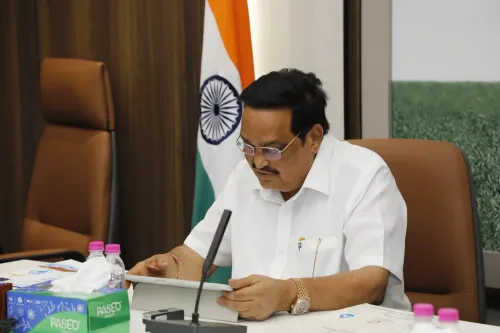
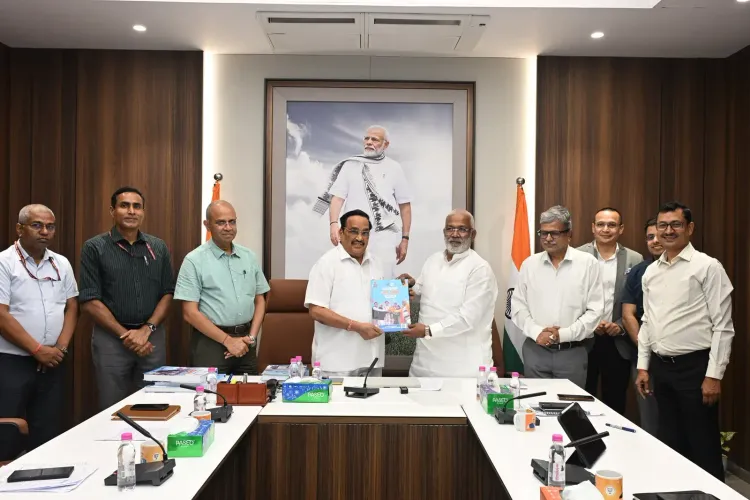
Union Jal Shakti Minister C. R. Paatil held a detailed review meeting on Thursday, 23 July 2026 with Uttar Pradesh Jal Shakti Minister Swatantra Dev Singh and senior ministry officials to assess the progress of the Jal Jeevan Mission (JJM) in Uttar Pradesh and discuss key implementation priorities.
Posting on X, Minister Paatil stated — 'बैठक में मिशन के प्रभावी क्रियान्वयन, ग्रामीण क्षेत्रों में सुरक्षित एवं स्वच्छ पेयजल की सतत उपलब्धता तथा शेष कार्यों को समयबद्ध ढंग से पूर्ण करने पर विस्तार से चर्चा हुई' — ('The meeting discussed in detail the effective implementation of the mission, sustained availability of safe and clean drinking water in rural areas, and completing the remaining work in a time-bound manner.')
Context
The review meeting brought together the Union Ministry of Jal Shakti and the Uttar Pradesh state government to take stock of on-ground progress under the Jal Jeevan Mission. Uttar Pradesh, India's most populous state, carries one of the largest shares of the mission's rural household tap-connection targets. Such bilateral reviews have become a regular feature of the mission's governance architecture, aimed at identifying and resolving implementation bottlenecks.
Minister Paatil underscored the political and moral weight of the programme, saying: 'Providing clean drinking water to every rural household under the leadership of Prime Minister Narendra Modi is not just our resolve — it is our duty.' He added that the central and state governments are working continuously with coordination and commitment toward this goal.
Policy Backdrop
The Jal Jeevan Mission was announced by Prime Minister Narendra Modi in the 2019 Union Budget with the aim of providing functional household tap connections to every rural household across India. The scheme operates on a centre-state cost-sharing model, with the Ministry of Jal Shakti responsible for overall policy oversight, fund release, and performance monitoring.
The mission's focus has evolved beyond mere infrastructure creation to emphasise sustained, functional water supply — including source sustainability and operation-and-maintenance frameworks at the village level. Uttar Pradesh has been a key focus state given its historically low baseline of piped water access in rural districts, and state-level reviews have been conducted periodically since 2020 to track physical and financial progress.
Stakeholders and Impact
The primary beneficiaries of the mission's progress in Uttar Pradesh are rural households — particularly women and girls who traditionally bear the burden of fetching water from distant sources. Accelerating the completion of remaining connections directly affects daily quality of life, health outcomes, and time poverty in villages across the state.
Swatantra Dev Singh, the state's Jal Shakti Minister, participated alongside senior officials, signalling active state-level engagement. The meeting's emphasis on 'time-bound completion of remaining works' suggests that pending connections and infrastructure gaps remain a priority concern for both the central and state governments.
What's Next
The Ministry of Jal Shakti is expected to track outcomes from this review through the next quarterly progress data release on state-wise tap-connection coverage. Any directions issued during the meeting regarding timelines or resource allocation for Uttar Pradesh will be reflected in subsequent official progress reports.
With the mission's long-term credibility tied to functional — not just installed — connections, the centre-state coordination underscored in this meeting is likely to intensify as the government pushes to close remaining coverage gaps across the state's vast rural hinterland.
Point of View
Electorally significant states like Uttar Pradesh to accelerate Jal Jeevan Mission delivery — particularly as the programme's credibility now rests on functional connections rather than headline installation numbers. Paatil's framing of water access as a 'duty' rather than merely a policy target signals an effort to elevate the mission's moral register ahead of future political cycles. The routine but high-frequency nature of such centre-state reviews also points to persistent last-mile implementation challenges that administrative meetings alone may not resolve. Ultimately, the mission's legacy will be judged by whether rural households in UP receive reliable, safe water daily — a bar that is harder to meet than a tap-connection count.
NationPress
22 Oct 2026
Frequently Asked Questions
What is the Jal Jeevan Mission and what is its goal?
The Jal Jeevan Mission is a central government scheme under the Ministry of Jal Shakti, launched in 2019, aimed at providing functional household tap connections with safe and clean drinking water to every rural household in India.
What was discussed in C. R. Paatil's meeting with UP officials on 23 July 2026?
The meeting focused on reviewing Jal Jeevan Mission progress in Uttar Pradesh, ensuring sustained availability of safe drinking water in rural areas, and completing remaining works in a time-bound manner.
Who is Swatantra Dev Singh?
Swatantra Dev Singh is the Uttar Pradesh Jal Shakti Minister and a BJP leader who represents the state government in water sector coordination with the Union ministry.
Why is Uttar Pradesh a key state for the Jal Jeevan Mission?
Uttar Pradesh is India's most populous state with a large rural population and historically low access to piped drinking water, making it one of the largest contributors to the mission's overall targets.
What happens after a Jal Jeevan Mission review meeting between the centre and states?
After such review meetings, the Ministry of Jal Shakti typically tracks outcomes through quarterly progress reports on state-wise tap-connection coverage, and any agreed timelines or resource allocations are reflected in subsequent official data releases.