Rajasthan CMO Orders Fodder Depots in Rain-Deficit Districts
Synopsis
The Rajasthan CMO on 14 November 2026 directed district administrations to activate fodder depots and strengthen goshala-based water and feed supply for cattle in districts recording below-normal rainfall, invoking the state's long-standing drought-management protocol to protect livestock owners and dairy farmers.
Key Takeaways
The Chief Minister's Office of Rajasthan issued a directive on 14 November 2026 for districts with below-normal rainfall.
District administrations are ordered to run fodder depots in a 'well-organised manner as needed' to distribute subsidised dry fodder.
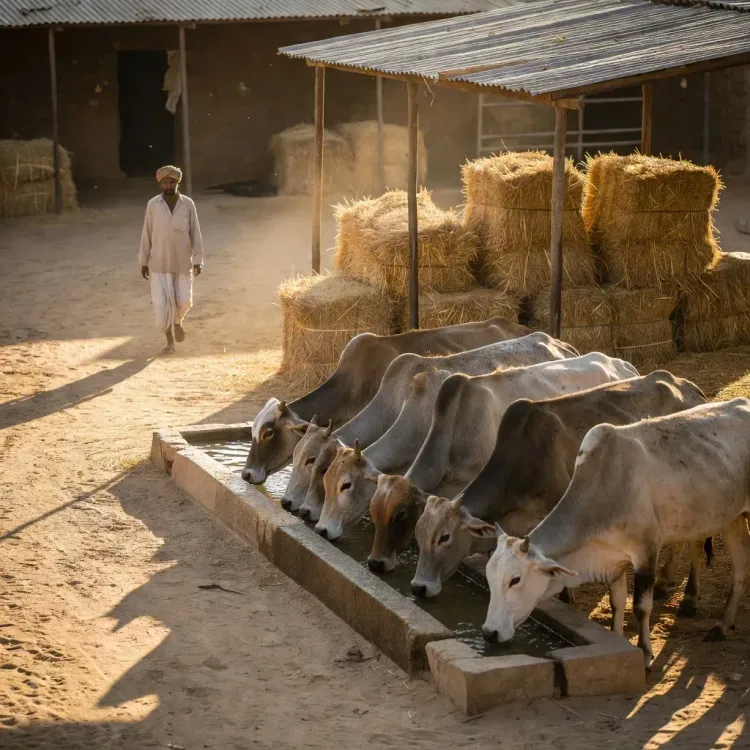
Goshalas (state-supported cow shelters) are directed to maintain adequate drinking water and fodder supplies for animals.
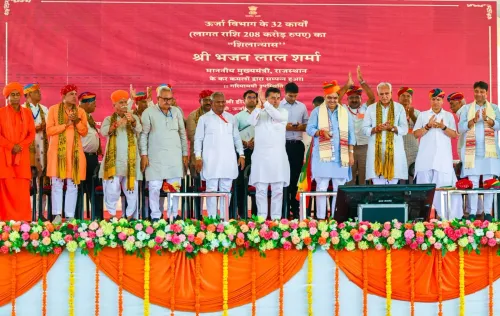
The directive is addressed to Chief Minister Bhajan Lal Sharma of the BJP, who has held office since December 2023.
Rajasthan's fodder depot and goshala relief framework has been part of the state's drought-management protocol since the early 2000s.
Livestock owners, dairy farmers, and stray cattle in arid and semi-arid districts are the primary beneficiaries of the order.
When the monsoon falls short in Rajasthan's arid heartland, cattle pay the first price — and the Chief Minister's Office of Rajasthan moved on Saturday, 14 November 2026 to get ahead of that crisis, directing district administrations to activate fodder depots and shore up water and feed supplies through the state's goshalas network.
The directive, addressed to Chief Minister Bhajan Lal Sharma and tagged with the hashtag #आपणो_अग्रणी_राजस्थान ('Our Leading Rajasthan'), is pointed and operational: 'In districts where rainfall has been below normal, fodder depots must be run in a well-organised manner as needed. At the same time, adequate arrangements for drinking water and fodder for animals must also be maintained through goshalas.'
What Fodder Depots Actually Do — and Why They Matter Here
Rajasthan's fodder depots are not standing infrastructure. They are temporary, demand-triggered facilities that district collectors activate in rainfall-deficit zones, distributing dry fodder at subsidised rates to livestock owners and dairy farmers who would otherwise face open-market price spikes or distress sales of their animals. The practice is embedded in the state's drought-management protocol, documented in successive action plans since the early 2000s.
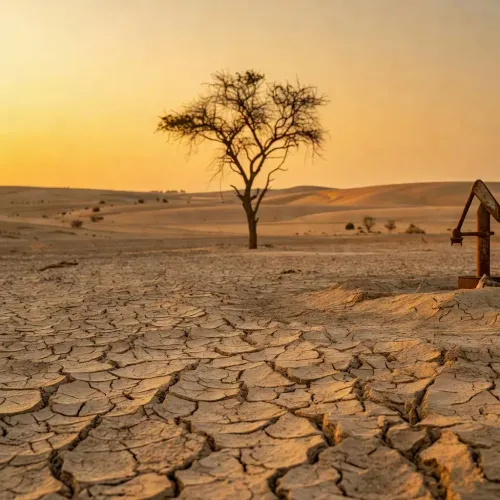
The scale of the challenge is structural. Rajasthan's arid and semi-arid belt — covering much of the western and central districts — is chronically exposed to monsoon variability. When the rains underperform, the first visible consequence is fodder and water scarcity for cattle, which then drives distress migration of livestock and forces smallholders to liquidate animals at throwaway prices. A timely depot activation can break that chain before it starts.
Goshalas as a Second Line of Defence
Alongside the depots, the directive specifically invokes goshalas — state-supported cow shelters that receive government aid for fodder, water, and maintenance under Rajasthan's animal welfare and cow protection framework. By routing relief through goshalas, the administration taps an existing network of facilities already equipped to house and feed stray and farmer-owned cattle during scarcity periods.
This dual-track approach — commercial-style depot distribution for active livestock owners, shelter-based care through goshalas for vulnerable animals — reflects the layered logic Rajasthan has built into its drought response over two decades. The immediate question now is which districts have been formally identified as rainfall-deficit, and how quickly district collectors translate this directive into activated supply chains on the ground.
With the India Meteorological Department's district-wise rainfall data set to drive the next round of decisions, livestock owners in below-normal rainfall zones will be watching for depot locations and goshala capacity announcements in the days ahead. In Rajasthan's dry belt, the window between a directive and distress is always narrow.
Point of View
Where administrative orders substitute for year-round infrastructure in the state's arid belt. By invoking both fodder depots and goshalas in a single directive, the CMO is signalling a whole-of-government posture on animal welfare ahead of what could be a difficult post-monsoon period. For Chief Minister Bhajan Lal Sharma, who took office in December 2023, activating this protocol also serves a political function: visibly protecting the rural livestock economy is central to the BJP's support base in Rajasthan's agrarian districts. The real test, as always, will be the speed and coverage of implementation at the district-collector level — where past drought responses have often stalled between order and delivery.
NationPress
14 Nov 2026
Frequently Asked Questions
What are fodder depots in Rajasthan and how do they work?
Fodder depots are temporary government facilities activated in rainfall-deficit districts to distribute dry fodder at subsidised rates. District collectors set them up during scarcity periods so livestock owners and dairy farmers can access feed without facing open-market price spikes.
Why has the Rajasthan CMO issued this fodder and water directive?
The Chief Minister's Office issued the directive because several districts have recorded below-normal rainfall, creating fodder and water shortages for cattle. The order aims to prevent distress sales of livestock and support dairy farmers before the situation worsens.
What role do goshalas play in Rajasthan's drought relief?
Goshalas are state-supported cow shelters that receive government aid for fodder, water, and maintenance. During scarcity, they serve as a second line of relief — housing and feeding stray and farmer-owned cattle when private fodder supplies run short.
Who is Bhajan Lal Sharma and what is his role in this order?
Bhajan Lal Sharma is the BJP Chief Minister of Rajasthan, in office since December 2023. The CMO directive is addressed to him, indicating the instruction flows from the Chief Minister's Office as part of state-level drought-management administration.
Which districts in Rajasthan are affected by below-normal rainfall?
The post does not name specific districts. The India Meteorological Department's district-wise rainfall data will determine which areas are formally classified as deficit zones and where fodder depots and goshala support will be activated.