Akal Takht gives Punjab govt 1-month ultimatum on Sacrilege Law clauses
Synopsis
The Akal Takht has put Punjab's AAP government on a one-month clock to amend the Sacrilege Law — a law passed in April without community consultation and now on hold by religious decree. With Chief Minister Bhagwant Mann barred from appearing due to a 'Guru Dokhi' declaration, the political fallout cuts deep into the AAP's Sikh constituency.
Key Takeaways
Akal Takht on 29 June gave the AAP government in Punjab a one-month ultimatum to remove objectionable clauses from the Jagat Jyot Sri Guru Granth Sahib Satkaar (Amendment) Act, 2026 .
The law has been put on hold until the amendments are made in line with Sikh religious sentiments.
Jathedar Giani Kuldeep Singh Gargaj objected to replacing 'Bir' with 'Saroop' and raised concerns over the SGPC's role in printing Guru Granth Sahib Birs.
Chief Minister Bhagwant Mann did not appear before the Akal Takht, having previously been declared 'Guru Dokhi' .
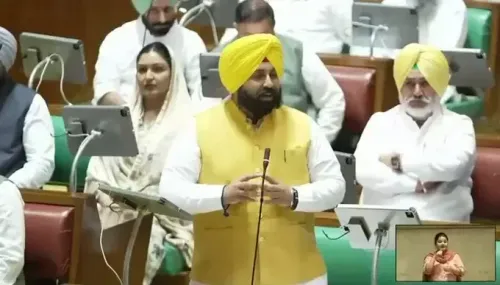
Legislators from AAP , Congress , and SAD appeared and agreed by a show of hands to review the law afresh.
The Vidhan Sabha had passed the Amendment Act on 13 April without adequate community consultation, according to opposition leaders.
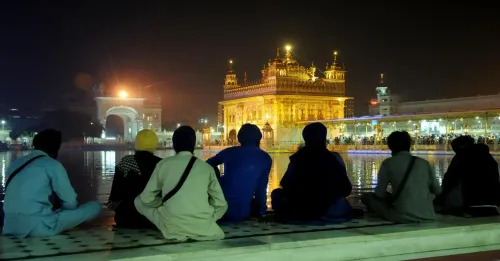
Akal Takht, the highest temporal seat of the Sikhs, on Monday, 29 June issued a one-month ultimatum to the Aam Aadmi Party (AAP) government in Punjab, directing it to remove objectionable clauses from the recently enacted Jagat Jyot Sri Guru Granth Sahib Satkaar (Amendment) Act, 2026, in keeping with Sikh religious sentiments. The directive was delivered by Akal Takht Jathedar Giani Kuldeep Singh Gargaj after Sikh legislators and ministers from across party lines appeared before the seat and, by a show of hands, agreed to review the law afresh. The law will remain on hold until the amendments are made.
Key Objections Raised by the Jathedar
Jathedar Gargaj questioned why the government had attempted to define religious terminology through legislation — a step critics argue encroaches on the spiritual autonomy of the Sikh community. He specifically objected to the replacement of the term 'Bir' with 'Saroop' in the law, and raised concerns over provisions governing the Shiromani Gurdwara Parbandhak Committee's (SGPC) role in the printing and publication of Guru Granth Sahib Birs. He also questioned lawmakers over the absence of community consultation before the Bill's passage in the Vidhan Sabha.
Additionally, the Jathedar sought details from the government regarding the 2015 Bargari sacrilege cases, questioning why the Sirsa Dera chief had not been brought to the state for questioning — a long-standing demand of the Sikh community that has remained unresolved across successive governments.
Who Appeared — and Who Did Not
The two-hour hearing saw the presence of legislators from the AAP, the Indian National Congress (Congress), and the Shiromani Akali Dal (SAD). Notably, Chief Minister Bhagwant Mann did not appear before the Jathedar, as he had earlier been declared 'Guru Dokhi' by the Akal Takht over a viral video — a designation that effectively barred his participation.
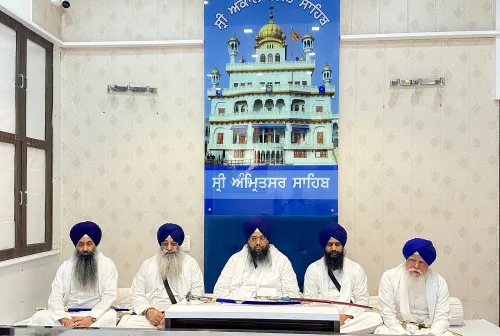
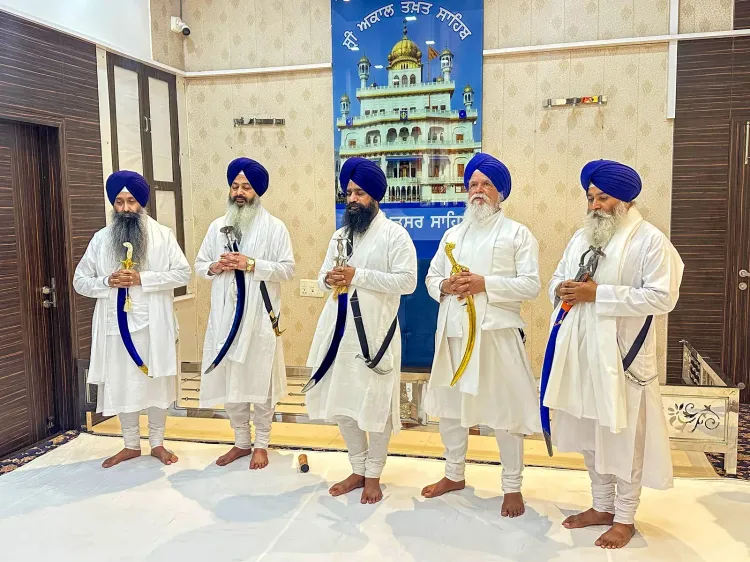
The five-member clergy presiding over the hearing was led by Jathedar Gargaj and included Takht Damdama Sahib Jathedar Giani Tek Singh Dhanaula and Darbar Sahib granthis Giani Baljit Singh, Giani Kewal Singh, and Giani Mangal Singh.
What Political Leaders Said
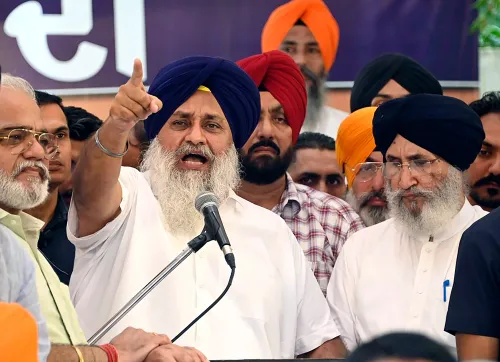
Leader of Opposition and Congress leader Partap Singh Bajwa told reporters that he had apprised the Akal Takht that the government chose to ignore constructive suggestions he had made in the Assembly regarding the sacrilege Act. Bajwa stated that legislators were not given sufficient time to study the draft Bill in detail, adding that laws dealing with sensitive religious matters require thorough discussion and careful scrutiny before being passed.
Vidhan Sabha Speaker Kultar Singh Sandhwan, who also appeared before the highest temporal seat, described the hearing as a long and highly meaningful, constructive discussion. He expressed reverence for the Jathedar, the institution, the Panth, and Guru Granth Sahib Maharaj, and said the government would be asked to review and consider the proceedings thoroughly.
Finance Minister Harpal Singh Cheema confirmed the one-month reprieve and said the Jathedar had proposed specific amendments and modifications, which would be formally transmitted to legislators through the Speaker. Cheema said that once these insights were received, all parties would collectively review them and take an immediate decision.
Background: The Sacrilege Law and Its Passage
The Vidhan Sabha passed the Jaagat Jot Sri Guru Granth Sahib Satkar (Amendment) Act, 2026 on 13 April, after which it received the Governor's assent. The legislation, framed to address sacrilege of the Guru Granth Sahib, quickly drew criticism from Sikh religious bodies who argued that certain provisions overstepped into matters of faith without adequate community input. This confrontation between the AAP government and the Akal Takht marks one of the most significant religio-political flashpoints in Punjab in recent years.
With the one-month deadline now in effect, all eyes are on whether the government can navigate the amendments in a manner acceptable to the Akal Takht — and whether the Bargari sacrilege accountability question will finally see movement.
Point of View
Signalling an unusual and deepening estrangement between a Punjab government and the faith institution that holds enormous moral authority over its electorate. The unresolved Bargari sacrilege cases, raised again by the Jathedar, are a reminder that accountability on this issue has been deferred across multiple governments — and that the AAP's credibility on Sikh matters remains on trial.
NationPress
28 Sept 2026
Frequently Asked Questions
What is the Jagat Jyot Sri Guru Granth Sahib Satkaar (Amendment) Act, 2026?
It is an amendment law passed by the Punjab Vidhan Sabha on 13 April 2026, aimed at addressing sacrilege of the Guru Granth Sahib. The Akal Takht has raised objections to certain clauses, including the replacement of the term 'Bir' with 'Saroop' and provisions affecting the SGPC's role in printing the Guru Granth Sahib, and has directed the government to revise them within one month.
Why did the Akal Takht issue an ultimatum to the Punjab government?
The Akal Takht objected to the law being passed without adequate consultation with the Sikh community and raised concerns over clauses it considers contrary to Sikh religious sentiments. Jathedar Giani Kuldeep Singh Gargaj questioned why the government attempted to define religious terminology through legislation, prompting the one-month deadline for amendments.
Why did Chief Minister Bhagwant Mann not appear before the Akal Takht?
Chief Minister Bhagwant Mann had previously been declared 'Guru Dokhi' by the Akal Takht over a viral video, which effectively prevented him from appearing before the seat. Other AAP ministers and legislators did appear and agreed to review the law.
What happens to the Sacrilege Law during the one-month period?
The law has been put on hold until the amendments are made to the satisfaction of the Akal Takht. Finance Minister Harpal Singh Cheema confirmed that the Jathedar's proposed amendments will be formally transmitted to legislators through the Vidhan Sabha Speaker, after which all parties will collectively decide on the revisions.
What are the 2015 Bargari sacrilege cases and why were they raised?
The 2015 Bargari sacrilege cases refer to incidents of desecration of the Guru Granth Sahib in Punjab's Bargari area, which triggered widespread protests. The Akal Takht raised these cases again on 29 June, questioning why the Sirsa Dera chief had not been brought to Punjab for questioning — a long-standing demand that has remained unaddressed across successive state governments.