All 78 Sikh MLAs, Punjab CM Mann appear before Akal Takht over anti-sacrilege law

Synopsis
In an extraordinary display of religious accountability, all 78 Sikh MLAs in Punjab — including Chief Minister Bhagwant Mann and nine Cabinet ministers — appeared before the Akal Takht on 29 June after the highest temporal seat of the Sikhs summoned them for passing an anti-sacrilege amendment without consulting panthic bodies. The Jathedar's charge that the government 'came between the Guru and the Sikh' sets the stage for a consequential verdict that could reshape Punjab's political landscape.
Key Takeaways
All 78 Sikh legislators , including CM Bhagwant Mann and Speaker Kultar Singh Sandhwa , appeared before the Akal Takht on 29 June 2026 .
The summons was issued on 15 June over the Jagat Jyot Sri Guru Granth Sahib Satkar (Amendment) Act, 2026 , passed on 13 April 2026 without consulting the Akal Takht or the SGPC .
Akal Takht Jathedar Giani Kuldeep Singh Gargaj said the government 'came between the Guru and the Sikh' by bypassing Sikh institutions.
The Bill was passed unanimously by AAP , Congress , and BJP legislators in a special one-day session after over three hours of deliberations.
Five non-Sikh ministers and other non-Sikh MLAs were directed to submit written explanations separately.
Shiromani Akali Dal leader Bikram Majithia and former BJP state president Sunil Jakhar have both publicly criticised the government's handling of the matter.
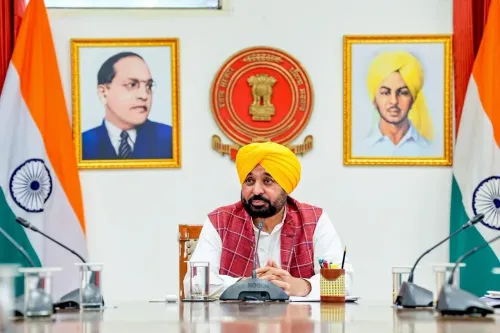
All 78 Sikh legislators in the Punjab Vidhan Sabha, including Chief Minister Bhagwant Mann, Speaker Kultar Singh Sandhwa, and nine Cabinet ministers, appeared before the Akal Takht in Amritsar on 29 June 2026 to present their position on the amended anti-sacrilege law — a legislation critics say was enacted without consulting the highest temporal seat of the Sikhs or other key panthic bodies.
The summons followed the passage of the Jagat Jyot Sri Guru Granth Sahib Satkar (Amendment) Act, 2026, which was tabled in a special one-day session on 13 April 2026 and received the Governor's assent within a week. The law amends the original Jagat Jot Sri Guru Granth Sahib Satkar Act, 2008, introducing stringent punishments to deter sacrilege incidents and uphold the sanctity of the Guru Granth Sahib.
Akal Takht's Stand
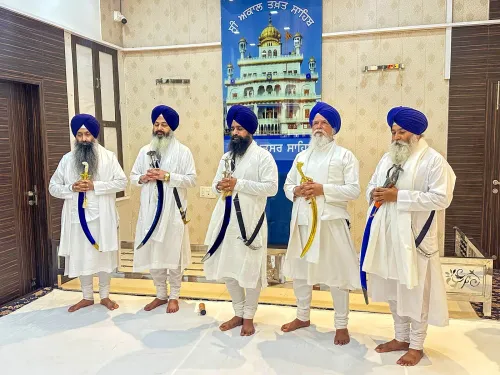
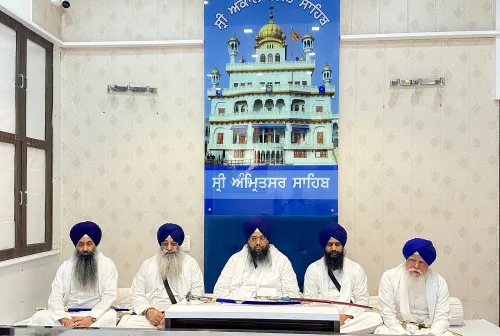
Akal Takht Jathedar Giani Kuldeep Singh Gargaj, speaking to reporters ahead of the meeting, said the amendment was passed after bypassing both the Akal Takht and Sikh institutions. 'The government has come in between the Guru and the Sikh by passing this Act,' he said. The Akal Takht, located on the premises of the Golden Temple (Harmandir Sahib) in Amritsar, is widely regarded as the supreme temporal authority of the Sikh faith.
The Jathedar had on 15 June directed all Sikh lawmakers and the Cabinet to appear before the Takht on 29 June, citing that the new law had hurt the sentiments and interests of the panth (community). Five non-Sikh ministers — Sanjeev Arora, Aman Arora, Barinder Kumar Goyal, Lal Chand Kataruchak, and Mahinder Bhagat — along with other non-Sikh legislators, were separately asked to submit written explanations.
How the Law Was Passed
The amendment Bill was tabled by Chief Minister Mann himself during the special session and passed unanimously, with support from members of the ruling Aam Aadmi Party (AAP) and opposition parties including the Indian National Congress and the Bharatiya Janata Party (BJP), after more than three hours of deliberations. The broad cross-party consensus, while notable, has not shielded the government from religious criticism over the process followed.
Opposition Voices and Political Undercurrents
Shiromani Akali Dal leader Bikram Majithia criticised the government, stating that the Akal Takht Jathedar had earlier issued explicit directives that any legislation concerning the Sri Guru Granth Sahib must be drafted only after securing approval from the Akal Takht, the Shiromani Gurdwara Parbandhak Committee (SGPC), other Sikh institutions, and the global Sikh congregation — the Guru Nanak Naam Leva Sangat.
Former Punjab BJP state president Sunil Jakhar called upon AAP legislators to 'listen to their inner conscience' before appearing at the Akal Takht. In a social media post, Jakhar said the MLAs were at a 'defining moment' where they must decide whether to stand with their Guru or with what he described as an 'arrogant Chief Minister.' He expressed concern that they could become 'offenders against the Panth' by supporting someone he claimed had been declared Panth Dokhi by the Akal Takht.
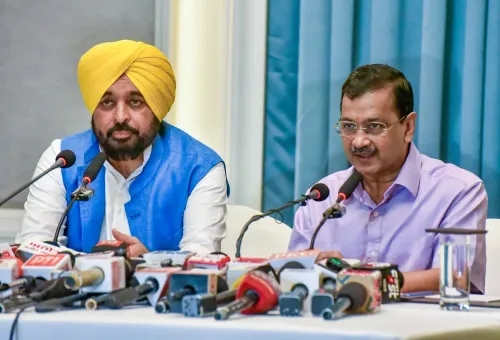
Chief Minister Mann, however, pushed back on Sunday, asserting that the Akal Takht is the supreme temporal authority and that all legislators would appear with humility to present the government's position. He also said the government would submit details of a fake video featuring his impersonator, and urged the Maharashtra government not to interfere in Sikh religious affairs. Mann further argued that opposition parties were attempting to gain political mileage by giving the issue a religious colour.
What Happens Next
The Akal Takht's deliberations with the 78 legislators are expected to determine whether the institution accepts the government's explanation or issues a formal religious directive. The outcome could have significant political and religious consequences for the AAP government in Punjab, particularly given the community's deep reverence for the Takht's authority. The SGPC and other panthic bodies are also likely to weigh in as the matter develops.
Point of View
And a formal censure from the Takht could fracture that base ahead of the next election cycle. The cross-party unanimity on the amendment Bill, while procedurally impressive, has paradoxically deepened the controversy: it suggests the legislature moved faster than the community's consent warranted. The real question the Takht's deliberations will answer is whether legislative sovereignty and religious authority can be reconciled in a state where the two have historically overlapped — and whether the AAP government, which positioned itself as a reformist force, can survive a confrontation with the institution that defines Sikh temporal governance.
NationPress
27 Sept 2026
Frequently Asked Questions
Why did the Akal Takht summon Punjab's Sikh legislators?
The Akal Takht summoned all 78 Sikh MLAs, including Chief Minister Bhagwant Mann, because the Punjab government passed the Jagat Jyot Sri Guru Granth Sahib Satkar (Amendment) Act, 2026 without consulting the Akal Takht, the SGPC, or other panthic bodies. Jathedar Giani Kuldeep Singh Gargaj said the government 'came between the Guru and the Sikh' by bypassing these institutions.
What is the Jagat Jyot Sri Guru Granth Sahib Satkar (Amendment) Act, 2026?
It is an amendment to the original 2008 anti-sacrilege law, passed unanimously by the Punjab Vidhan Sabha on 13 April 2026 during a special one-day session. The amendment introduces stricter punishments to deter incidents of sacrilege against the Guru Granth Sahib and received the Governor's assent within a week of passage.
What did CM Bhagwant Mann say before appearing at the Akal Takht?
Chief Minister Mann on Sunday reaffirmed that the Akal Takht is the supreme temporal authority of the Sikh community and said all ministers, MLAs, and the Speaker would appear with humility. He also said the government would submit details of a fake video featuring his impersonator and accused opposition parties of trying to gain political mileage by giving the issue a religious colour.
Who are the non-Sikh ministers and what action has been sought from them?
Five non-Sikh Cabinet ministers — Sanjeev Arora, Aman Arora, Barinder Kumar Goyal, Lal Chand Kataruchak, and Mahinder Bhagat — along with other non-Sikh legislators, were not summoned to appear in person but were asked to submit written explanations regarding the passage of the amended anti-sacrilege law.
What could the Akal Takht's verdict mean for the AAP government in Punjab?
The Akal Takht's decision after deliberating with the 78 legislators could range from accepting the government's explanation to issuing a formal religious directive. A censure from the Takht would carry significant religious and political weight, potentially affecting the AAP government's standing among Sikh voters ahead of future elections in Punjab.