Akal Takht declares Punjab CM Bhagwant Mann guilty of religious misconduct
Synopsis
The Akal Takht has declared Punjab Chief Minister Bhagwant Mann 'Guru Dokhi' — a grave religious censure — citing forensic-verified footage of alleged sacrilege, while simultaneously summoning every Sikh legislator in the state over a contested anti-sacrilege law. It is only the third time in Punjab's history that a sitting Chief Minister has faced such a verdict, and the second action against Mann in under six months.
Key Takeaways
Akal Takht Jathedar Giani Kuldeep Singh Gargaj declared Punjab CM Bhagwant Mann guilty of religious misconduct on 15 June .
Mann was pronounced 'Guru Dokhi' and 'Khalsa Panth Virodhi' ; the Sikh community was directed to sever ties with him.
Two government-recognised forensic laboratories reportedly confirmed the viral video was authentic and 'not AI-generated or doctored.' All Sikh legislators and the state Cabinet have been summoned to appear before the Akal Takht on 29 June over the Jaagat Jot Sri Guru Granth Sahib Satkar (Amendment) Act, 2026 .
Mann is only the third Punjab Chief Minister summoned by the Akal Takht, after Parkash Singh Badal (1979) and Surjit Singh Barnala (1986).
This is the second formal Akal Takht action against Mann within six months , following a January summons over alleged derogatory remarks on Sikh tenets.
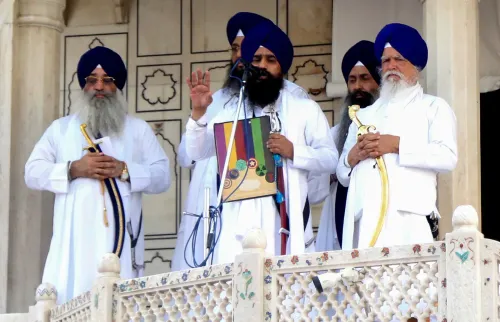
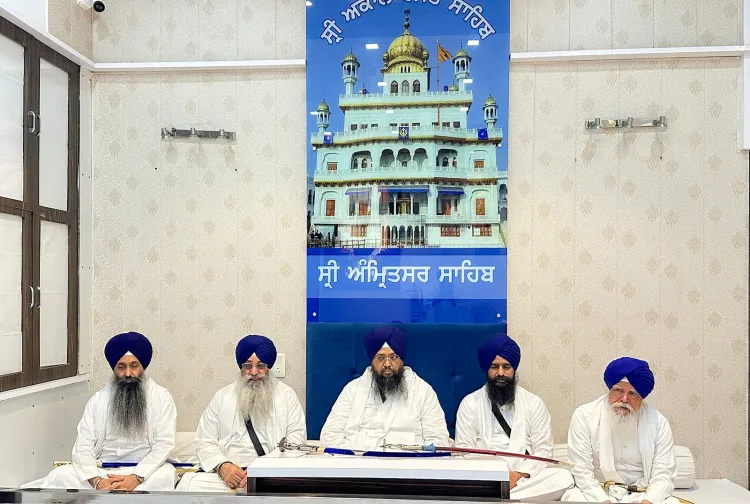
Akal Takht Jathedar Giani Kuldeep Singh Gargaj on Monday, 15 June declared Punjab Chief Minister Bhagwant Mann guilty of religious misconduct, citing a viral video that forensic analysis reportedly confirmed showed him committing an act of sacrilege against Sikh Gurus. The pronouncement, made from the podium of the Akal Takht in Amritsar — the highest temporal seat of Sikhism — marks one of the most serious religious censures a sitting Chief Minister has faced in recent Punjab history.
The Verdict and What It Means
The five Sikh high priests unanimously declared Chief Minister Mann 'Guru Dokhi' (one who has betrayed or shown disloyalty to the Guru) and 'Khalsa Panth Virodhi' (opposed to the Khalsa Panth). The Sikh community was also directed to shun ties with Mann. The specific charge against the Chief Minister was 'sprinkling alcohol on portraits of Sikh Gurus,' as allegedly depicted in the circulating video.
Jathedar Gargaj stated that forensic examination by two government-recognised laboratories confirmed the footage was authentic. 'Ultimately, the conclusion from both labs is that this video is authentic,' he said, adding that the reports explicitly stated the footage had 'not been tampered with' and was 'not AI,' describing it as appearing 'entirely natural, just like sitting in a natural environment where shadows fall.'
Sikh Legislators Summoned Over Sacrilege Law
In a separate but related action, the Akal Takht summoned all Sikh legislators — across all political parties — as well as the state Cabinet to appear before it on 29 June for allegedly hurting the sentiments and interests of the panth (community) by passing the Jaagat Jot Sri Guru Granth Sahib Satkar (Amendment) Act, 2026. The date is significant: 29 June is observed as the death anniversary of Sher-e-Punjab Maharaja Ranjit Singh.
Jathedar Gargaj had previously flagged objections to certain provisions of the anti-sacrilege law, calling it a 'black law' during his address marking the 42nd anniversary of Operation Blue Star on 6 June, and demanding its immediate revocation.
Historical Precedents: Not the First Such Summons
This is not the first time Chief Minister Mann has been called before the Akal Takht. He appeared before the seat on 15 January after allegedly making derogatory remarks on Sikh tenets, making him the third Chief Minister in Punjab's history to be summoned by the Akal Takht.
The two predecessors were Parkash Singh Badal, summoned in 1979 by then Jathedar Sadhu Singh Bhaura over his role in the Sikh-Nirankari clash that claimed 13 lives in Amritsar, and Surjit Singh Barnala, who was declared tankhaiya (guilty of religious misconduct) in 1986 and excommunicated for ordering police action inside the Golden Temple. Barnala later sought atonement in 1988.
Political and Community Fallout
The declaration carries significant political weight in Punjab, where the Sikh community's religious institutions command deep influence. The directive for the panth to sever ties with Mann, combined with the summons to all Sikh legislators regardless of party affiliation, signals a broad institutional challenge to the state's ruling Aam Aadmi Party (AAP) government.
Notably, this is the second time within six months that the Akal Takht has taken formal action against the Chief Minister, reflecting an escalating tension between the state government and the apex Sikh religious body. How Mann and the AAP government respond to the edict — and whether legislators comply with the 29 June summons — will shape the next chapter of this confrontation.
Point of View
Which the Akal Takht has called a 'black law,' suggests a miscalculation of the religious establishment's tolerance threshold. What is striking is the breadth of the summons: by calling all Sikh legislators regardless of party, the Akal Takht is signalling that this is not a partisan dispute but a community-wide reckoning. Mann's response — and whether he seeks atonement as Barnala eventually did — will define both his political survival and the AAP's Punjab project.
NationPress
15 Sept 2026
Frequently Asked Questions
What did the Akal Takht declare about Punjab CM Bhagwant Mann?
The Akal Takht declared Chief Minister Bhagwant Mann guilty of religious misconduct on 15 June, pronouncing him 'Guru Dokhi' (disloyal to the Guru) and 'Khalsa Panth Virodhi' (opposed to the Khalsa Panth). The five Sikh high priests unanimously took the decision, and the Sikh community was directed to shun ties with him.
What is the viral video at the centre of this controversy?
The video purportedly shows a man resembling Chief Minister Mann sprinkling alcohol on portraits of Sikh Gurus — an act considered a serious act of sacrilege. Akal Takht Jathedar Giani Kuldeep Singh Gargaj stated that two government-recognised forensic laboratories confirmed the footage was authentic, not AI-generated, and had not been tampered with.
Why have Sikh legislators been summoned to the Akal Takht?
All Sikh legislators across all political parties and the state Cabinet have been summoned to appear before the Akal Takht on 29 June for allegedly hurting the sentiments and interests of the Sikh community by passing the Jaagat Jot Sri Guru Granth Sahib Satkar (Amendment) Act, 2026. The Akal Takht has described provisions of the law as a 'black law' and demanded its revocation.
Has a Punjab Chief Minister ever faced this kind of action before?
Yes. Bhagwant Mann is the third Punjab Chief Minister to be summoned by the Akal Takht. Parkash Singh Badal was summoned in 1979 over the Sikh-Nirankari clash that killed 13 people in Amritsar. Surjit Singh Barnala was declared tankhaiya and excommunicated in 1986 for ordering police action inside the Golden Temple; he later sought atonement in 1988.
What is the Jaagat Jot Sri Guru Granth Sahib Satkar (Amendment) Act, 2026?
It is a Punjab state law on sacrilege against the Guru Granth Sahib, recently amended by the Bhagwant Mann government. The Akal Takht has objected to certain provisions it considers problematic, calling the law 'black' and demanding its immediate revocation. The legislation prompted the summons of all Sikh legislators to the Akal Takht on 29 June.