CM Bhagwant Mann: Life Imprisonment Core of Anti-Beadbi Law

Synopsis
Chief Minister Bhagwant Mann chaired a meeting on 27 September 2026 with Punjab's seven-member committee on the Jaagat Jot Amendment Act 2026, insisting life imprisonment for beadbi is non-negotiable and directing joint consultations with the Sri Akal Takht Sahib panel to build consensus.
Key Takeaways
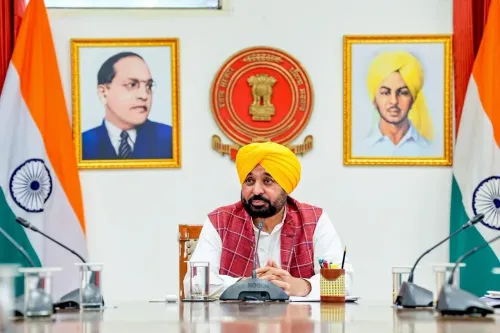
Chief Minister Bhagwant Mann chaired a meeting on 27 September 2026 at his official residence to review the anti-desecration law.
The Jaagat Jot Sri Guru Granth Sahib Satkar (Amendment) Act, 2026 prescribes life imprisonment and heavy fines for desecration — provisions Mann declared non-negotiable.
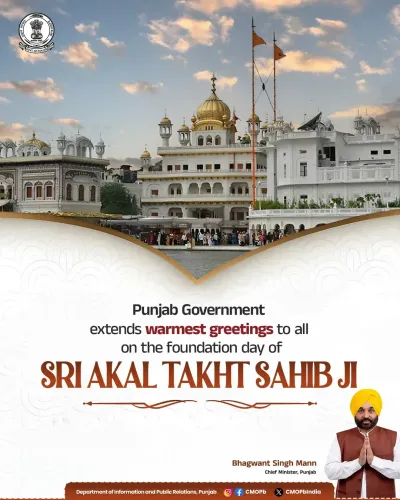
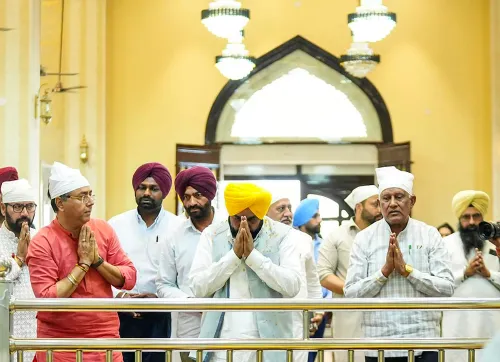
Mann reaffirmed that Sri Akal Takht Sahib is supreme for all and that the government will protect the sanctity of Sri Guru Granth Sahib Ji through the strongest possible legal framework.
The state's seven-member high-level committee has been directed to hold detailed, regular joint meetings with the panel constituted by Sri Akal Takht Sahib to evolve consensus on amendments.
The legislative push is rooted in the 2015 Bargari sacrilege incidents , which triggered widespread protests and demands for stringent legal protection.
The next key step is a consensus-backed revised draft to be placed before the Punjab Assembly.
When the sanctity of the Sikh scripture is at stake, there is no room for half-measures — that was the unambiguous message Chief Minister Bhagwant Mann sent on Sunday, 27 September 2026, as he chaired a high-stakes meeting at his official residence in Chandigarh with a seven-member high-level committee examining Punjab's landmark anti-desecration legislation.
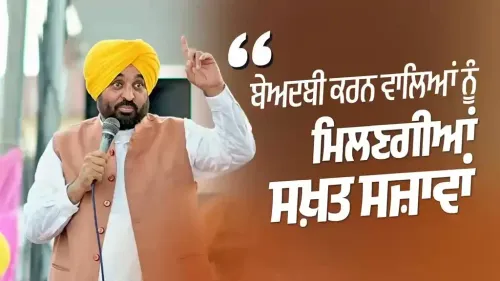
Mann left the committee in no doubt about the law's non-negotiable core: life imprisonment and heavy fines for those who commit beadbi (desecration) of Sri Guru Granth Sahib Ji are the bedrock of the Jaagat Jot Sri Guru Granth Sahib Satkar (Amendment) Act, 2026 — and neither provision can be diluted. He also reaffirmed that Sri Akal Takht Sahib, Sikhism's supreme temporal authority seated in Amritsar, is supreme for all, and that his government will use the strongest possible legal framework to protect the scripture's sanctity and dignity.
The Meeting at the CM's Residence and What Was on the Table
The discussion centred on the specific provisions of the 2026 Amendment Act, concerns raised about certain clauses, and how to chart a way forward through consultation and consensus. Mann directed the state committee to hold detailed, regular meetings with the parallel panel constituted by Sri Akal Takht Sahib — ensuring that religious authority and legislative authority work in lockstep to review the proposed amendments and incorporate the Akal Takht panel's suggestions before a final draft is presented.
The Chief Minister framed the objective clearly: any final law must deliver the strongest possible protection to the sanctity of Sri Guru Granth Sahib Ji and bring solace to the deeply hurt sentiments of the Sikh Sangat — the global Sikh congregation.
A Decade of Unhealed Wounds: The Bargari Shadow
Punjab's legislative push on this issue did not emerge in a vacuum. The 2015 Bargari sacrilege incidents — in which pages of Sri Guru Granth Sahib Ji were torn and scattered — ignited mass protests across Punjab and left wounds in the Sikh community that successive state governments have struggled to address through law. From that moment, every Punjab administration has felt the pressure to enact credible, enforceable anti-desecration legislation.
The current effort by the Aam Aadmi Party government, which came to power in March 2022, marks the latest chapter in that decade-long legislative journey — one that explicitly anchors punishment at the severity of life imprisonment, a bar that predecessors did not set into law with the same force.
Why Consensus with Akal Takht Matters
Mann's directive to coordinate formally with the Akal Takht's own panel is a politically and religiously significant move. Laws touching Sikh religious matters carry legitimacy in Punjab only when they are seen to align with or carry the endorsement of the Akal Takht's moral authority. By institutionalising joint meetings between the two panels, the government is building a bridge between legislative process and religious sanction — a model that has historically been the only path to laws the Sikh Sangat will accept as genuine rather than performative.
The next critical milestone is the output of those joint meetings: a revised, consensus-backed draft that can be placed before the Punjab Assembly. If that process holds, Punjab could enact one of the most stringent religious-desecration statutes in independent India's history.
Point of View
Suggesting the AAP has learned from the failures of its predecessors. Whether the Akal Takht panel and the state committee can genuinely converge on language will determine if this becomes landmark legislation or another delayed promise.
NationPress
28 Sept 2026
Frequently Asked Questions
What is the Jaagat Jot Sri Guru Granth Sahib Satkar Amendment Act 2026?
It is a Punjab state law that prescribes life imprisonment and heavy fines for acts of desecration — called beadbi — of Sri Guru Granth Sahib Ji, aimed at providing the strongest possible legal protection to the Sikh scripture.
What did CM Bhagwant Mann say about the anti-beadbi law?
Chief Minister Bhagwant Mann stated on 27 September 2026 that life imprisonment and heavy fines for beadbi are the core foundation of the law and cannot be diluted, and that his government will leave no stone unturned to protect the sanctity of Sri Guru Granth Sahib Ji.
What is Sri Akal Takht Sahib and why is it involved?
Sri Akal Takht Sahib, located in Amritsar, is the highest temporal seat of authority in Sikhism. It issues religious directives called hukumnamas, and any legislation touching Sikh religious matters requires alignment with the Akal Takht's authority to be accepted by the Sikh community.
What were the 2015 Bargari sacrilege incidents?
The Bargari sacrilege incidents in 2015 involved the tearing and scattering of pages of Sri Guru Granth Sahib Ji in Punjab, triggering mass protests and sustained demands from the Sikh community for a strict anti-desecration law, which successive Punjab governments have since attempted to deliver.
What happens next with the Punjab anti-desecration law?
The seven-member state committee has been directed to hold regular joint meetings with the panel constituted by Sri Akal Takht Sahib, review proposed amendments, and evolve a consensus draft that will then be presented to the Punjab Assembly for enactment.