CM Bhagwant Mann Gets Nanaksar Blessing Over New Sikh Respect Act
Synopsis
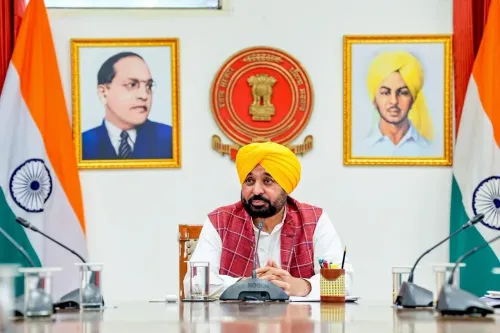
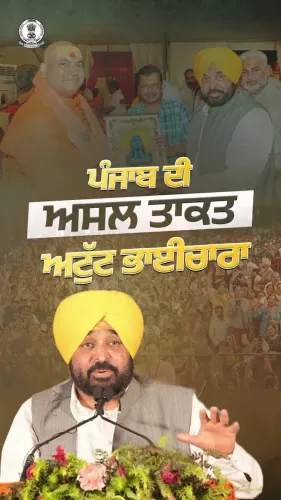
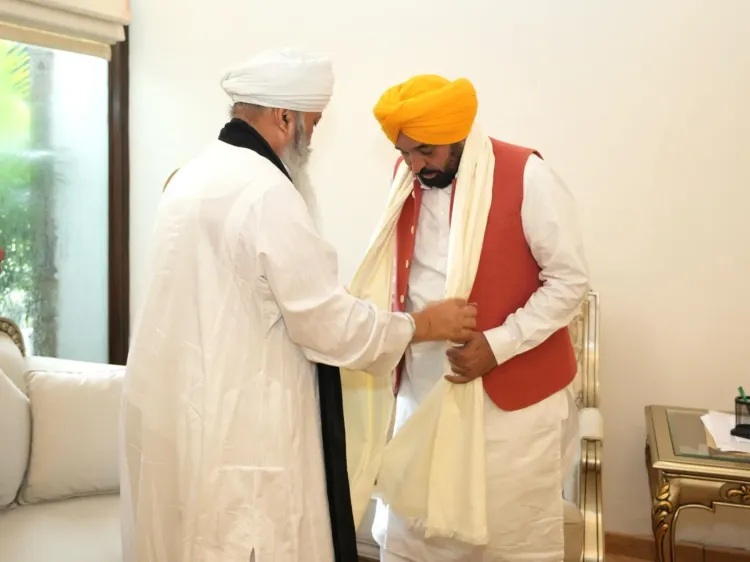
Punjab CM Bhagwant Mann received a siropa and blessing from Nanaksar Sampradaye head Baba Lakha Singh Ji in Chandigarh on 29 September 2026, in appreciation of the state government's newly enacted Jagat Jyot Satikar Act 2026, aimed at upholding the sanctity of Sri Guru Granth Sahib Ji.
Key Takeaways
Baba Lakha Singh Ji , head of the Nanaksar Sampradaye, visited CM Bhagwant Mann in Chandigarh on 29 September 2026 .
Baba Ji presented a siropa (robe of honour) to Mann, a traditional Sikh gesture of blessing and recognition.
The visit was prompted by appreciation for the 'Jagat Jyot Satikar Act 2026' , passed by the Punjab government to protect the dignity of Sri Guru Granth Sahib Ji.
CM Mann described upholding the honour of Sri Guru Granth Sahib Ji as the 'primary duty' of his government.
The Nanaksar Sampradaye is a widely respected Sikh religious order with gurdwaras across Punjab and beyond.
The AAP government in Punjab has consistently framed its governance around Sikh values and communal harmony since taking office in March 2022 .
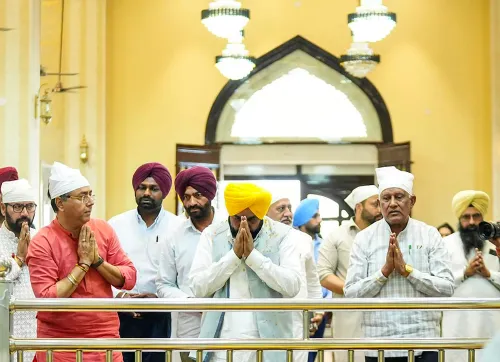
A sacred siropa (robe of honour) placed on his shoulders by one of Punjab's most revered Sikh religious figures — that is how Punjab Chief Minister Bhagwant Mann marked a significant moment of religious endorsement at Chandigarh on 29 September 2026, as the head of the Nanaksar Sampradaye arrived to commend his government's newly passed legislation.
Baba Lakha Singh's Visit and the Siropa Ceremony
Baba Lakha Singh Ji, head of the Nanaksar Sampradaye — a respected Sikh religious order that runs gurdwaras across Punjab and the diaspora — called on CM Mann in Chandigarh and presented him with a siropa, a gesture of blessing and honour traditionally bestowed by Sikh religious authorities. The occasion: appreciation for the 'Jagat Jyot Satikar Act 2026', a law the state government says it has passed to uphold the dignity and sanctity of Sri Guru Granth Sahib Ji, the eternal Sikh scripture.
Mann, posting in Punjabi on X, expressed heartfelt gratitude — 'ਮੈਂ ਬਾਬਾ ਜੀ ਦਾ ਤਹਿ ਦਿਲੋਂ ਧੰਨਵਾਦ ਕਰਦਾ ਹਾਂ' ('I thank Baba Ji from the depths of my heart') — and used the moment to restate his administration's governing philosophy: 'Upholding the complete honour, respect, and dignity of Shabad Guru, Sri Guru Granth Sahib Ji, is the primary duty of our government.'
What the Jagat Jyot Satikar Act 2026 Signals
The legislation's name — Jagat Jyot means 'Light of the World,' a title associated with the Guru Granth Sahib — signals its intent: codifying protections for the scripture's reverence in law. Punjab governments across party lines have periodically legislated on sacrilege and religious respect, reflecting how deeply the issue resonates with the state's majority Sikh population. The Aam Aadmi Party administration, in power since March 2022, has consistently positioned such measures as central to its moral mandate in the state.
Mann closed his post by affirming that his government remains 'fully committed to the progress, peace, and communal harmony of the state, walking the path shown by the Gurus and saints' — framing the Act not merely as legislation but as governance rooted in Sikh values.
Why Nanaksar's Endorsement Carries Weight
The Nanaksar Sampradaye is not a fringe voice. Founded in the early twentieth century, it commands deep reverence among devout Sikhs in rural and urban Punjab alike, and its network of taksals (seminaries) and gurdwaras extends well beyond state borders. When its head travels to the Chief Minister's office and offers a siropa, the symbolism is unmistakable: a major religious institution publicly validating a government's legislative action. In the fractious landscape of Punjab politics, where Sikh religious bodies have frequently clashed with governments over sacrilege handling, such an endorsement is a meaningful political signal — even as it is framed in purely spiritual terms.
Point of View
Which has staked much of its Punjab identity on being the credible custodian of Sikh values, a siropa from a major Sikh sect is both a spiritual affirmation and a political asset ahead of any future electoral cycle. Punjab's long and painful history with sacrilege controversies means that any government seen as having finally legislated meaningfully on the issue gains ground with a deeply attentive electorate. The broader pattern — of AAP combining welfare governance with religious-cultural signalling — is becoming a defining feature of its Punjab playbook.
NationPress
29 Sept 2026
Frequently Asked Questions
What is the Jagat Jyot Satikar Act 2026?
The Jagat Jyot Satikar Act 2026 is a law passed by the Punjab government under Chief Minister Bhagwant Mann, aimed at upholding the complete honour, respect, and sanctity of Sri Guru Granth Sahib Ji, the eternal Sikh scripture.
Who is Baba Lakha Singh Ji?
Baba Lakha Singh Ji is the head of the Nanaksar Sampradaye, a respected Sikh religious order that operates gurdwaras and seminaries across Punjab and beyond.
What is a siropa and why is it significant?
A siropa is a robe of honour traditionally presented by Sikh religious authorities as a gesture of blessing and recognition. When offered by a prominent religious figure like the head of Nanaksar Sampradaye, it carries deep spiritual and symbolic weight.
Why did Baba Lakha Singh Ji visit CM Bhagwant Mann?
Baba Lakha Singh Ji visited CM Bhagwant Mann in Chandigarh to commend the Punjab government's passage of the Jagat Jyot Satikar Act 2026 and to present a siropa as a blessing.
What is the Nanaksar Sampradaye?
The Nanaksar Sampradaye is a Sikh religious denomination founded in the early twentieth century, known for its network of gurdwaras and seminaries across Punjab and the global Sikh diaspora.