CM Bhagwant Mann Vows Justice in Punjab Beadbi Cases

Synopsis
Chief Minister Bhagwant Mann, at a Lok Milni on 18 June 2026, pledged thorough investigation of past Beadbi (sacrilege) cases, jail for the guilty, and cited a new stringent state law as a deterrent against future incidents — renewing a long-standing demand for justice from Punjab's Sikh community.
Key Takeaways
Chief Minister Bhagwant Mann made the pledge at a Lok Milni public outreach programme on 18 June 2026 .
Mann assured that all past Beadbi (sacrilege) cases would be thoroughly investigated and those responsible sent to jail.
He cited a stringent law enacted by the Punjab government as a deterrent against future sacrilege incidents.
The most prominent Beadbi incidents date to 2015 and have remained unresolved through multiple state governments.
The Sikh community and victims' families are the primary stakeholders awaiting concrete judicial outcomes.
Possible legal challenges to the stringent sacrilege law in Punjab courts or the Supreme Court remain a key development to watch.
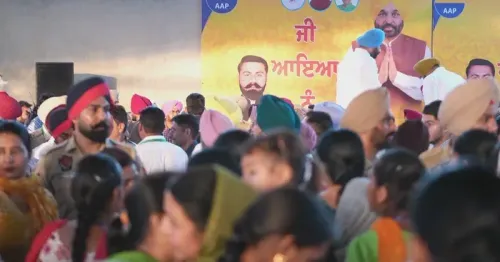
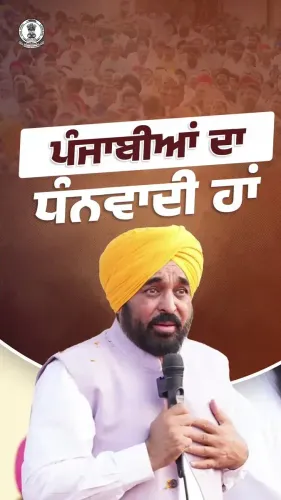
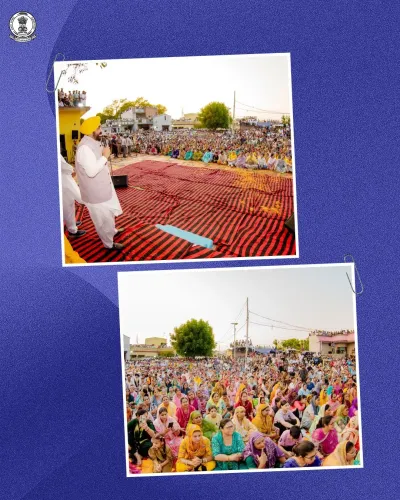
The Chief Minister's Office of Punjab, on Thursday, 18 June 2026, announced that Chief Minister Bhagwant Mann reaffirmed the state government's commitment to justice in long-pending Beadbi (sacrilege) cases during a Lok Milni public outreach programme. Mann assured attendees that all past sacrilege cases would be thoroughly investigated and those found responsible would be sent to jail, and that a stringent law enacted by the state government would serve as a strong deterrent against future incidents.
Context
The Lok Milni (public meeting with citizens) is a direct-grievance format that Chief Minister Mann has used periodically to hear citizen concerns and make public-facing policy commitments. At Thursday's session, the issue of Beadbi — desecration of Sikh scriptures — emerged as a central concern, reflecting the deep religious and emotional weight the issue carries across Punjab.
Mann stated that past cases would be 'thoroughly investigated' and those responsible 'sent to jail', while also pointing to a state-enacted stringent law as a forward-looking safeguard. The dual commitment — accountability for the past and deterrence for the future — signals the government's attempt to address both unresolved grievances and fresh anxieties.
Policy Backdrop
The most prominent Beadbi incidents date to 2015, when alleged desecration of Sikh scriptures triggered widespread protests, police action, and multiple FIRs across Punjab. Those cases dragged through successive state governments — SAD-BJP and Congress — with repeated announcements of fresh probes, judicial inquiries, and special investigation teams, yet without conclusive convictions that satisfied the Sikh community or victims' families.
When the Aam Aadmi Party came to power in 2022 under Bhagwant Mann, closure on Beadbi cases was among the most loudly demanded deliverables. The government has since cited legislative action — a law imposing stricter penalties for sacrilege — as a structural response, though the exact provisions and enactment date of that legislation remain subject to ongoing legal and public scrutiny.
Stakeholders and Impact
The Sikh community and families of victims connected to the 2015 incidents remain the most directly affected stakeholders. For them, Mann's renewed assurance at a public forum carries both political and emotional significance, even as they await tangible judicial outcomes rather than repeated pledges.
The commitment also has electoral undercurrents. Beadbi cases sit at the intersection of religious sentiment and political mobilisation in Punjab, and any visible progress — or perceived inaction — is closely tracked by opposition parties, religious bodies such as the Shiromani Gurdwara Parbandhak Committee, and civil society groups. The stringent law, if challenged, could also face scrutiny in Punjab courts or escalate to the Supreme Court of India.
What's Next
The immediate focus will be on whether the renewed commitment at the Lok Milni translates into fresh investigative action — including any reconstituted or newly empowered special investigation teams — and whether case timelines are made public. Legal challenges to the stringent sacrilege law, if mounted, will be a parallel track to watch.
Broader accountability on the 2015 Beadbi cases remains the benchmark by which the Mann government's promises will be judged, both by the Sikh community and by political opponents heading into future electoral cycles in Punjab.
Point of View
And the Sikh community's trust is now indexed to outcomes, not announcements. The invocation of a 'stringent law' raises its own questions: if that law faces judicial challenge, it could become a liability rather than an asset. Mann's ability to convert this public pledge into visible investigative progress before the next electoral cycle will be the true measure of its political worth.
NationPress
18 Sept 2026
Frequently Asked Questions
What are the Beadbi cases in Punjab?
Beadbi refers to incidents of alleged desecration of Sikh scriptures, most notably in 2015, which triggered widespread protests and multiple criminal cases across Punjab that have remained unresolved for over a decade.
What did CM Bhagwant Mann say about Beadbi cases at the Lok Milni?
At a Lok Milni on 18 June 2026, CM Bhagwant Mann assured citizens that past Beadbi cases would be thoroughly investigated, those responsible would be sent to jail, and that a new stringent state law would deter future incidents.
What is a Lok Milni?
Lok Milni is a public outreach format used by the Punjab Chief Minister to directly hear citizens' grievances and make policy commitments in an open setting.
Has any government resolved the 2015 Beadbi cases?
No. The 2015 sacrilege cases have passed through SAD-BJP and Congress governments, with repeated probes and SIT formations, but without convictions that have satisfied victims' families or the Sikh community.
What is the stringent law on sacrilege enacted by the Punjab government?
The Punjab government has enacted a law imposing stricter penalties for sacrilege offences; however, the exact provisions and enactment date are subject to ongoing legal scrutiny and have not been fully detailed in the public domain.