Punjab proposes life term, Rs 50 lakh fine for Guru Granth Sahib sacrilege
Synopsis
The Punjab government has announced the Jagat Jyoti Sri Guru Granth Sahib Satkar (Amendment) Bill, 2026, proposing life imprisonment and fines up to Rs 50 lakh for sacrilege of the Guru Granth Sahib Ji, reviving a legislative push that failed to gain presidential assent in 2016.
Key Takeaways
The Chief Minister's Office of Punjab announced the Jagat Jyoti Sri Guru Granth Sahib Satkar (Amendment) Bill, 2026 on 22 June 2026 .
The bill proposes a maximum fine of Rs 50 lakh and life imprisonment for those convicted of sacrilege against the Sri Guru Granth Sahib Ji.
A similar bill passed by the Punjab Assembly in 2016 never became law after it failed to receive presidential assent.
Punjab has seen repeated sacrilege episodes that triggered protests and public unrest, making this a politically sensitive and high-priority issue.
The bill must pass the Punjab Vidhan Sabha and receive gubernatorial and potentially presidential assent before it can become enforceable.
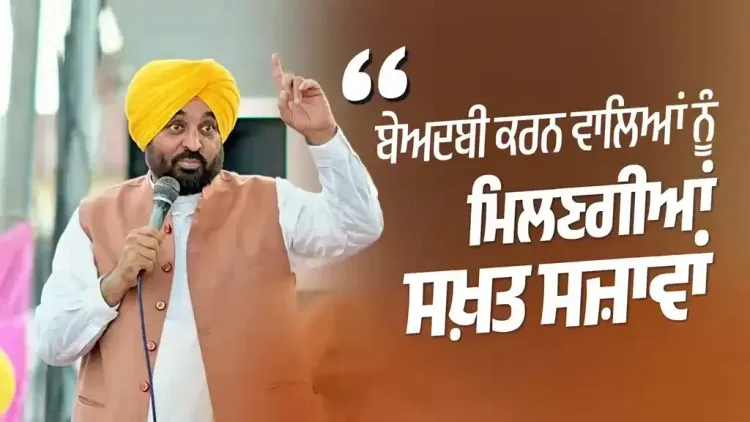
The Chief Minister's Office of Punjab announced on Monday, 22 June 2026 that the state government is introducing the 'Jagat Jyoti Sri Guru Granth Sahib Satkar (Amendment) Bill, 2026', which prescribes penalties of up to Rs 50 lakh in fines and life imprisonment for those convicted of sacrilege against the Sri Guru Granth Sahib Ji.
Context
The post, written in Punjabi, states that the bill aims to keep the mahanta, satkar ate pavitarta (greatness, respect, and sanctity) of Sri Guru Granth Sahib Ji 'unbreakable.' Offenders found guilty of desecration will face the dual punishment of a fine reaching Rs 50 lakh and life imprisonment under the proposed legislation. The announcement was made through the official CMO Punjab account, signalling the bill is a priority of the current state administration.
Policy Backdrop
This is not the first time Punjab has sought to legislate against sacrilege of Sikh scriptures. In 2016, the Punjab Assembly passed a bill amending the Indian Penal Code and Code of Criminal Procedure to provide for life imprisonment in such cases, but that legislation did not receive presidential assent and never came into force. The present 2026 amendment bill revives and significantly strengthens that legislative intent, adding a substantial financial penalty alongside the custodial sentence. Successive governments in Chandigarh, across party lines, have framed such measures as essential to protect religious sentiments and maintain public order in a state that has witnessed repeated episodes of alleged sacrilege, each triggering protests, bandhs, and occasional violence.
Stakeholders and Impact
Sikh devotees and religious organisations across Punjab and the broader Sikh diaspora have long demanded stringent legal protection for the Guru Granth Sahib Ji, which is revered as the living Guru of the Sikhs. The proposed penalties — among the most severe proposed for a religious-offence law at the state level in India — are likely to be welcomed by community groups who have criticised the state's earlier failure to secure presidential assent for the 2016 legislation. Civil liberties advocates, however, may scrutinise the bill's drafting to ensure it meets constitutional standards on freedom of expression and due process.
For the Punjab government, the bill also carries clear political weight. Sacrilege incidents have historically destabilised governments and galvanised public sentiment across the state, making protective legislation a high-visibility commitment for any ruling party.
What's Next
The bill will need to be tabled and debated in the Punjab Vidhan Sabha before it can be passed. Given the precedent of the 2016 legislation, the critical question is whether the Governor of Punjab will give assent or refer the bill to the central government, which would then determine whether presidential assent is granted. Legal experts are expected to examine whether the bill's provisions align with the framework of Indian criminal law, particularly given that criminal law is a concurrent subject under the Constitution. The government's ability to navigate this legislative and constitutional path will determine whether the bill becomes enforceable law.
Point of View
2026 is the latest chapter in Punjab's decade-long struggle to enact enforceable legal protection for the Sikh scripture, a goal that has repeatedly collided with constitutional and federal constraints. The 2016 precedent — a bill that passed the assembly but died without presidential assent — hangs over this announcement, and the government's ability to clear that hurdle will be the true measure of this initiative. Politically, the bill allows the ruling dispensation to demonstrate responsiveness to a deeply felt community demand in a state where sacrilege incidents have toppled governments and shaped electoral outcomes. Whether this translates into durable law or becomes another unfulfilled legislative promise depends on how the bill is drafted and how the Centre responds.
NationPress
21 Sept 2026
Frequently Asked Questions
What is the Jagat Jyoti Sri Guru Granth Sahib Satkar (Amendment) Bill, 2026?
It is a proposed Punjab state law that prescribes penalties of up to Rs 50 lakh in fines and life imprisonment for individuals convicted of committing sacrilege against the Sri Guru Granth Sahib Ji, the central scripture of Sikhism.
What punishment does the Punjab sacrilege bill 2026 propose?
The bill proposes a maximum fine of Rs 50 lakh and life imprisonment for those found guilty of desecrating the Guru Granth Sahib Ji.
Has Punjab tried to pass a sacrilege law before?
Yes. In 2016, the Punjab Assembly passed a bill providing for life imprisonment for desecration of the Guru Granth Sahib, but it did not receive presidential assent and never came into force.
Will the Punjab sacrilege bill become law automatically after the assembly passes it?
No. After passing the Vidhan Sabha, the bill requires the Governor's assent and could be referred to the central government for presidential assent, a step that blocked the 2016 version of the law.
Why is sacrilege of the Guru Granth Sahib such a sensitive issue in Punjab?
The Guru Granth Sahib Ji is revered as the living Guru by Sikhs. Incidents of alleged desecration have historically triggered widespread protests, bandhs, and violence in Punjab, making legal protection of the scripture a major political and community demand.