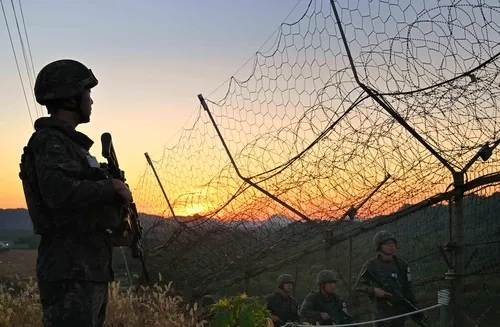
DMZ explosions probe: South Korea pledges swift, impartial investigation
Synopsis
Three South Korean soldiers were injured by suspected mine blasts in the DMZ on 22 September, and forensic analysis of recovered fragments is now under way to determine whether North Korea planted them illegally on the South's side. With a new Defence Minister openly naming the North as 'the enemy' and vowing no more eggshell diplomacy, Seoul's response to the investigation findings could mark a turning point in inter-Korean tensions.
Key Takeaways
Three South Korean soldiers were injured by suspected mine explosions in the DMZ on Monday, 22 September 2026 .
A South Korean presidential official confirmed a prompt and thorough investigation is under way, coordinated with the United Nations Command .
Forensic analysis of collected mine fragments aims to determine whether they are of South or North Korean origin .
New Defence Minister Kang Shin-chul urged North Korea to halt border fortification and stated the North Korean military is South Korea's enemy .
Investigators have yet to confirm whether the blast site matches the specific area where North Korea is suspected of illegal mine-laying across the border.
Clear footage of the explosion site has not yet been obtained, citing difficult terrain inside the buffer zone.
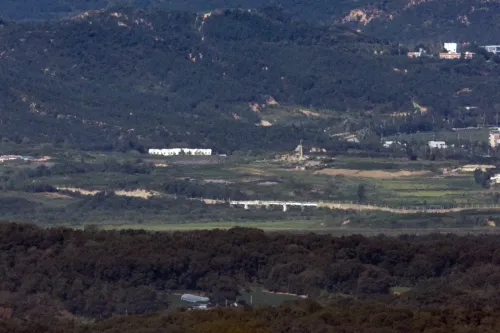
A senior South Korean presidential official on Thursday, 25 September vowed that a prompt and thorough investigation into the recent Demilitarised Zone (DMZ) explosions is already under way, following an incident on Monday in which three South Korean soldiers were injured by suspected mine blasts south of the Military Demarcation Line (MDL) on the western inter-Korean border.
Key Developments
The official made the remarks while accompanying South Korean President Lee Jae Myung on his ongoing state visit to Mexico City. Speaking to reporters, the official confirmed that forensic analysis of collected mine fragments is under way to determine whether they are of South Korean or North Korean origin.
'An objective, prompt and thorough investigation is under way,' the official told reporters. The probe is being coordinated with the United Nations Command (UNC), given that the explosion site lies on a new reconnaissance route — making it hazardous to access.
What the Investigation Must Determine
'A thorough fact-finding (probe) is needed to determine whether they were mines, and if they were mines, what kinds of mines they were, as well as whether they were buried by North Korea, and if not, what happened,' the official said. The official ruled out any cover-up, adding: 'Although dangerous, we will (investigate) promptly to announce the results.'
Critically, authorities have not yet confirmed whether the blast occurred at a specific site where North Korea is already suspected of illegally laying mines across the border. Difficult terrain within the buffer zone has also hampered visual confirmation, and clear footage of the explosion site has reportedly not yet been obtained.
New Defence Minister Takes a Firm Stance
On Tuesday, South Korea's newly inaugurated Defence Minister Kang Shin-chul issued a direct warning to Pyongyang, urging the North to halt its ongoing border-hardening measures along the inter-Korean boundary. His remarks came during a press availability following his inauguration ceremony.
'(North Korea) must cease its border fortification. Of course, we need to speak out,' Kang said. He also pushed back against suggestions that Seoul treads carefully around the North: 'You keep bringing up that we walk on eggshells when it comes to North Korea, but we do not.'
Kang acknowledged the explosion could be a consequence of North Korea's broader border-hardening campaign, including fencing and suspected mine-laying activities on the South Korean side of the DMZ. 'There are secondary effects that stem from North Korea's border-hardening, and this (explosion) could be one of them,' he said.
Investigation Challenges
Kang noted a key investigative uncertainty: whether the area where personnel entered, the specific patrol route, and the confirmed blast location all correspond. 'The problem is that we cannot confirm this at this point. That is precisely what the investigation must determine,' he told reporters. The injured soldiers' direct testimony is also reportedly difficult to obtain given their current condition, further complicating the probe.
What Comes Next
The investigation, being conducted in close coordination with the United Nations Command, is expected to conclude with a formal announcement once forensic analysis of the mine fragments is complete. The outcome could have significant implications for inter-Korean relations, especially amid growing speculation that North Korea may have planted mines illegally on the southern side of the border — a charge Pyongyang has not yet publicly addressed. Analysts will be watching whether Seoul formally attributes the blast to the North, which would likely trigger a sharper diplomatic or military response.
Point of View
Who has openly labelled the North's military as 'the enemy', signals a tonal shift from cautious ambiguity to explicit attribution — but rhetoric without a confirmed forensic finding risks either over-escalation or a credibility loss if the blast turns out to have another origin. The broader pattern — North Korea's systematic border hardening with fences, landmines, and surveillance barriers since 2020 — has created a slow-burn crisis that periodic incidents like this one will continue to detonate, literally and diplomatically, until the UNC and Seoul establish clearer joint protocols for rapid attribution.
NationPress
25 Sept 2026
Frequently Asked Questions
What happened in the South Korea DMZ explosion?
Three South Korean soldiers were injured by suspected mine explosions in the Demilitarised Zone (DMZ) on Monday, 22 September 2026, south of the Military Demarcation Line on the western inter-Korean border. Forensic analysis of recovered mine fragments is under way to determine their origin.
Is North Korea responsible for the DMZ mine blast?
Investigators have not yet confirmed responsibility. Forensic analysis is ongoing to determine whether the mine fragments are of South or North Korean origin. South Korean officials have said the blast 'could be' a secondary effect of North Korea's border-hardening campaign, but no formal attribution has been made.
Who is leading South Korea's investigation into the DMZ explosion?
The investigation is being conducted by South Korean military authorities in coordination with the United Nations Command (UNC). A senior presidential official confirmed it is being carried out carefully given the dangerous terrain at the new reconnaissance route where the blast occurred.
What did South Korea's new Defence Minister say about the explosion?
Defence Minister Kang Shin-chul, speaking after his inauguration on Tuesday, urged North Korea to stop its border fortification measures and stated that the North Korean military is South Korea's enemy. He said South Korea does not 'walk on eggshells' around Pyongyang and that he would issue a firm warning over North Korea's fencing and mine-laying activities.
What is North Korea's border-hardening campaign?
North Korea has been systematically reinforcing its side of the inter-Korean border since around 2020, installing fences, barriers, and reportedly laying landmines — some allegedly on the South Korean side of the DMZ. South Korea's new Defence Minister has said these activities are a direct threat and that their secondary effects may have caused the 22 September explosion.