South Korea to urge UNSC to hold North accountable for DMZ mine blast
Synopsis
South Korea is taking the DMZ mine blast that injured three of its soldiers to the UN Security Council, formally demanding a North Korean apology and warning that unilateral sanctions remain on the table. The move tests UNSC unity — and China's and Russia's willingness to hold Pyongyang accountable.
Key Takeaways
South Korea will send a letter to the UNSC president on 22 October 2026 over the 21 September DMZ mine blast.
The blast, caused by North Korean mines planted south of the MDL , injured three South Korean soldiers , two of them seriously.
The letter demands a formal apology and 'responsible action' from Pyongyang , and calls for dialogue to prevent further escalation.
North Korea has denied responsibility and warned of retaliation.
Seoul is coordinating with Greece , the current UNSC rotating president, for swift circulation to all council members.
Unilateral sanctions against North Korea have not been ruled out if Pyongyang does not respond.
South Korea plans to formally write to the President of the UN Security Council (UNSC) demanding that North Korea apologise for the 21 September land mine explosions in the Demilitarised Zone (DMZ) and accept responsibility for violating the Korean War Armistice Agreement, the country's foreign ministry announced on Thursday, 22 October 2026. The letter is expected to be dispatched the same day under New York time, through South Korea's Ambassador to the United Nations.
What the Letter Demands
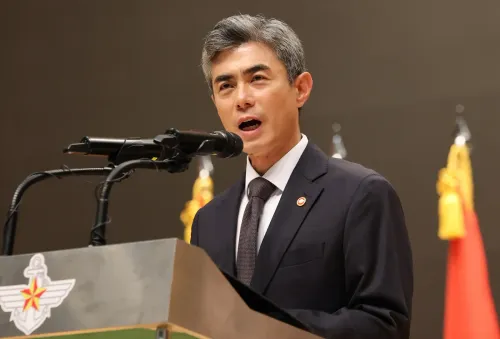
Foreign ministry spokesperson Park Doo-soon said the letter will set out Seoul's findings that the blasts were caused by land mines planted by North Korean troops south of the Military Demarcation Line (MDL) — a direct breach of the Armistice Agreement. The letter will formally demand an apology and 'responsible action' from Pyongyang, and call for dialogue to prevent further escalation and rebuild trust. It will also push back against North Korea's framing of South Korean military activities along the MDL as 'provocations,' which Seoul regards as an attempt to shift blame for rising inter-Korean tensions.
Background: The 21 September DMZ Blasts
The South Korean military concluded that the explosions on 21 September were caused by North Korean mines. The blasts injured three South Korean soldiers, two of them seriously. North Korea has denied any responsibility and warned of retaliation if Seoul takes corresponding action — a posture that Seoul's foreign ministry is now directly challenging at the international level.
Diplomatic Options on the Table
During a parliamentary audit earlier this month, Foreign Minister Cho Hyun outlined four possible courses of action at the UNSC: sending a letter to the council president, seeking a presidential statement reflecting the council's collective position, pursuing a formal UNSC resolution, or taking no action at the multilateral level. Seoul has opted for the first step, though senior ministry officials have not ruled out additional measures. 'Seoul will consider their effectiveness and practical benefits before deciding on further steps,' a senior ministry official told reporters, adding that unilateral sanctions remain a live option if Pyongyang does not respond.
Coordination with Greece
South Korea is coordinating with Greece, which holds the rotating presidency of the UNSC for the current cycle, to ensure the letter is circulated to council members as quickly as possible after it is received. Under standard UNSC procedure, such letters are typically distributed to all members within several days of being received by the council president and are subsequently published on the UNSC website. This timeline means the letter could reach all 15 Security Council members — including China and Russia, both traditional allies of Pyongyang — within the coming week.
What Comes Next
The diplomatic move marks a significant escalation in Seoul's multilateral response to the mine incident, and tests the limits of UNSC unity on North Korean accountability. Notably, any UNSC presidential statement or resolution would require consensus or a majority vote — thresholds that have historically been difficult to reach given Beijing's and Moscow's reluctance to censure Pyongyang. Whether the letter catalyses meaningful Council action, or remains a formal statement of protest, will depend in large part on how the P5 responds in the days ahead.
Point of View
As history suggests, China and Russia block any meaningful Council response. The mention of unilateral sanctions is the real signal here: it suggests Seoul is preparing a fallback track that bypasses multilateral deadlock entirely. Whether that threat is credible depends on what sanctions leverage Seoul actually holds over an economy as isolated as North Korea's.
NationPress
22 Oct 2026
Frequently Asked Questions
Why is South Korea writing to the UN Security Council about the DMZ mine blast?
South Korea is writing to the UNSC to formally place on record that North Korea violated the Korean War Armistice Agreement by planting mines south of the Military Demarcation Line on 21 September 2026, injuring three South Korean soldiers. The letter demands an apology and responsible action from Pyongyang, and calls for dialogue to prevent further escalation.
What happened in the DMZ mine blast on 21 September 2026?
Explosions in the Demilitarised Zone on 21 September were caused by land mines planted by North Korean troops south of the Military Demarcation Line, according to South Korea's military. The blasts injured three South Korean soldiers, two of them seriously. North Korea has denied responsibility.
What is North Korea's position on the incident?
North Korea has denied planting the mines and has warned of retaliation if South Korea takes corresponding action. Pyongyang has also characterised South Korean troops' activities along the MDL as 'provocations,' a framing Seoul is directly contesting in its UNSC letter.
What further steps could South Korea take beyond the UNSC letter?
South Korea has not ruled out unilateral sanctions against North Korea if Pyongyang does not respond to the letter. Foreign Minister Cho Hyun earlier outlined three additional UNSC options: a presidential statement, a formal resolution, or no further multilateral action. Officials said effectiveness and practical impact will guide any next step.
Who currently holds the UNSC rotating presidency, and why does it matter?
Greece holds the rotating UNSC presidency for the current cycle. South Korea is coordinating with Athens to ensure the letter is circulated to all 15 Security Council members as quickly as possible after it is received, which under standard procedure typically takes several days.