CM Fadnavis at India Chem 2026: New Chemical Policy in Works
Synopsis
Maharashtra CM Devendra Fadnavis joined Union Minister J.P. Nadda at India Chem 2026 in Mumbai to announce a new Chemical Industry Policy focused on API manufacturing, import substitution, batteries, electronics, and coal gasification, backed by MAITRI and Invest Maharashtra platforms.
Key Takeaways
Maharashtra is developing a new Chemical Industry Policy aimed at attracting investment, strengthening the industry, and creating jobs.
The policy targets domestic manufacturing of critical raw materials and APIs , import substitution, and growth in batteries, electronics, and coal gasification.
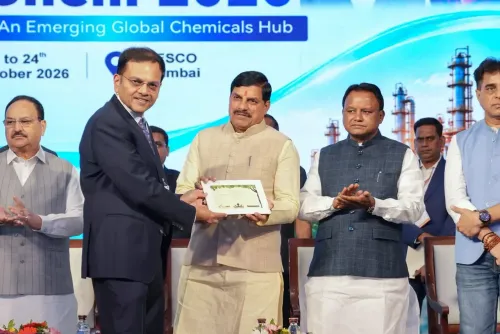
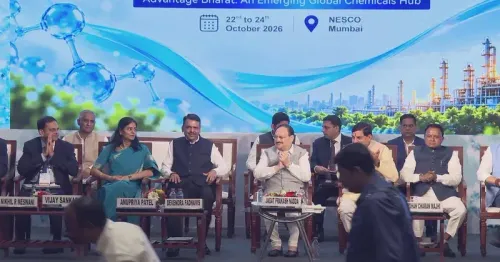
India Chem 2026 was inaugurated in Mumbai on October 22, 2026 with Union Minister J.P.
Nadda , CMs of Madhya Pradesh and Odisha, and senior industry leaders present.
MAITRI (single-window facilitation) and Invest Maharashtra are the state's existing tools to ease investment approvals and reduce bureaucratic friction.
Maharashtra is leveraging its port infrastructure and manufacturing clusters to position itself competitively in global chemical supply chains.
The gathering underscored intensifying competitive federalism among states — including MP and Odisha — to capture chemical-sector investment post the China-plus-one supply chain shift.
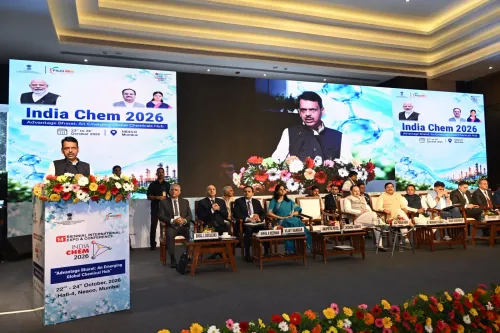
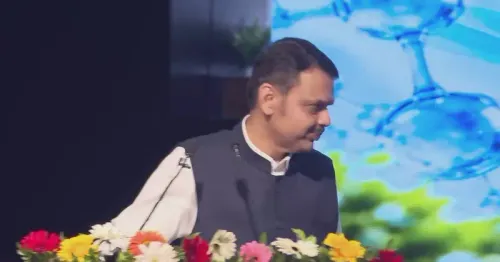
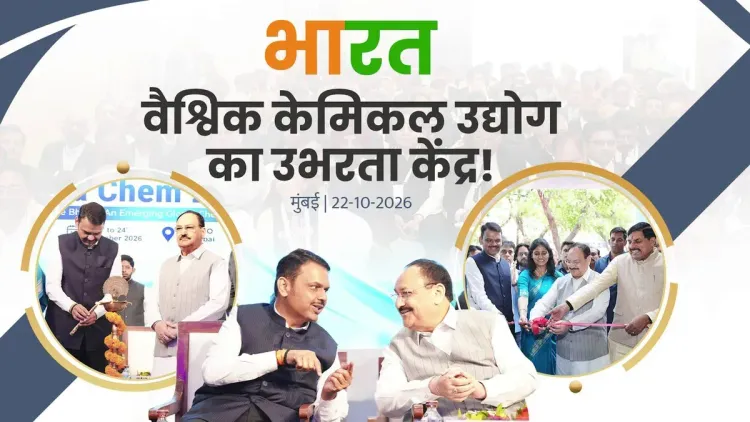
A new chapter in Maharashtra's industrial ambitions opened in Mumbai on Thursday, October 22, 2026, as Maharashtra Chief Minister Devendra Fadnavis joined Union Minister J.P. Nadda at the inaugural ceremony of India Chem 2026 — one of the country's flagship platforms for the chemical industry — to unveil the state's sharply focused pitch for investment, import substitution, and supply-chain resilience.
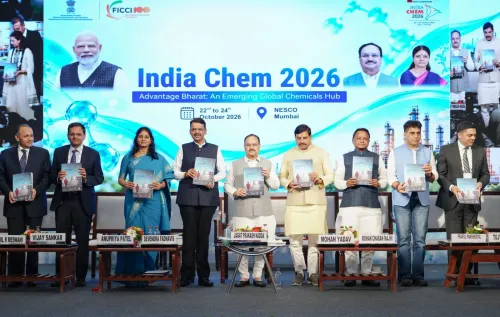
The stage was crowded with policy weight. Madhya Pradesh Chief Minister Dr. Mohan Yadav, Odisha Chief Minister Mohan Charan Majhi, Union Minister of State Anupriya Patel, Gujarat MoS Praful Pansheriya, FICCI National Petrochemicals Committee Chairman and HMEL MD & CEO Prabh Das, and UPL Chairman and Group CEO Jai Shroff were among the dignitaries present — signalling that this was not a ceremonial gathering but a competitive one, with multiple states quietly bidding for the same pool of industrial capital.
Maharashtra's New Chemical Industry Policy Takes Shape
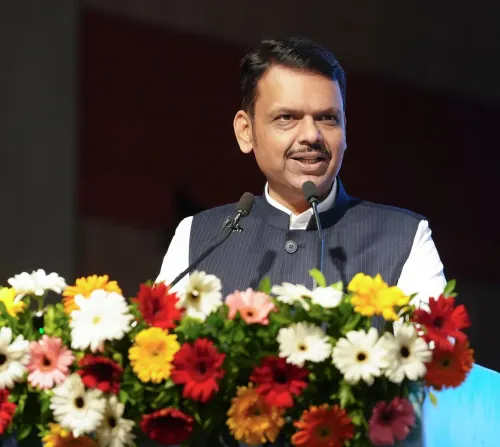
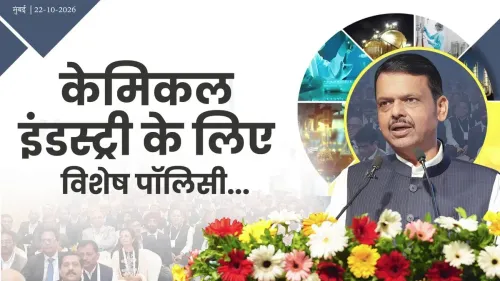
The headline announcement was unambiguous: Maharashtra is developing a new Chemical Industry Policy designed to attract investment, deepen the industrial base, and generate jobs. Fadnavis outlined a four-pillar strategy — domestic manufacturing of critical raw materials and Active Pharmaceutical Ingredients (APIs), import substitution, and expansion into batteries, electronics, and coal gasification. The framing is deliberate: these are precisely the segments where India's dependence on imports has been identified as a strategic vulnerability, and where central government Production Linked Incentive (PLI) schemes — rolled out from 2020 onward — have already begun tilting the economics toward domestic production.
Maharashtra's geography makes the pitch credible. The state's established manufacturing clusters and port infrastructure — anchored by one of Asia's busiest container port ecosystems — offer logistics advantages that inland competitors simply cannot replicate. For chemical companies weighing where to set up or expand, proximity to a port is not a footnote; it is often the deciding variable.
MAITRI, Invest Maharashtra and the Ease-of-Doing-Business Push
Beyond the headline policy, Fadnavis pointed to existing architecture already in place. MAITRI — Maharashtra's single-window facilitation cell for industrial approvals — and the Invest Maharashtra initiative have been the state's principal tools for reducing bureaucratic friction. The emphasis on both in the same breath as the new chemical policy signals that Maharashtra intends to compete not just on land and incentives, but on the speed and predictability of government response — a factor that large chemical manufacturers, who often face multi-year capex cycles, weigh heavily.
The Competitive Federalism Play
The presence of chief ministers from Madhya Pradesh and Odisha at the same event was not coincidental — it crystallised the competitive federalism dynamic that has defined Indian industrial policy since 2014. States are no longer passive recipients of central allocation; they are active bidders in a global supply-chain reshuffling accelerated by the post-pandemic 'China-plus-one' sourcing shift. Fadnavis explicitly invoked Prime Minister Narendra Modi's competitive federalism framework, positioning Maharashtra's moves as aligned with — and amplified by — the national Atmanirbhar Bharat agenda.
For investors tracking India's chemical sector, the next signpost is clear: the detailed provisions and incentive architecture of Maharashtra's new Chemical Industry Policy will determine whether the state's ambitions translate into signed MoUs or remain in the presentation layer. India Chem 2026 may have been the platform — but what gets announced in the weeks that follow will be the real measure.
Point of View
Batteries, and coal gasification maps directly onto the PLI-era investment appetite the Centre has been cultivating since 2020. The simultaneous presence of Madhya Pradesh and Odisha CMs at the same event, however, is a reminder that Maharashtra's geographic and infrastructural advantages are no longer enough on their own — policy clarity and execution speed will be the tiebreaker. Whether the new Chemical Industry Policy delivers differentiated incentives, or mirrors what rival states are already offering, will determine its real impact on investment flows.
NationPress
22 Oct 2026
Frequently Asked Questions
What is India Chem 2026?
India Chem 2026 is a flagship national conference and exhibition for India's chemical industry, organised with industry body FICCI, bringing together government officials, chemical manufacturers, and investors to discuss policy, investment, and supply-chain strategy.
What did CM Devendra Fadnavis announce at India Chem 2026?
CM Fadnavis announced that Maharashtra is developing a new Chemical Industry Policy to attract investment, create jobs, and focus on domestic manufacturing of APIs, import substitution, and sectors like batteries, electronics, and coal gasification.
What is MAITRI in Maharashtra?
MAITRI is Maharashtra's single-window facilitation cell that streamlines industrial investment approvals and business clearances, helping companies navigate government processes faster.
Who attended the India Chem 2026 inauguration in Mumbai?
Union Minister J.P. Nadda, Maharashtra CM Devendra Fadnavis, Madhya Pradesh CM Dr. Mohan Yadav, Odisha CM Mohan Charan Majhi, Union MoS Anupriya Patel, Gujarat MoS Praful Pansheriya, HMEL MD Prabh Das, and UPL Group CEO Jai Shroff were among those present.
Why is Maharashtra promoting its chemical industry?
Maharashtra is positioning its port infrastructure, manufacturing clusters, and policy initiatives to attract chemical-sector investment, capitalise on the global 'China-plus-one' supply-chain shift, and align with the central government's Atmanirbhar Bharat and PLI scheme goals.