Kim Yo-jong rejects DMZ blast blame, mocks Seoul's peace overture

Synopsis
Kim Yo-jong's second denial this week over the DMZ mine blast — paired with a declaration that North Korea intends to 'cut off the relationship forever' with the South — is more than a diplomatic rebuttal. It comes as South Korean investigators confirm the mine was deliberately buried, not flood-displaced, raising the stakes of an already fraught standoff on the Korean Peninsula.
Key Takeaways
Kim Yo-jong again rejected North Korea's responsibility for the DMZ mine blast on Friday, 3 October 2025 , in a statement carried by KCNA .
The September 21 explosion injured three South Korean soldiers , two with severe wounds, south of the Military Demarcation Line (MDL) .
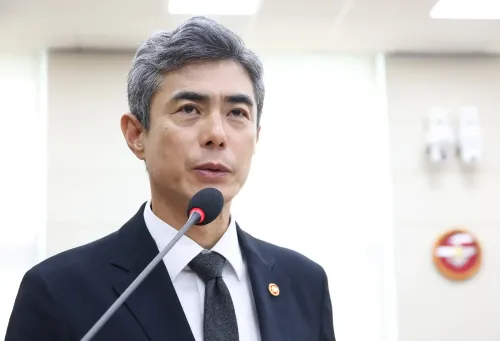
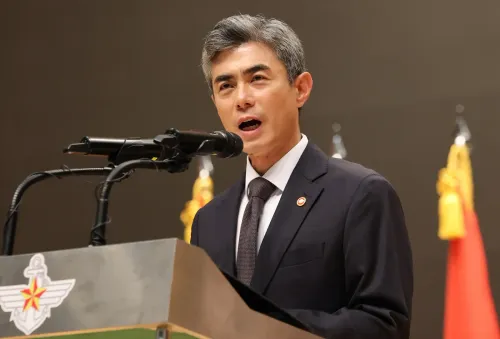
South Korean Defence Minister Kang Shin-chul confirmed the recovered North Korean resin antipersonnel mine was buried, not flood-displaced.
Kim declared North Korea's goal is to 'cut off the relationship forever' with the South, framing border fortification as a permanent closure.
President Lee Jae Myung vowed at the 78th Armed Forces Day to keep pursuing practical de-escalation measures, a position Kim Yo-jong openly derided.
Kim Yo-jong, the influential sister of North Korean leader Kim Jong-un, on Friday, 3 October 2025 again flatly rejected South Korean military findings that blamed Pyongyang for a recent mine explosion inside the Demilitarised Zone (DMZ), while openly mocking Seoul's calls to reduce inter-Korean military tensions. The statement, carried by the Korean Central News Agency (KCNA), marks her second public denial this week and signals Pyongyang's increasingly confrontational posture toward the South.
Kim's Statement and What She Said
In the KCNA-carried statement, Kim Yo-jong repeated her categorical rejection of the South Korean military's conclusion that the North was responsible for the September 21 blast south of the Military Demarcation Line (MDL) — an explosion that left three South Korean soldiers injured, two of them with severe wounds.
She described North Korea's border fortification drive in pointed terms: 'Explaining in a simple and clear way, this is aimed at shutting down the door forever so that we will have nothing to do with the ROK and even wild animals cannot come and go,' she said. ROK stands for the Republic of Korea, South Korea's official name.
She further stated that North Korea intends to 'cut off the relationship forever' with the South — language that goes well beyond a denial and amounts to a broader declaration of intent to sever ties entirely.
Seoul's Call for Apology and Tension Reduction
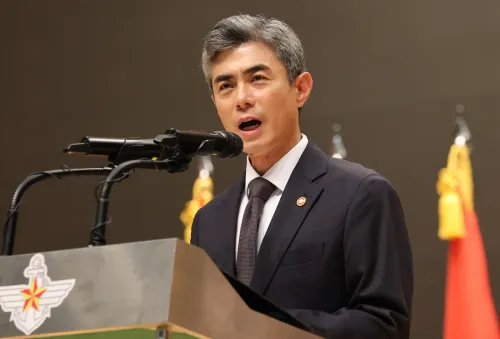
South Korea's military had urged Pyongyang to apologise for the blast and halt fortification work along the border, according to reports. South Korean President Lee Jae Myung, speaking Thursday at a ceremony marking the 78th Armed Forces Day, vowed to continue pursuing de-escalation despite the impasse.
'My administration will consistently pursue practical measures to reduce military tensions between the two Koreas,' President Lee said. 'For the sake of peace on the Korean Peninsula, the two Koreas must find a way to win together and build trust,' he added.
Kim Yo-jong dismissed Lee's remarks with open contempt, calling them 'the climax of the farce that everyone should watch.' She added: 'Those who wrote the playbook for the farce, directed it and played the actors deserve the precious "citation."'
What South Korea's Defence Ministry Found
South Korean Defence Minister Kang Shin-chul said on Tuesday that a North Korean resin antipersonnel mine recovered near the blast site was not a mine that had been washed away by floodwaters, but one that had been deliberately buried. When asked directly by opposition lawmaker Rep. Yu Yong-weon whether the mine was buried or flood-displaced, Kang's single-word reply was unambiguous: '(It was) buried.'
The finding directly undercuts Pyongyang's earlier suggestion — widely circulated after heavy summer rains — that border mines may have drifted south through flooding. South Korean investigators' conclusion that the mine was intentionally planted has sharpened the diplomatic standoff considerably.
Broader Context and What Comes Next
This is the latest in a pattern of DMZ-related friction that has intensified since North Korea formally declared the South a 'hostile foreign state' in its revised constitution. Pyongyang has also accelerated physical barrier construction along the border, which Seoul views as a provocation. Kim Yo-jong's repeated public statements — increasingly acerbic in tone — suggest she continues to play a central role in shaping the North's communication strategy toward the South.
With Pyongyang refusing to engage and Seoul insisting on a diplomatic path, the immediate outlook on the peninsula remains tense. Analysts will be watching whether the Lee administration follows its stated commitment to 'practical measures' with concrete diplomatic outreach, or whether the rhetoric on both sides continues to harden.
Point of View
Not a temporary diplomatic chill. What mainstream coverage tends to underplay is the forensic detail: South Korea's finding that the mine was deliberately buried, not washed away, removes Pyongyang's most plausible deniability argument. The Lee administration's stated commitment to de-escalation is being stress-tested in real time, and its credibility depends on whether it can sustain that posture without appearing to reward provocation. The deeper pattern — North Korea constitutionally redesignating the South as a hostile state, accelerating border barriers, and now planting mines — points to a deliberate strategic choice, not a misunderstanding to be resolved through dialogue alone.
NationPress
2 Oct 2026
Frequently Asked Questions
What was the DMZ mine blast that Kim Yo-jong is responding to?
A mine explosion occurred on September 21 inside the Demilitarised Zone, south of the Military Demarcation Line separating the two Koreas, injuring three South Korean soldiers — two of them severely. South Korean investigators concluded that a North Korean resin antipersonnel mine found at the site had been deliberately buried there.
Why does Kim Yo-jong keep denying North Korea's involvement?
Kim Yo-jong has issued repeated denials through the state-run Korean Central News Agency (KCNA), rejecting South Korean military findings as false. Analysts note her statements serve a dual purpose: countering Seoul's narrative while signalling Pyongyang's refusal to engage diplomatically on the incident.
What did South Korea's defence minister say about the mine?
Defence Minister Kang Shin-chul stated on Tuesday that the North Korean mine recovered near the blast site was buried in the ground, directly rebutting suggestions that it may have been a flood-displaced mine. His remarks came in response to a direct question from opposition lawmaker Rep. Yu Yong-weon.
What is South Korean President Lee Jae Myung's position on inter-Korean tensions?
President Lee Jae Myung, speaking at the 78th Armed Forces Day ceremony on Thursday, pledged that his administration would 'consistently pursue practical measures to reduce military tensions between the two Koreas.' He called on both sides to 'find a way to win together and build trust,' remarks Kim Yo-jong subsequently dismissed as a 'farce.'
What does North Korea's 'cut off forever' language signal for inter-Korean relations?
Kim Yo-jong's declaration that North Korea intends to 'cut off the relationship forever' with the South reflects Pyongyang's constitutional redesignation of South Korea as a hostile state. Combined with accelerated physical barrier construction and the DMZ mine incident, analysts see this as a deliberate strategic posture rather than a temporary escalation.