Amit Shah pays tribute to media legend Ramoji Rao
Synopsis
Union Home Minister Amit Shah posted a bilingual English-Telugu tribute to Ramoji Rao, founder of Eenadu and Ramoji Film City, calling him an institution who inspired the nation. Rao, awarded the Padma Vibhushan in 2016, passed away in 2024.
Key Takeaways
Amit Shah posted a bilingual tribute to Ramoji Rao on November 16, 2026 , describing him as an institution who inspired the nation.
Cherukuri Ramoji Rao (1936–2024) founded Telugu daily Eenadu in 1974 , making it one of the most-read newspapers in Andhra Pradesh and Telangana.
Ramoji Film City in Hyderabad, built by Rao, holds the Guinness World Record as the world's largest film studio complex at over 2,000 acres .
Rao was awarded the Padma Vibhushan — India's second-highest civilian honour — in 2016 .
Shah's post was written in both English and Telugu , signalling a message aimed at both national and regional Telugu audiences.
Some legacies outlast the men and women who built them — and Union Home Minister Amit Shah invoked exactly that idea on Monday, November 16, 2026, posting a heartfelt tribute to Ramoji Rao, the towering figure who shaped Telugu journalism and global film infrastructure from a single desk in Hyderabad.
Shah wrote in English and Telugu: 'శ్రీ రామోజీరావు వంటి మహనీయులు తమ జీవితకాలంలోనే వ్యవస్థగా ఎదిగి, ఎల్లప్పుడూ దేశానికి స్ఫూర్తినిస్తారు!' — 'People like Ramoji Rao become institutions in their lifetimes and always inspire the nation.' The phrasing is precise: not a hero, not a pioneer, but an institution. That word carries weight.
From a Telugu daily to the world's largest film studio
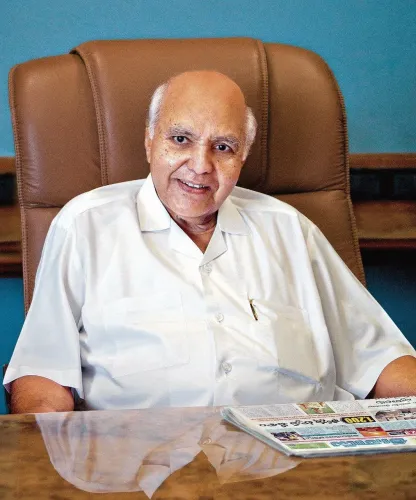
Cherukuri Ramoji Rao, born in 1936, launched the Telugu newspaper Eenadu in 1974. What began as a regional daily grew into the most-read Telugu newspaper in both Andhra Pradesh and Telangana, reshaping how millions of Telugu speakers consumed news. Rao did not stop at print. He built Ramoji Film City in Hyderabad — a studio complex that holds the Guinness World Record as the largest film studio in the world, spreading across more than 2,000 acres and hosting productions from across India and abroad.
In 2016, the Government of India recognised his contribution with the Padma Vibhushan, the country's second-highest civilian honour. Rao passed away in 2024, but the infrastructure he built — newsrooms, studios, training grounds for journalists and filmmakers — continues to function as a living institution, precisely as Shah's tribute implies.
A pattern of pan-India recognition for regional builders
Senior political leaders across the spectrum have long used platforms like X to acknowledge regional media and cultural figures, particularly around birth or death anniversaries. Such tributes serve a dual purpose: honouring a genuine legacy and affirming the importance of regional-language media at a time when Telugu-speaking states remain politically consequential. Shah's choice to post both in English and Telugu signals that the tribute is addressed simultaneously to a national audience and to Telugu readers directly.
Ramoji Rao's story — building a vernacular newspaper empire and then a globally significant creative infrastructure from scratch — resonates as a model of entrepreneurship rooted in regional identity. That is the 'inspiration' Shah points to: not just the man, but the standard he set.
Point of View
Reinforcing the party's presence in Telugu-speaking states. Describing Rao as an 'institution' — rather than merely a businessman or editor — elevates his legacy above party lines and makes the tribute difficult to contest. The bilingual post also reflects how national leaders increasingly code-switch on social media to speak directly to regional constituencies. For a figure who built both a media empire and a creative landmark, the tribute underlines the government's framing of private enterprise in regional languages as a form of nation-building.
NationPress
17 Nov 2026
Frequently Asked Questions
Why did Amit Shah post a tribute to Ramoji Rao?
Amit Shah posted a bilingual tribute on November 16, 2026 , calling Ramoji Rao an institution who always inspired the nation. The exact occasion was not specified in the post, but Indian political leaders commonly mark birth or death anniversaries of prominent figures with such tributes.
What is Ramoji Film City and why is it famous?
Ramoji Film City , located in Hyderabad , holds the Guinness World Record as the world's largest film studio complex, spanning over 2,000 acres. It was built by Ramoji Rao and hosts film and television productions from across India and internationally.
What is the Padma Vibhushan that Ramoji Rao received?
The Padma Vibhushan is India's second-highest civilian honour, awarded by the Government of India. Ramoji Rao received it in 2016 in recognition of his contributions to journalism and media.
What is Eenadu newspaper?
Eenadu is a leading Telugu-language daily newspaper founded by Ramoji Rao in 1974 . It grew into one of the most widely read newspapers in Andhra Pradesh and Telangana .