South Korea's Lee vows to ease military tensions with North Korea after DMZ mine blast
Synopsis
South Korean President Lee Jae Myung struck an unusually conciliatory tone on Armed Forces Day — inviting North Korea to 'restore trust and resume dialogue' — just days after Pyongyang's mines wounded three South Korean soldiers in the DMZ. Kim Yo-jong's flat denial and counter-accusation of fabrication signals how steep the road back to dialogue truly is.
Key Takeaways
President Lee Jae Myung pledged on 1 October 2026 to pursue practical steps to reduce military tensions with North Korea .
Last week's explosion of North Korean mines in the DMZ wounded three South Korean soldiers and prompted Seoul's military to label it a 'blatant violation' of the armistice.
Kim Yo-jong , sister of Kim Jong-un , denied North Korean responsibility and accused Seoul of fabricating evidence.
Lee announced plans to acquire indigenous nuclear-powered submarines by the mid-2030s and finalise the transfer of wartime OPCON from the United States .
To address falling military recruitment numbers, Seoul plans wider use of AI and manned-unmanned teaming systems.
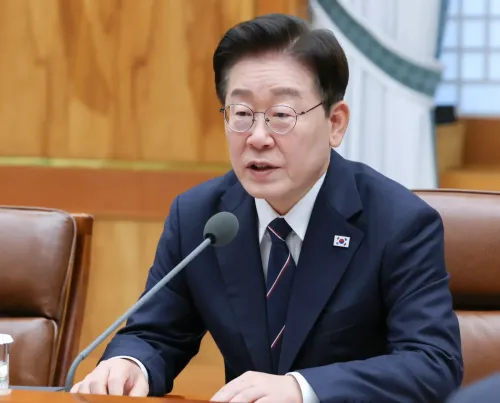
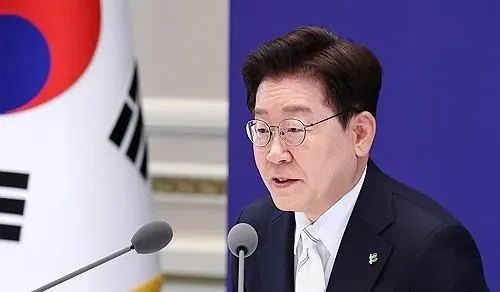
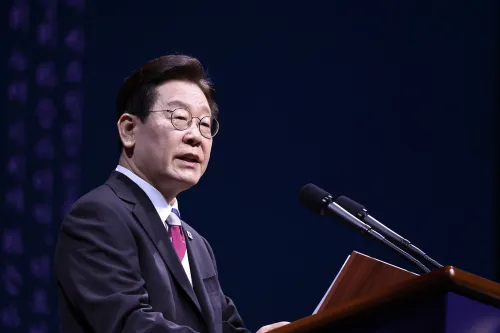
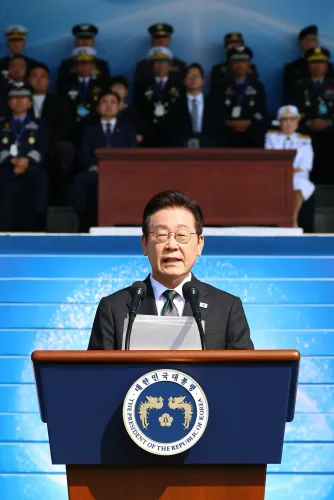
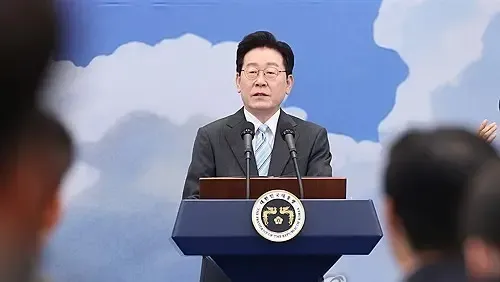
South Korean President Lee Jae Myung on Thursday, 1 October 2026, pledged to persistently pursue practical steps to reduce military tensions with North Korea, even as the two Koreas remain sharply at odds following the explosion of North Korean mines in the Demilitarised Zone (DMZ) that wounded three South Korean soldiers last week. The remarks were delivered at a ceremony marking the 78th Armed Forces Day at the military headquarters in Gyeryongdae, South Chungcheong Province.
Key Developments at Armed Forces Day
'My administration will consistently pursue practical measures to reduce military tensions between the two Koreas,' Lee said at the ceremony. He acknowledged that 'the knots in inter-Korean relations are extremely complex,' but vowed to 'steadily, patiently strive to untie them, one by one.' He also extended a direct invitation to Pyongyang to join Seoul 'on the path of restoring trust and resuming dialogue.'
Lee expressed that peace and prosperity must be forged with 'our own hands,' arguing that 'the surest form of security is one that renders conflict unnecessary — in other words, one that creates peace.' He added that building trust 'begins to take root, little by little, when words are matched by actions.'
The DMZ Mine Blast and Diplomatic Fallout
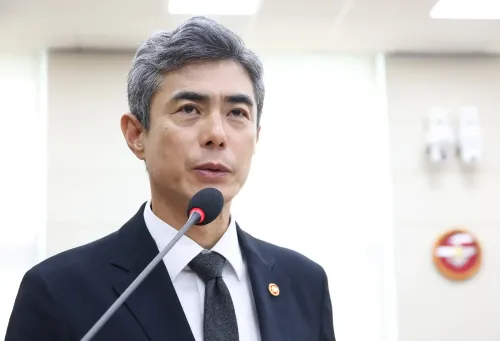
Lee's conciliatory message came one day after the South Korean military formally declared that the DMZ explosions — triggered by mines reportedly planted by North Korea — constituted a 'blatant violation' of the armistice agreement that ended the 1950–53 Korean War, and demanded an apology and responsible measures from Pyongyang. South Korean Defence Minister Kang Shin-chul had earlier warned that Seoul would take 'corresponding measures' if North Korea's involvement was confirmed.
Pyongyang, however, has rejected any responsibility. Kim Yo-jong, the influential sister of North Korean leader Kim Jong-un, denied her country's involvement and accused Seoul of fabricating the findings — a sharp rebuttal that underscores the fragility of inter-Korean relations at this juncture. Lee said his heart 'remains heavy' for the three soldiers wounded in what he called an 'unfortunate accident,' and wished them 'a swift recovery.'
Defence Sovereignty and Military Modernisation
Beyond the North Korea question, President Lee used the Armed Forces Day address to reaffirm a broader defence agenda. He declared that 'self-reliance in national defence is sovereignty itself,' announcing that South Korea will acquire indigenous nuclear-powered submarines by the mid-2030s. He also signalled that Seoul is actively finalising the transfer of wartime operational control (OPCON) of South Korean troops currently held by the United States.
At a subsequent luncheon with government officials, lawmakers, military personnel and veterans, Lee reiterated the OPCON priority with striking directness: 'There is no other country in the world that relies on other people or countries for the military command of its troops.' He added that recovering wartime OPCON is essential to South Korea's status as 'a genuinely sovereign and independent country.'
AI and the Future of South Korea's Armed Forces
Addressing the structural challenge of a shrinking military recruitment pool — a consequence of South Korea's demographic decline — Lee pledged to expand the deployment of artificial intelligence (AI) and manned-unmanned teaming systems across the armed forces. He also announced plans to establish an integrated military academy bringing together the Army, the Navy, and the Air Force under a single institutional framework.
The combination of diplomatic outreach toward North Korea, assertive defence modernisation, and a push for wartime OPCON recovery signals a presidency seeking strategic autonomy on multiple fronts simultaneously — a balance that will be closely watched by allies and adversaries alike.
Point of View
And while Kim Yo-jong is publicly calling your evidence fabricated, is not diplomacy; it is managed ambiguity. The OPCON push is the more consequential signal: it tells Washington that Seoul is recalibrating the terms of the alliance, and it tells Pyongyang that South Korea is preparing to act without waiting for US authorisation. How Beijing reads that shift may matter more than how Pyongyang does.
NationPress
1 Oct 2026
Frequently Asked Questions
What did South Korean President Lee Jae Myung say about North Korea on Armed Forces Day?
President Lee pledged to consistently pursue practical measures to reduce military tensions with North Korea and invited Pyongyang to join Seoul on 'the path of restoring trust and resuming dialogue.' He acknowledged that inter-Korean relations are 'extremely complex' but said his administration would patiently work to resolve them.
What happened with North Korean mines in the DMZ?
Explosions caused by mines reportedly planted by North Korea detonated in the Demilitarised Zone (DMZ) last week, wounding three South Korean soldiers. The South Korean military declared the blast a 'blatant violation' of the armistice agreement that ended the 1950–53 Korean War and demanded an apology from Pyongyang.
How did North Korea respond to the mine blast allegations?
Kim Yo-jong, the sister of North Korean leader Kim Jong-un, denied any North Korean responsibility for the DMZ blast and accused the South Korean government of fabricating its findings. Pyongyang has not issued a formal apology.
What is wartime OPCON and why is South Korea seeking its transfer?
Wartime operational control (OPCON) refers to the command authority over South Korean troops during a military conflict, which is currently held by the United States under the terms of the bilateral alliance. President Lee has called for the swift finalisation of its transfer to Seoul, arguing that retaining it under a foreign power undermines South Korea's sovereignty as an independent nation.
What are South Korea's key military modernisation plans announced by President Lee?
President Lee announced that South Korea will acquire indigenous nuclear-powered submarines by the mid-2030s and will expand the use of artificial intelligence and manned-unmanned teaming systems to compensate for a shrinking military recruitment pool. He also announced plans to establish a unified military academy integrating the Army, Navy, and Air Force.