CM Nayab Saini Lays Foundation of Krishna Kripa Dham in Panchkula
Synopsis
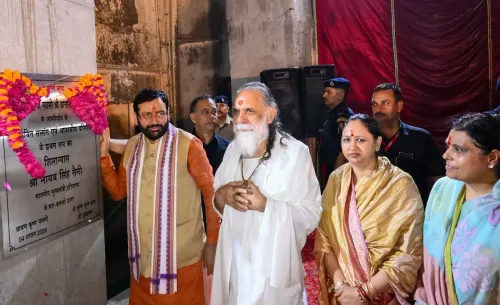
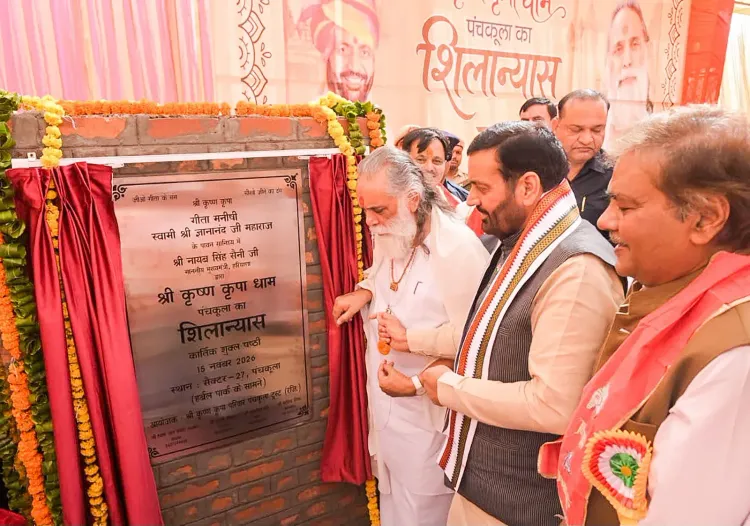
Haryana Chief Minister Nayab Singh Saini laid the foundation stone of Shri Krishna Kripa Dham in Panchkula on November 15, 2026, alongside Mahamandaleshwar Swami Gyananand Ji Maharaj. The centre is envisioned as a hub for Gita study, yoga, satsang, and service.
Key Takeaways
Shri Krishna Kripa Dham foundation stone was laid in Panchkula on November 15, 2026 .
CM Nayab Singh Saini performed the ceremony alongside Swami Shri Gyananand Ji Maharaj , a Mahamandaleshwar known for Gita discourses.
The dham is planned as a centre for satsang, seva, simran, yoga, and Gita-based knowledge.
The Shri Krishna Kripa Parivar Panchkula Trust is the organisation developing the project.
Saini described the dham as a vehicle to connect future generations to Indian cultural ideals rooted in the Bhagavad Gita.
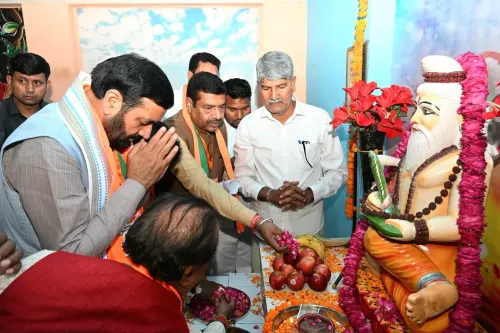
A new spiritual landmark took root in Panchkula, Haryana, on Sunday, November 15, 2026, as Haryana Chief Minister Nayab Singh Saini performed the foundation-stone laying ceremony of Shri Krishna Kripa Dham — a dedicated centre for Gita study, yoga, and service — in the presence of revered Mahamandaleshwar Swami Shri Gyananand Ji Maharaj.
Posting on X, CM Saini offered congratulations to the Shri Krishna Kripa Parivar Panchkula Trust, the organisation spearheading the project. 'भगवान श्री कृष्ण ने गीता के माध्यम से हमें कर्म, कर्तव्य और लोक कल्याण का मार्ग दिखाया है' — 'Lord Shri Krishna, through the Gita, has shown us the path of action, duty, and public welfare,' he wrote, framing the new dham as a living expression of those values.
What Shri Krishna Kripa Dham Is Meant to Become
Saini described the complex as a future hub of satsang (spiritual discourse), seva (service), simran (devotional remembrance), yoga, and gyan (knowledge). The vision is explicitly intergenerational: the CM said he firmly believes the dham will carry the Gita's ideas to every person and 'connect future generations to the ideals of Indian culture.'
Swami Shri Gyananand Ji Maharaj, under whose spiritual oversight the ceremony was held, is a Mahamandaleshwar widely recognised for his discourses on the Bhagavad Gita. His presence lent the foundation ceremony both religious authority and public visibility.
Haryana BJP's Pattern of Cultural Institution-Building
Panchkula — the planned city adjoining Chandigarh and serving as the district headquarters — has grown steadily as a religious and civic hub in the state's northern corridor. The BJP government in Haryana has regularly participated in foundation ceremonies for temples and ashrams that emphasise Gita teachings, a pattern that dovetails with the party's broader cultural outreach across the state.
Saini, who took charge as Chief Minister in March 2024 after Manohar Lal Khattar, has continued that tradition, attending such events as both a political and ceremonial act. The question now is what shape of state support, if any, will follow the symbolic brick-laying — and how swiftly the trust moves from foundation stone to finished structure.
Point of View
Which the party has long positioned as a unifying national text. For CM Saini, still consolidating his leadership identity since taking over in March 2024, such events serve a dual purpose: they reinforce his credentials with Haryana's devout constituency while projecting a governance philosophy linked to dharmic values. Whether the state's engagement remains ceremonial or translates into material support for the trust's construction and programming will be the more revealing indicator of political intent.
NationPress
15 Nov 2026
Frequently Asked Questions
What is Shri Krishna Kripa Dham in Panchkula?
Shri Krishna Kripa Dham is a proposed spiritual centre in Panchkula, Haryana, being developed by the Shri Krishna Kripa Parivar Panchkula Trust. It is planned as a hub for Gita study, yoga, satsang, seva, and devotional activities.
Who laid the foundation stone of Krishna Kripa Dham?
Haryana Chief Minister Nayab Singh Saini laid the foundation stone on November 15, 2026, in the presence of Mahamandaleshwar Swami Shri Gyananand Ji Maharaj.
Who is Swami Gyananand Ji Maharaj?
Swami Shri Gyananand Ji Maharaj is a Mahamandaleshwar widely recognised for his discourses on the Bhagavad Gita and spiritual initiatives across India.
Where is Panchkula located?
Panchkula is a planned city in Haryana adjacent to Chandigarh, serving as the district headquarters of Panchkula district.
What will Krishna Kripa Dham focus on?
According to CM Saini, the dham will serve as a centre for satsang, seva, simran, yoga, and the spread of Gita-based knowledge, with a focus on connecting younger generations to Indian cultural heritage.