CM Bhupendra Patel marks Janjatiya Gaurav Diwas with tribal welfare push
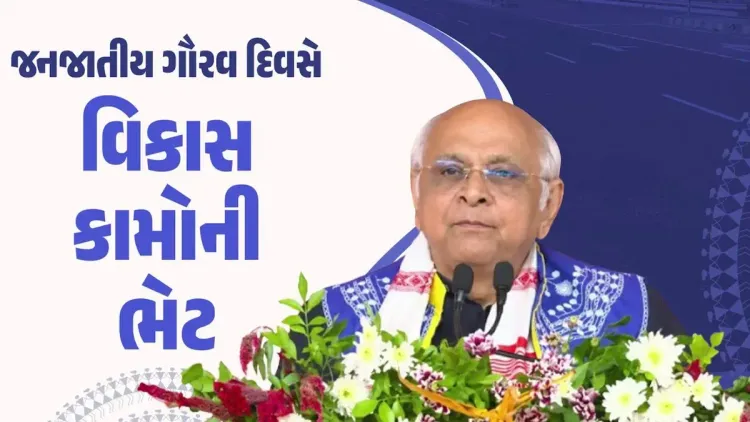
Synopsis
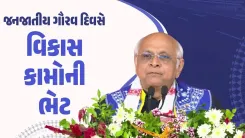
Gujarat CM Bhupendra Patel marked Janjatiya Gaurav Diwas on November 15 by framing the national tribal observance as a 'festival of development,' underscoring the BJP's twin-track approach of cultural pride and welfare delivery for Adivasi communities across the state.
Key Takeaways
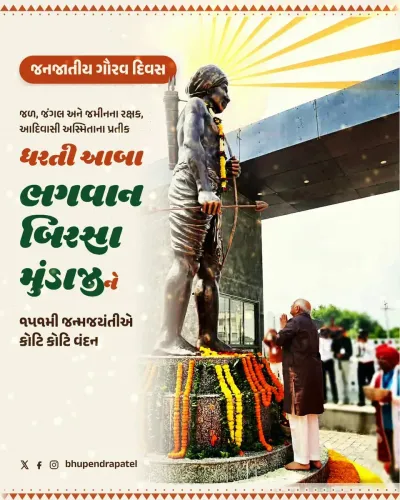
November 15 is Janjatiya Gaurav Diwas , instituted nationally in 2021 to mark the birth anniversary of tribal leader Birsa Munda .
Gujarat CM Bhupendra Patel described the day as both a pride observance and a 'festival of development' for tribal communities.
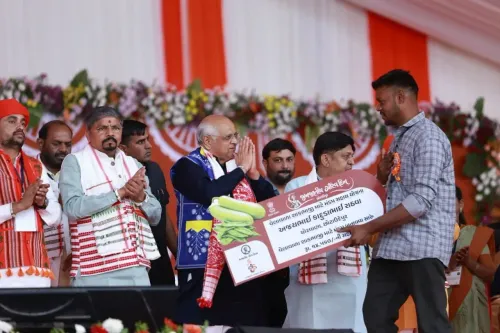
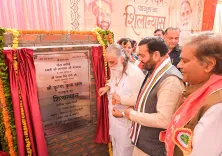
Patel stated the state has taken 'one more concrete step' toward the social, economic, and educational advancement of Adivasi communities through various schemes and development works.
Gujarat's Adivasi population is concentrated in the eastern and central districts , including the Dang, Narmada, Dahod, and Chhota Udaipur belt.
BJP governments at the Centre and state level consistently use the annual observance as a platform to highlight tribal welfare delivery.
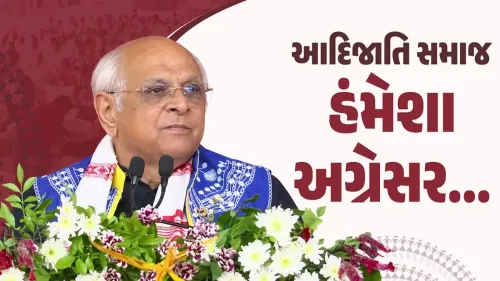
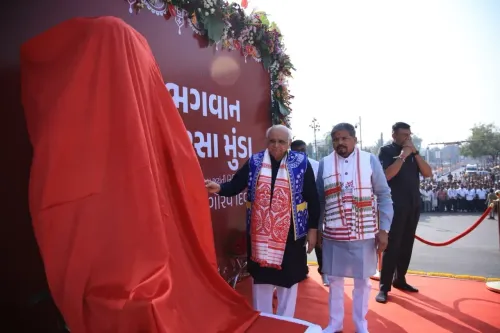
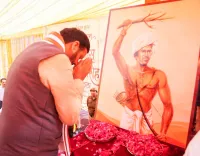
On the birth anniversary of tribal freedom fighter Birsa Munda, Gujarat Chief Minister Bhupendra Patel declared November 15 not just a day of pride but a day of development — channelling the state machinery toward the social, economic, and educational uplift of Adivasi communities across Gujarat.
Posting on X in Gujarati, CM Patel wrote: 'આજે જનજાતીય ગૌરવ દિવસને આપણે વિકાસના ઉત્સવનો દિવસ પણ બનાવ્યો છે' — 'Today we have also made Janjatiya Gaurav Diwas a day of the festival of development.' He added that through 'various development works and scheme benefits,' the state has taken 'one more concrete step in the direction of the social, economic, and educational advancement of the tribal community.'
Birsa Munda, the day, and its national roots
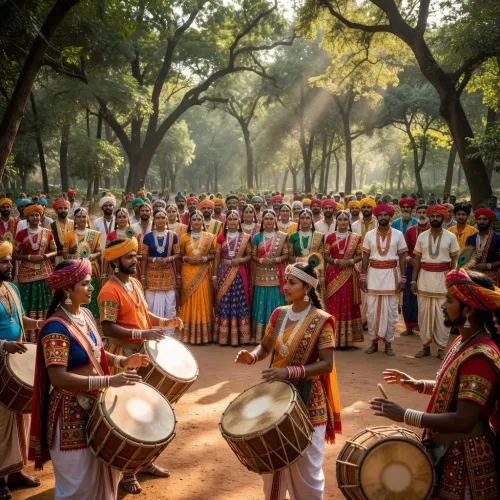
The Government of India formally declared November 15 as Janjatiya Gaurav Diwas in 2021, anchoring it to the birth anniversary of Birsa Munda — the 19th-century Adivasi leader and freedom fighter who led the Ulgulan uprising against colonial land dispossession. The observance was designed to do two things simultaneously: honour the cultural and historical contributions of tribal communities, and use the occasion as a platform to push welfare delivery into Scheduled Tribe areas.
That dual frame — pride plus progress — is precisely what CM Patel invoked on Sunday. The hashtag #JanjatiyaGauravDiwas anchored his message in a nationwide conversation that BJP governments at the Centre and in the states have cultivated consistently since 2021.
Gujarat's tribal belt and the development stakes
Gujarat is home to a substantial Adivasi population concentrated in the eastern and central districts — a belt that runs through areas such as the Dang, Narmada, Dahod, and Chhota Udaipur regions. The state maintains dedicated tribal development programmes aligned with the national approach, covering infrastructure, education, and livelihood schemes in these districts.
The annual November 15 observance has become a checkpoint moment: state governments use it to announce or highlight scheme progress, and policy watchers track budget allocations and physical delivery milestones released around the date. CM Patel's framing — 'one more concrete step' — signals ongoing delivery rather than a single announcement, though the post does not name specific projects or figures.
For Gujarat's Adivasi communities, the convergence of cultural recognition and scheme delivery on a single day represents the broader BJP template for tribal outreach: embed welfare in a narrative of historical dignity, and make both visible at once.
The question that follows every such observance is whether the 'concrete steps' translate into measurable ground-level change — and state budget disclosures in the weeks ahead will be the first test of that claim.
Point of View
The Gujarat government converts a historical commemoration into an annual accountability moment, raising expectations that scheme progress will be verifiable. The approach carries political logic: tribal belt districts in eastern Gujarat have emerged as crucial swing territory, making visible development signalling as important as the actual delivery. Whether the rhetoric closes the gap between announced schemes and on-ground outcomes remains the central tension in Gujarat's tribal policy arc.
NationPress
15 Nov 2026
Frequently Asked Questions
What is Janjatiya Gaurav Diwas and why is it celebrated on November 15?
Janjatiya Gaurav Diwas is a national observance celebrated on November 15 to mark the birth anniversary of tribal freedom fighter Birsa Munda . The Government of India formally instituted the day in 2021 to honour tribal contributions to India's history and to promote welfare and development in Scheduled Tribe communities.
What did Gujarat CM Bhupendra Patel say on Janjatiya Gaurav Diwas 2026?
CM Bhupendra Patel said that Janjatiya Gaurav Diwas has been made a 'festival of development,' and that the state has taken 'one more concrete step' toward the social, economic, and educational advancement of Gujarat's tribal communities through various development works and scheme benefits.
Which districts in Gujarat have large Adivasi populations?
Gujarat's Adivasi communities are concentrated in the eastern and central districts , including Dang, Narmada, Dahod, and Chhota Udaipur . These areas are the primary focus of the state's dedicated tribal development programmes.
Who was Birsa Munda?
Birsa Munda was a 19th-century Adivasi leader and freedom fighter who led the Ulgulan uprising against colonial land dispossession. His birth anniversary, November 15 , is now commemorated nationally as Janjatiya Gaurav Diwas.
How does the BJP approach tribal welfare policy in Gujarat?
The BJP frames tribal policy around simultaneous cultural recognition and welfare delivery — using observances like Janjatiya Gaurav Diwas to highlight infrastructure, education, and livelihood schemes in Scheduled Tribe areas, while embedding that delivery in a narrative of historical pride rooted in figures like Birsa Munda .