Kim Yo-jong warns of 'very unstable' southern border, North Korea eyes loudspeaker return
Synopsis
Kim Yo-jong has declared the North-South Korean border 'very unstable' and threatened to resume loudspeaker broadcasts while deploying additional tactical strike means — a direct escalation signal that undermines South Korean President Lee Jae Myung's reconciliation push. The backdrop: a disputed land mine explosion last month that injured two South Korean soldiers and which Pyongyang flatly denies causing.
Key Takeaways
Kim Yo-jong declared on 19 October 2026 that the North-South Korean border situation is 'very unstable.' Pyongyang is reviewing resumption of loudspeaker broadcasts and deployment of additional tactical strike means along the border.
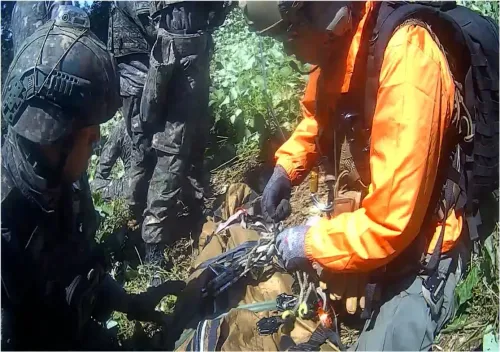
The escalation follows a land mine explosion that severely injured two South Korean soldiers ; North Korea denies planting the mines.
Kim alleged the South conducted 2,870 loudspeaker broadcast rounds and fired 201 warning shots between 1 August and 17 October .
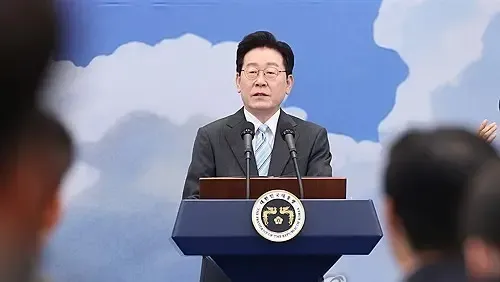
Kim directly attacked President Lee Jae Myung 's government, accusing it of surpassing the 'conservative regime of Yoon Suk Yeol' in provocations.
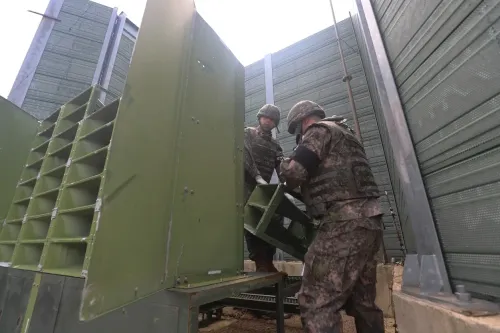
Seoul 's suspension of loudspeaker broadcasts — a Lee-era concession — now appears at risk of being reversed by Pyongyang .
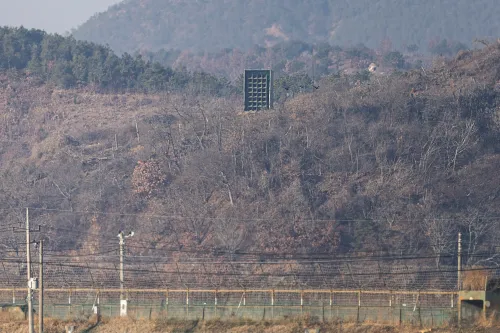
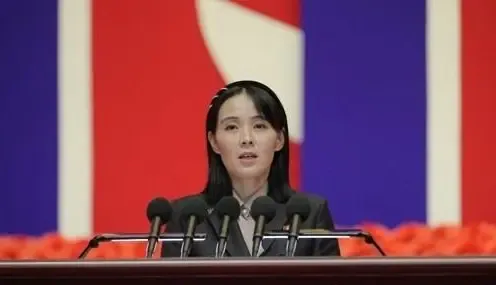
Kim Yo-jong, the sister of North Korean leader Kim Jong-un, declared on Monday, 19 October 2026 that the situation along the North-South Korean border is 'very unstable,' warning that Pyongyang is actively considering resuming loudspeaker broadcasts along the frontier and deploying additional tactical strike capabilities. The statement, carried by the state-run Korean Central News Agency (KCNA) in English, marks one of the sharpest public rebukes from the North in recent months.
What Kim Yo-jong Said
'Now the situation of the southern border is very unstable. A grave situation is prevailing along the southern border due to the reckless behavior of the ROK military gangsters,' Kim said in the KCNA statement, using ROK — the acronym for the Republic of Korea, South Korea's official name.
She warned that Seoul 'will surely regret and face uncontrollably terrible danger,' accusing the South Korean military of actions that have 'gone beyond the red line.' Kim further alleged that the South conducted 2,870 rounds of loudspeaker broadcasts and fired 201 warning shots between 1 August and 17 October, according to Yonhap News Agency.
The Land Mine Dispute at the Centre
The latest escalation follows a land mine explosion last month that severely injured two South Korean soldiers. Seoul concluded the mines were deliberately planted by North Korea, a finding Pyongyang has repeatedly and categorically denied. Kim referred to the incident as a 'fabricated mine explosion farce,' doubling down on the North's rejection of responsibility.
This pattern — a cross-border incident followed by a formal denial and counter-accusations — mirrors previous escalation cycles on the peninsula, particularly flare-ups in 2015 and 2020 that led to temporary suspension of inter-Korean communication channels.
Sharp Attack on South Korea's Lee Government
Notably, Kim directed pointed criticism at President Lee Jae Myung's administration, asserting it 'has far outpaced the die-hard conservative regime of Yoon Suk Yeol' in provocative behaviour — despite Lee's public advocacy for reconciliation and peace. The charge is significant: Lee came to power on a platform of restoring inter-Korean dialogue, and Kim's remarks suggest Pyongyang is deliberately undercutting that framing.
This comes amid Seoul's suspension of its own loudspeaker broadcasts along the border last year, a concession made as part of Lee's bid to rebuild trust. In response, the North had also halted its border broadcasts — a pause that Kim now signals could end.
North Korea's Threatened Military Steps
Beyond loudspeakers, Kim said the North Korean military is considering deploying 'more tactical strike means' along the border. She did not elaborate on the specific nature of those measures, but the language aligns with previous KCNA statements that preceded short-range missile tests or artillery drills near the DMZ.
The broader context is a peninsula where diplomatic channels have been largely frozen since 2019, when US-North Korea talks collapsed in Hanoi. With Kim Yo-jong — widely regarded as one of the most influential figures in the North Korean power structure — issuing direct threats, the prospect of a fresh de-escalation agreement appears remote in the near term.
What Comes Next
Analysts will watch whether Pyongyang follows through on the loudspeaker threat, which would almost certainly trigger a reciprocal response from Seoul and potentially draw in US Forces Korea. South Korea's defence ministry has not issued a formal response to the statement as of publication. Any resumption of cross-border broadcasts would represent a significant reversal of one of the few confidence-building steps implemented under the Lee administration.
Point of View
It shifts blame for an unresolved land mine incident onto the South's military, and it signals that Pyongyang's threat calculus does not change with a liberal government in Seoul. The charge that Lee's administration has 'outpaced' Yoon's conservatives in provocation is a deliberate attempt to box in a government that staked its inter-Korean credibility on goodwill gestures. What mainstream coverage underweights is the timing: these statements typically precede — rather than follow — a military action, functioning as political cover. The loudspeaker threat, if executed, would test whether Seoul responds in kind and how Washington calibrates its posture given the broader US-North Korea diplomatic freeze since 2019.
NationPress
19 Oct 2026
Frequently Asked Questions
What did Kim Yo-jong say about the North-South Korean border?
Kim Yo-jong declared on 19 October 2026 that the situation along the southern border is 'very unstable,' warning that North Korea is considering resuming loudspeaker broadcasts and deploying additional tactical strike means. The statement was carried by state media outlet KCNA in English.
Why is North Korea threatening to resume loudspeaker broadcasts?
Pyongyang cited what it described as 'reckless behavior' by the South Korean military, including alleged loudspeaker broadcasts and warning shots, as justification for potentially resuming its own border broadcasts. The move would reverse a confidence-building step taken under South Korean President Lee Jae Myung's administration.
What was the land mine explosion that triggered this escalation?
A land mine explosion occurred last month near the border and severely injured two South Korean soldiers. Seoul concluded the mines were deliberately planted by North Korea, but Pyongyang has repeatedly denied responsibility, with Kim Yo-jong dismissing the finding as a 'fabricated mine explosion farce.'
Who is Kim Yo-jong and why does her statement matter?
Kim Yo-jong is the sister of North Korean leader Kim Jong-un and is widely regarded as one of the most powerful figures in the North Korean state. Her official statements, particularly on inter-Korean affairs and military posture, are considered authoritative signals of Pyongyang's policy direction.
How has South Korea responded to Kim Yo-jong's warning?
South Korea's defence ministry had not issued a formal response to the statement as of publication. Seoul had previously suspended its own loudspeaker broadcasts as part of President Lee Jae Myung's efforts to restore inter-Korean trust, a concession that Pyongyang's latest threats now put in jeopardy.