DMZ landmine blasts injure two S Korean soldiers; forensic probe underway

Synopsis
Two back-to-back landmine blasts in the DMZ on Monday critically injured a South Korean battalion commander and a noncommissioned officer during a route-clearing mission linked to a UN Command inspection into suspected North Korean mine-laying. Forensic analysis of recovered fragments is under way, and the results — expected after next week — could directly implicate Pyongyang.
Key Takeaways
Two consecutive explosions struck the DMZ on 22 September 2025 , critically injuring a battalion commander and a noncommissioned officer .
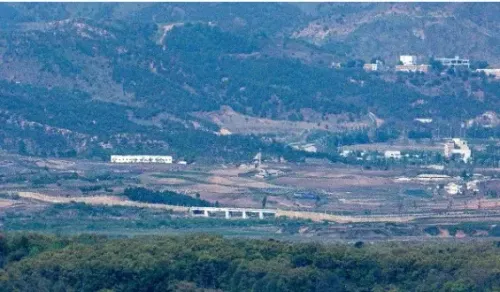
The blast site is located south of the Military Demarcation Line (MDL) , between the MDL and South Korea's forward fences.
A total of 18 personnel — including combat engineers — were deployed to clear a route for a UN Command (UNC) inspection into North Korean mine-laying.
Forensic analysis of recovered mine fragments is under way; preliminary findings expected after next week .
Both critically injured soldiers have undergone surgery and are recovering at a military hospital in Seongnam .
North Korea was notified of the incident via live broadcasts and through the UNC channel .
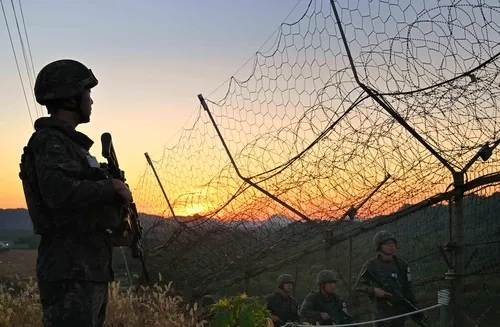
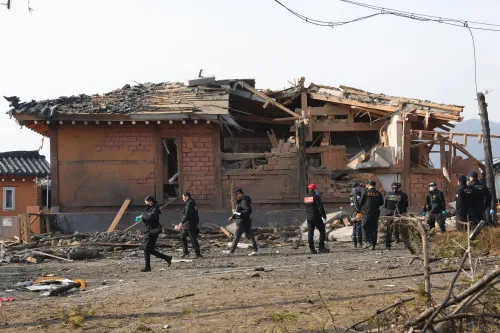
Two consecutive explosions inside the demilitarised zone (DMZ) on Monday, 22 September 2025 critically injured two South Korean soldiers, with forensic analysis now under way on mine fragments collected from the blast site to determine whether they are of South Korean or North Korean origin, a military official confirmed on Wednesday. The incident occurred south of the Military Demarcation Line (MDL), the heavily fortified boundary separating the two Koreas, as speculation over potential North Korean involvement continues to grow.
How the Blasts Unfolded
A team of 18 personnel — comprising 15 officers and noncommissioned officers and three conscripts, including combat engineers — had been deployed to clear a route for a UN Command (UNC) inspection into North Korea's suspected mine-laying activities, originally scheduled for early next week.
'Two explosions occurred in total. Around 10.50 am, a staff sergeant was injured in the first blast, while the battalion commander was injured in a second blast that occurred when he approached the staff sergeant to administer first aid at the scene,' a military official told reporters, citing initial statements from the soldiers.
According to those initial statements, the blasts took place as the team was returning after completing a route-clearing operation, while sweeping through waist-high grass along a completely new path — conditions that officials acknowledged made buried mine detection especially difficult.
Injuries and Evacuation
The battalion commander suffered a severe injury to his ankle, while a noncommissioned officer sustained a leg fracture, according to military officials. A rescue helicopter deployed a hoist to airlift both critically wounded soldiers from within the DMZ, transporting them to a military hospital in Seongnam, just south of Seoul.
The remaining 16 personnel — including a third soldier with a minor injury — moved on foot south of the general outpost fence for initial medical checks before being airlifted to the same hospital in eight separate helicopter flights. The two critically injured soldiers have since undergone surgery and are recovering; another soldier with minor injuries remains hospitalised, while the other 15 have been discharged following thorough medical evaluations.
Forensic Investigation and North Korean Angle
Forensic analysis of mine fragments recovered from the scene is under way, with preliminary findings expected to be released after next week. Officials are keeping all possibilities open, including North Korean involvement. The blast site is located between the MDL and South Korea's forward fences, in an unspecified location closer to the heavily fortified border.
'We are keeping all possibilities open in our investigation and will take all necessary measures in response,' the official said. Notably, the investigation follows a broader UNC-led effort to assess North Korea's suspected mine-laying activity along the DMZ — a pattern that has raised alarm among Seoul's defence planners in recent months.
Body cameras worn by two of the deployed soldiers captured only dense grass in initial footage reviews, meaning investigators will need to return to the site near the MDL for an on-site examination. The military has said it will not rush the process, ensuring affected soldiers receive appropriate post-traumatic care and complete safety rehearsals before returning to assist the inquiry.
Safety Protocols and Next Steps
Asked whether adequate safety measures were in place, the official confirmed that every soldier on the mission had worn protective suits and mine boots. Following the blasts, the military notified North Korea via live broadcasts and through the UNC channel.
Preliminary forensic findings are expected to shape the next phase of the investigation, and will likely influence the scope and timeline of the rescheduled UNC inspection into North Korean mine-laying activities along the DMZ.
Point of View
Where route-clearing missions are conducted in areas where mine provenance is literally unknown until forensic results arrive. If the fragments prove to be North Korean, Seoul faces a hard diplomatic and security calculation: how to respond without triggering an escalation along one of the world's most volatile borders. The timing is also pointed — the mission was explicitly tied to a UNC investigation into North Korean mine-laying, suggesting the DMZ's contested ground is being actively contested once more. What mainstream coverage often underweights is the institutional pressure this places on the UNC inspection framework itself: with the investigation now deferred and personnel potentially traumatised, Pyongyang — if responsible — has effectively disrupted a monitoring mechanism at minimal cost.
NationPress
23 Sept 2026
Frequently Asked Questions
What happened in the DMZ landmine explosions on 22 September 2025?
Two consecutive landmine explosions struck inside the demilitarised zone (DMZ) south of the Military Demarcation Line on 22 September 2025, critically injuring a battalion commander and a noncommissioned officer. The soldiers were part of an 18-member team clearing a route for a UN Command inspection into suspected North Korean mine-laying activities.
What injuries did the South Korean soldiers sustain?
The battalion commander suffered a severe ankle injury, while the noncommissioned officer sustained a leg fracture. Both underwent surgery and are reportedly recovering at a military hospital in Seongnam, south of Seoul. A third soldier suffered a minor injury and remains hospitalised.
Is North Korea suspected of responsibility for the DMZ blasts?
North Korean involvement is under active investigation, but no conclusion has been reached. Forensic analysis of mine fragments recovered from the blast site is under way to determine whether they are of South or North Korean origin, with preliminary findings expected after next week. Military officials have said they are 'keeping all possibilities open.'
What was the purpose of the mission when the blasts occurred?
The 18-member team — comprising officers, noncommissioned officers, and conscripts, including combat engineers — was clearing a new route to facilitate a UN Command inspection into North Korea's suspected mine-laying activities along the DMZ, originally scheduled for early the following week.
What happens next in the investigation?
Forensic results from the mine fragments are expected to be released after next week. An on-site investigation near the Military Demarcation Line is also planned, though the military has said it will not rush the process to ensure affected soldiers receive post-traumatic care and complete safety rehearsals before returning to the site.