DMZ landmine blast injures 3 South Korean officers, 2 seriously wounded
Synopsis
A landmine blast inside the Korean DMZ on 21 September left three South Korean military officers injured — two seriously — during a routine route-clearance mission. It is the worst such incident since August 2015, and it comes as North Korea has been aggressively fortifying its side of the border since 2024, leaving open the explosive question of who planted the mine.
Key Takeaways
A suspected landmine exploded at 10:50 am on 21 September 2026 in the western sector of the DMZ , south of the Military Demarcation Line.
Three South Korean military officers were injured; two sustained serious wounds , including one who lost his ankle.
None were in life-threatening condition.
An emergency helicopter was dispatched in coordination with the UN Command (UNC) to evacuate the casualties.
Investigators are probing whether the mine was of North Korean or South Korean origin, including the possibility that recent heavy rains displaced North Korean mines southward.
This is the first serious landmine injury on the South Korean side of the DMZ since August 2015 , when North Korean mines cost one soldier both legs.
North Korea has been laying mines and erecting border barriers along the MDL since April 2024 , following Kim Jong-un's 2023 declaration of hostile inter-state relations.
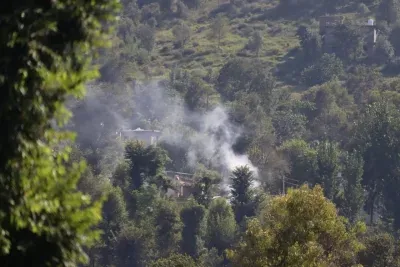
Three South Korean military officers were injured on Monday, 21 September 2026, in a suspected landmine explosion during a route-clearance operation inside the Demilitarised Zone (DMZ) separating the two Koreas, the Joint Chiefs of Staff (JCS) confirmed. The blast, which occurred at around 10:50 am local time, marked the first landmine explosion on the South Korean side of the DMZ to cause serious injury since August 2015.
How the Explosion Unfolded
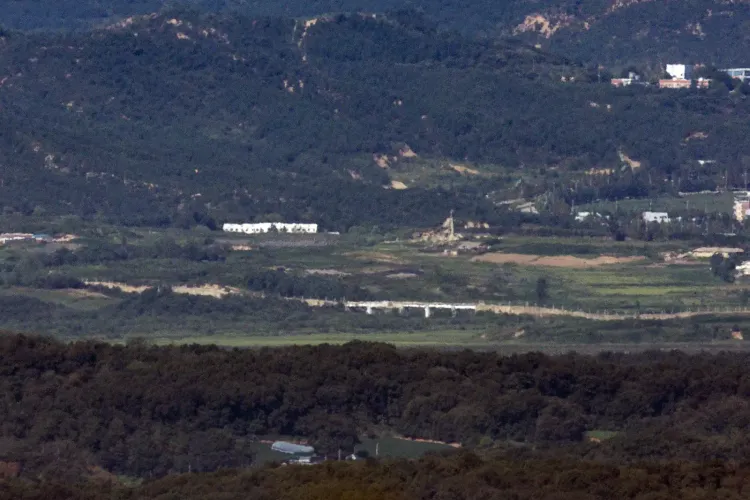
The blast occurred south of the Military Demarcation Line (MDL) in the western sector of the DMZ. According to military sources, the troops were engaged in operations to clear routes, search for buried explosives, and secure a safe passage for ongoing operations when the explosion went off.
Of the three injured officers, two senior military personnel sustained serious wounds — including one who lost his ankle, according to military sources. None of the three was in life-threatening condition, the sources added. An emergency helicopter was dispatched inside the heavily fortified DMZ in coordination with the UN Command (UNC) to transport the casualties to a hospital.
Cause Under Investigation: North Korean Mines or South Korean Ordnance?
Military authorities said the cause is under investigation, though officials assessed a landmine as the highly probable cause. 'There was an unidentified explosion, and it appears that there is a high probability that it was a landmine explosion,' a JCS official said.
Investigators are keeping 'all possibilities open,' examining whether a previously unidentified landmine detonated during the clearance operation, or whether North Korean mines swept southward by recent torrential rains may have been responsible. It was not immediately confirmed whether the device was of North Korean or South Korean origin.
The JCS also acknowledged it had been in consultations with the UNC over evidence of terrain changes south of the DMZ, raising the possibility that North Korean troops may have crossed the line to plant mines — a charge that has been building since April 2024, when Pyongyang began reinforcing border defences with barbed wire, anti-tank barriers, and reported mine-laying along the MDL.
Political Dimension: Opposition Claim Disputed
Representative Yu Yong-weon of the main opposition People Power Party claimed the explosion site at the 25th Infantry Division was near an area where North Korean soldiers were believed to have crossed into the South to bury mines. The JCS official, however, dismissed the assertion, saying the blast site was 'distanced' from the location cited by the lawmaker.
Historical Context: A Pattern of Border Danger
The incident is the most serious DMZ landmine accident in over a decade. In August 2015, three wooden-box landmines buried by North Korea exploded in the DMZ, causing one South Korean staff sergeant to lose both legs and another to lose an ankle during a patrol mission. More recently, in November 2025, a South Korean soldier suffered an ankle fracture while on a landmine-detection mission inside the DMZ — though that incident was less severe.
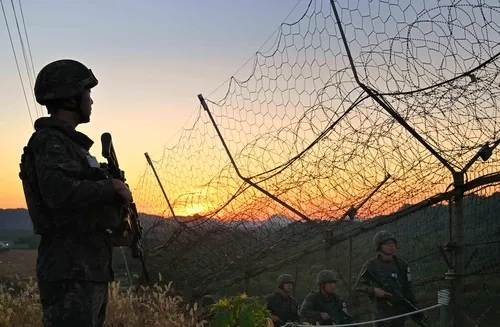
The backdrop is a sharply deteriorating inter-Korean relationship. North Korean leader Kim Jong-un formally declared inter-Korean relations as those between 'two states hostile to each other' in late 2023, and the North has since undertaken extensive border fortification. With the DMZ now more heavily mined and monitored than at any point in recent memory, analysts warn the risk of further accidents — or deliberate escalation — remains elevated.
South Korean military authorities have yet to release a final determination on the origin of the mine. The findings of the ongoing investigation are expected to carry significant diplomatic weight.
Point of View
It would constitute a significant provocation requiring a formal UNC response. Seoul's delayed press briefing — hours after the blast — also points to a familiar tension between operational transparency and managing public alarm on the peninsula.
NationPress
21 Sept 2026
Frequently Asked Questions
What happened in the DMZ landmine explosion on 21 September 2026?
Three South Korean military officers were injured in a suspected landmine explosion inside the Demilitarised Zone at around 10:50 am on 21 September 2026. The blast occurred south of the Military Demarcation Line in the western sector of the DMZ during a route-clearance operation.
How seriously were the South Korean soldiers injured?
Two of the three injured officers sustained serious wounds, including one who lost his ankle. Military sources confirmed that none of the three was in life-threatening condition, and an emergency helicopter evacuated them to a hospital with UNC coordination.
Was the landmine planted by North Korea?
The origin of the mine has not been confirmed. Military authorities are investigating two main possibilities: that an unidentified mine detonated during the clearance operation, or that North Korean landmines were swept southward by recent heavy rains. The JCS has said all possibilities remain open.
When was the last serious landmine incident in the DMZ?
The last comparable incident was in August 2015, when three North Korean wooden-box mines exploded during a South Korean patrol, causing one staff sergeant to lose both legs and another to lose an ankle. A less severe incident occurred in November 2025, when a soldier suffered an ankle fracture during a mine-detection mission.
Why is North Korea mining the DMZ border?
North Korean leader Kim Jong-un declared inter-Korean relations as those between 'two states hostile to each other' in late 2023. Since April 2024, North Korea has been reinforcing the border with barbed wire fences, anti-tank barriers, and reported mine-laying along the Military Demarcation Line as part of a broader border fortification drive.