South Korea proposes military talks with North Korea over DMZ border dispute
Synopsis
South Korea has formally asked North Korea to sit down over a border line that neither side agrees on — and where a land mine already injured three soldiers last month. With nearly a million mines reportedly planted since 2024 and the only communication channel being an old UNC hotline, Seoul’s offer is as much a warning as an invitation: resolve this at the table, or risk a clash neither side can control.
Key Takeaways
South Korea formally proposed inter-Korean military talks on 23 October 2026 to jointly verify the Military Demarcation Line (MDL) and prevent border clashes.
The proposal follows a 21 September DMZ land mine blast that injured three South Korean soldiers ; Seoul blames Pyongyang, which has denied responsibility.
Deputy Defence Minister Kim Hong-cheol also offered a trilateral format including the UN Command (UNC) if needed.
North Korea has planted an estimated 960,000 land mines along the MDL since 2024 , according to South Korean lawmakers.
Only about 200 of the original 1,292 MDL marker posts from 1953 remain identifiable, fuelling conflicting border interpretations.
Pyongyang did not respond to a similar military-talks proposal from Seoul last year.
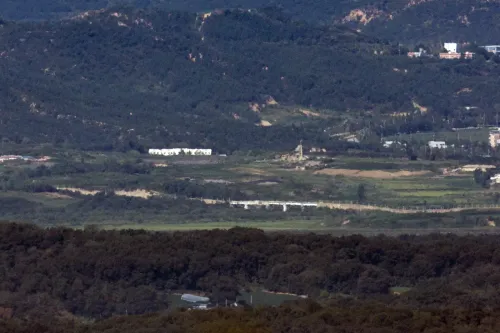
South Korea on Friday, 23 October 2026, formally proposed holding inter-Korean military talks with North Korea to resolve conflicting interpretations of the Military Demarcation Line (MDL) — the border separating the two Koreas — and to reduce the risk of armed clashes inside the Demilitarised Zone (DMZ). The offer comes a month after a September 21 land mine blast inside the DMZ injured three South Korean troops, triggering a fresh round of cross-border hostility.
What Seoul Has Proposed
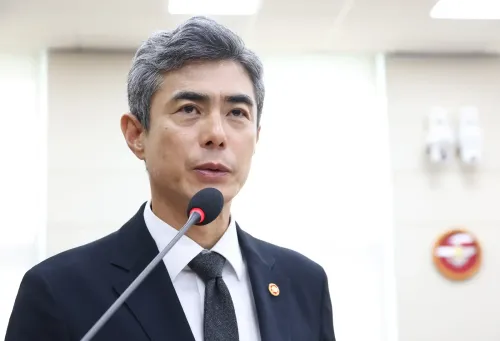
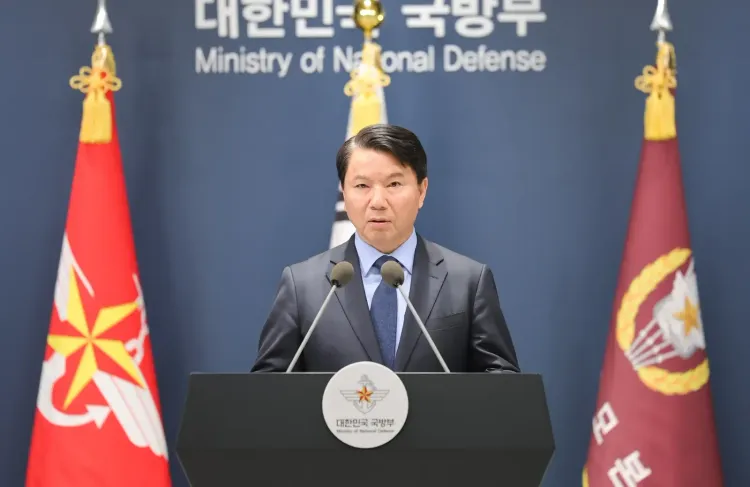
Deputy Defence Minister Kim Hong-cheol announced the offer at a press briefing in Seoul, laying out a three-point agenda: jointly verifying the locations of the land-based MDL, restoring military communication lines, and discussing steps to prevent accidental clashes along the border. “Different perceptions remain over the Military Demarcation Line,” Kim said, framing the proposal as an urgent necessity rather than a diplomatic gesture.
Kim also opened the door to a broader format, stating: “If necessary, a trilateral meeting including the UN Command (UNC) is also possible.” The UNC, which administers and enforces the 1953 Armistice Agreement governing the border area, has legal jurisdiction over MDL management. Seoul reportedly informed the UNC of its dialogue plan ahead of the public announcement, “in accordance with protocol,” according to a defence ministry official.
The September Mine Blast and Its Fallout
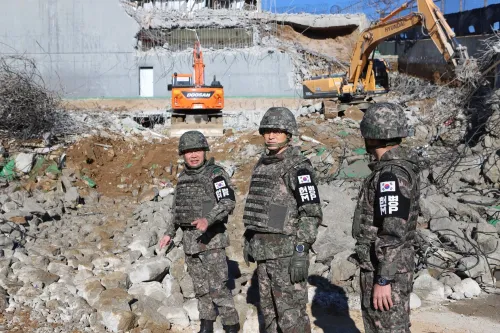
The immediate trigger for the proposal was the 21 September mine explosion inside the DMZ that wounded three South Korean soldiers on a mission to clear a path for a joint UNC investigation into North Korea’s border-hardening activities. Seoul has attributed the blast to Pyongyang. North Korea denied responsibility and threatened military action along the border if provoked.
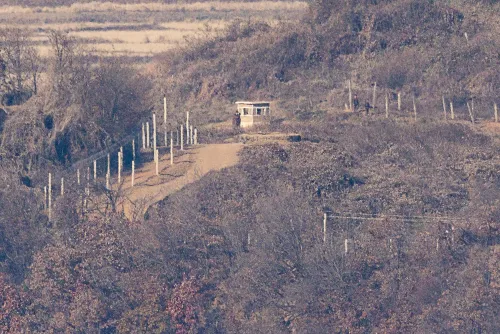
The incident deepened an already tense standoff. South Korean forces have issued warning broadcasts and warning shots after reportedly observing North Korean troops cross the MDL to carry out fortification work — erecting fences and laying mines. Seoul’s military estimates the North has planted approximately 960,000 land mines along the MDL since 2024, according to multiple lawmakers in Seoul.
Why the Border Line Is Disputed
The root of the tension is a technical but consequential disagreement. Under the Armistice Agreement signed in 1953, the UNC and North Korea installed 1,292 marker posts along the MDL. Most have deteriorated or disappeared over the decades; only about 200 identifiable markers remain. South Korea now defines the MDL using mapping designated by the US National Geospatial-Intelligence Agency, while the UNC relies on a separate set of coordinates established through its own 2016 MDL project. North Korea is believed to use a third version based on its own surviving physical markers — meaning all three parties operate on different baselines.
Kim warned that letting soldiers serve in the border area under conflicting boundary interpretations raises the risk of unintended escalation, calling for “extraordinary measures.” “The damage will not be limited to any single side,” he cautioned.
Pyongyang’s Track Record on Dialogue
This is not Seoul’s first such overture. South Korea made a similar proposal for senior-level military talks last year; Pyongyang did not respond. Since North Korean leader Kim Jong-un declared inter-Korean relations to be those of “two hostile states,” the North has systematically intensified border reinforcement and severed all official communication lines with Seoul. The UNC’s ‘pink phone’ hotline with the Korean People’s Army now remains the only active channel between the two Koreas.
In a statement issued shortly after Seoul’s announcement, the UNC reaffirmed its commitment to upholding the Armistice Agreement and “reducing the risk of miscalculation and unintended escalation” along the MDL. The UNC declined to confirm whether it had relayed Seoul’s dialogue offer to Pyongyang, citing its policy of not publicly disclosing communications with the North.
What Comes Next
Whether Pyongyang will accept the offer remains uncertain given its consistent refusal to engage with Seoul under Kim Jong-un’s ‘hostile states’ doctrine. Analysts note that any meaningful de-escalation would require North Korea to acknowledge, at minimum, the existence of a border demarcation dispute — something the Kim regime has shown little appetite for. For now, the onus is on Pyongyang to respond, and Seoul has made clear it expects a “positive” answer.
Point of View
But the structural problem is that Pyongyang has no incentive to participate in a process that would formally constrain its border activities. Kim Jong-un’s ‘two hostile states’ doctrine was designed precisely to remove any institutional obligation to engage South Korea — and accepting military talks would partially reverse that posture. The mine-count figure — 960,000 since 2024 — is itself a geopolitical signal: North Korea is hardening a de facto border on its own terms, and dialogue would interrupt that project. The UNC’s silence on whether it has even passed Seoul’s message to Pyongyang is also telling; it suggests the pink-phone channel is fragile at best.
NationPress
23 Oct 2026
Frequently Asked Questions
Why has South Korea proposed military talks with North Korea?
South Korea proposed the talks on 23 October 2026 to resolve conflicting interpretations of the Military Demarcation Line after a land mine blast inside the DMZ on 21 September injured three South Korean soldiers. Seoul wants to jointly verify the border line, restore military communication, and prevent accidental armed clashes.
What caused the September 2026 DMZ mine blast?
A land mine exploded inside the Demilitarised Zone on 21 September while South Korean troops were clearing a path for a joint UNC investigation into North Korea’s border-fortification activities. Seoul blamed North Korea; Pyongyang denied involvement and threatened military action if provoked.
Why do South Korea and North Korea disagree on where the border is?
Of the 1,292 marker posts installed along the MDL under the 1953 Armistice, only about 200 remain identifiable. South Korea uses US National Geospatial-Intelligence Agency mapping, the UNC uses its own 2016 MDL coordinates, and North Korea is believed to rely on its surviving physical markers — leaving all three parties operating on different baselines.
Has North Korea responded to South Korea’s dialogue proposals before?
No. South Korea made a similar proposal for senior-level military talks in 2025 and Pyongyang did not respond. Since North Korean leader Kim Jong-un declared the two Koreas ‘two hostile states,’ the North has consistently refused to engage Seoul through formal channels.
What role does the UN Command play in the border dispute?
The UNC administers and enforces the 1953 Armistice Agreement and has legal jurisdiction over MDL management. Seoul informed the UNC of its dialogue plan before Friday’s announcement. The UNC reaffirmed its commitment to reducing escalation risk but declined to say whether it had conveyed Seoul’s offer to Pyongyang, citing its policy of not disclosing communications with the North.