South Korea, US, Japan hold talks after North Korea fires 10 missiles

Synopsis
North Korea fired around 10 short-range ballistic missiles from Wonsan on Thursday, prompting emergency trilateral phone consultations among South Korea, the US, and Japan. The launches — which Pyongyang says included a 600mm rocket launcher and air-to-surface missiles — come just a week after Seoul proposed military talks, and on the heels of a DMZ mine blast that injured three South Korean soldiers.
Key Takeaways
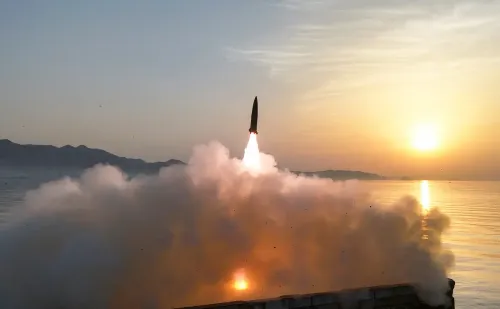
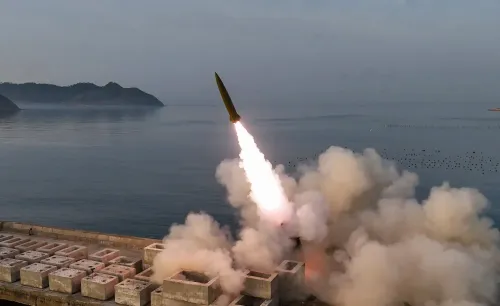
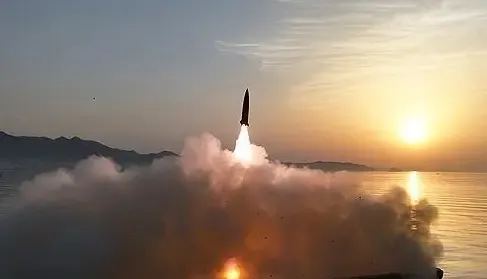
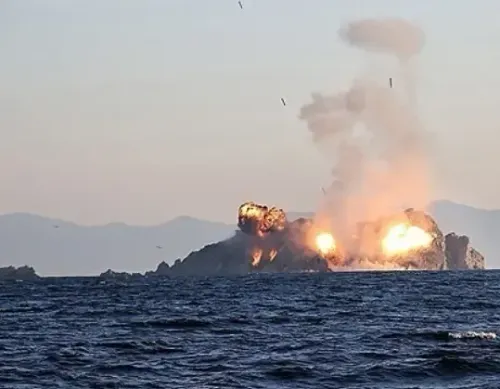
North Korea fired approximately 10 short-range ballistic missiles from Wonsan toward the East Sea on Thursday, 29 October 2026 .
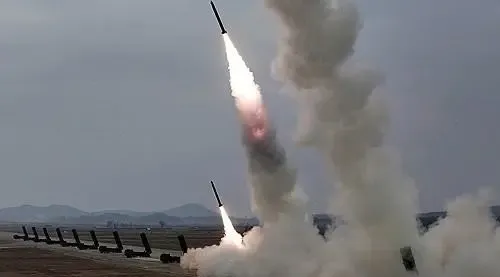
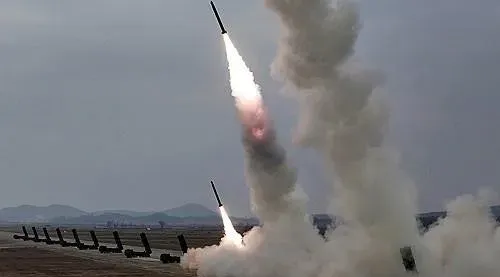
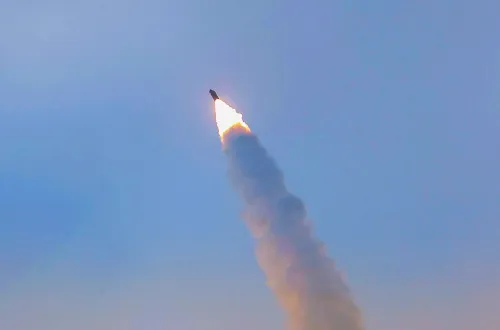
Pyongyang's state media confirmed the use of a 600-millimetre multiple rocket launcher , tactical cruise missiles , and air-to-surface missiles .
Senior diplomats from South Korea , the US , and Japan held emergency telephone consultations on Friday, 30 October to share information and discuss responses.
South Korea's Defence Minister Kang Shin-chul denounced the launches at the ADMM-Plus summit in the Philippines , calling the DMZ mine incident a 'clear violation' of the Armistice Agreement .
The launches came one week after Seoul proposed military talks with Pyongyang to resolve inter-Korean border differences.
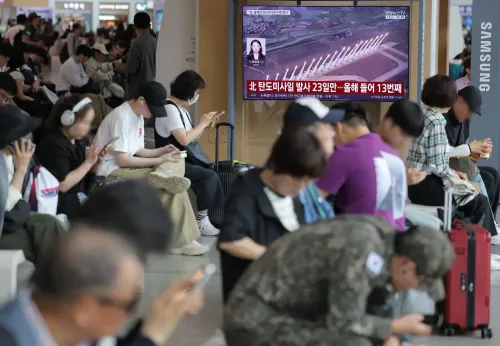
South Korea, the United States, and Japan convened emergency telephone consultations on Friday, 30 October 2026, after North Korea launched approximately 10 short-range ballistic missiles from the Wonsan area toward the East Sea the previous day, according to South Korea's Joint Chiefs of Staff (JCS). The trilateral call reflected the three allies' standing protocol of promptly coordinating whenever Pyongyang conducts ballistic missile tests.
What North Korea Fired
North Korea's state media reported on Friday that the weapons demonstration involved a 600-millimetre multiple rocket launcher, tactical cruise missiles, and air-to-surface missiles. The disclosure came a day after the launches, which were independently tracked by South Korean military authorities. This latest salvo adds to a pattern of escalatory weapons tests that Pyongyang has conducted throughout the year.
Who Spoke and What Was Said
Baek Yong-jin, director general for Korean Peninsula policy at Seoul's foreign ministry, led the South Korean side in discussions with David Wilezol, deputy assistant secretary for Northeast Asia at the US State Department, and Takashi Ariyoshi, a senior official at Japan's foreign ministry. 'The three officials shared relevant information and discussed future responses,' Seoul's foreign ministry said in a press release. The ministry added that the three countries 'operate a channel for promptly sharing information and assessments whenever North Korea launches ballistic missiles.'
Rising Tensions on the Korean Peninsula
The missile launches came just a week after Seoul proposed holding military talks with Pyongyang to address their border dispute. Tensions had already been elevated following a land mine blast inside the Demilitarised Zone (DMZ) last month that injured three South Korean soldiers — an explosion South Korea's Defence Minister Kang Shin-chul attributed to mines planted by North Korea south of the Military Demarcation Line (MDL).
Defence Minister's Remarks at ADMM-Plus
Speaking at the ASEAN Defence Ministers' Meeting-Plus (ADMM-Plus) in the Philippines on Thursday, Kang Shin-chul denounced the launches in unambiguous terms. 'Today at this very moment, North Korea is threatening the Korean Peninsula and regional security by firing a number of missiles,' Kang said during the plenary session. On the DMZ mine incident, he called it a 'clear violation' of the Armistice Agreement that ended the 1950–53 Korean War and a 'provocation.' Kang also warned that the breakdown in communication between the two Koreas heightens crisis risk. 'It is difficult to check on the opponent's intentions when communication is ruptured, and mutual mistrust and tension can lead to further clashes and crisis,' he said, calling for the resumption of inter-Korean dialogue.
What Comes Next
The trilateral consultations signal that Washington, Tokyo, and Seoul are aligned in monitoring further escalation, though no joint response measures have been publicly announced. Analysts note that Pyongyang's decision to publicise the weapons types — including air-to-surface missiles — suggests a deliberate signalling effort aimed at both its neighbours and the broader alliance. The fate of Seoul's proposed military talks with Pyongyang now hangs in greater uncertainty following the latest provocations.
Point of View
Likely aimed at testing allied resolve ahead of any diplomatic overture from Seoul. What is striking is the timing: Pyongyang escalated one week after South Korea extended a rare offer of military talks, a pattern consistent with past behaviour of responding to dialogue gestures with provocation rather than engagement. The trilateral call is the correct procedural response, but it remains a coordination mechanism, not a deterrent. Unless the three allies move toward a more consequential and unified posture, Pyongyang has little reason to alter its calculus.
NationPress
30 Oct 2026
Frequently Asked Questions
Why did South Korea, the US and Japan hold phone talks on 30 October 2026?
The three countries convened emergency telephone consultations after North Korea launched approximately 10 short-range ballistic missiles from the Wonsan area on 29 October. Senior diplomats from all three nations shared intelligence and discussed potential responses under an existing trilateral coordination protocol.
What weapons did North Korea fire during the 29 October launch?
North Korea's state media confirmed the use of a 600-millimetre multiple rocket launcher, tactical cruise missiles, and air-to-surface missiles during what it described as a weapons demonstration. South Korea's Joint Chiefs of Staff tracked around 10 short-range ballistic missiles fired toward the East Sea.
How does the DMZ land mine blast connect to the latest tensions?
A land mine explosion inside the Demilitarised Zone last month injured three South Korean soldiers, sharply raising inter-Korean tensions. South Korea attributed the mines to North Korea, with Defence Minister Kang Shin-chul calling the incident a 'clear violation' of the 1950–53 Korean War Armistice Agreement.
What did South Korea's Defence Minister say about the missile launches?
Defence Minister Kang Shin-chul, speaking at the ASEAN Defence Ministers' Meeting-Plus (ADMM-Plus) in the Philippines, said North Korea was 'threatening the Korean Peninsula and regional security by firing a number of missiles.' He also called for resumed inter-Korean dialogue, warning that ruptured communication raises the risk of further clashes.
What happens next after these North Korea missile launches?
No joint response measures have been publicly announced by the three allies following their consultations. Seoul's proposal for military talks with Pyongyang faces renewed uncertainty after the missile launches, and analysts expect close monitoring of any further North Korean weapons activity in the near term.