South Korea, US, Japan consult over North Korea's 14th missile launch in 2026
Synopsis
North Korea fired its 14th ballistic missiles of 2026 just days before the UN General Assembly and a Trump-Xi summit — and South Korea, the US, and Japan were on the phone within hours. Despite Trump's overtures toward Kim Jong-un, Pyongyang's test cadence shows no sign of slowing, raising the stakes for an already crowded week of high-stakes diplomacy.
Key Takeaways
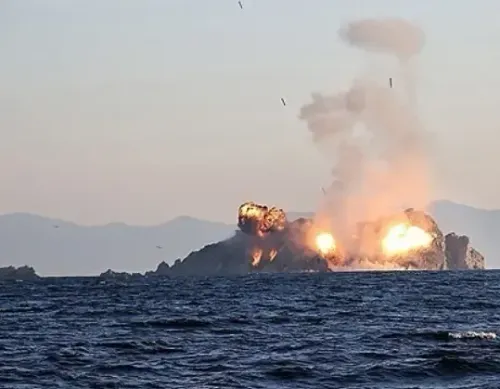
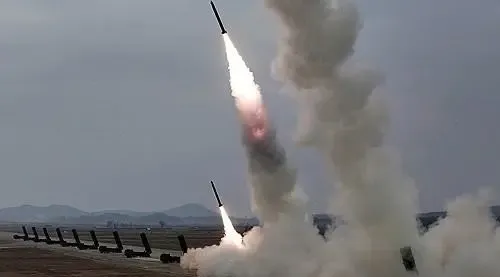
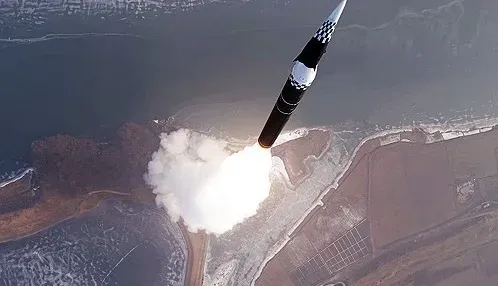
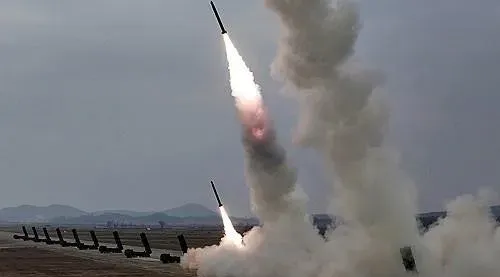
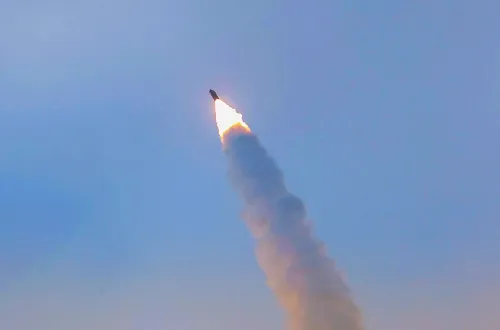
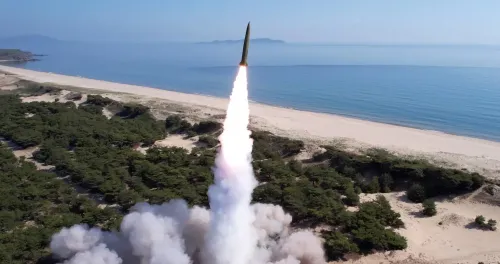
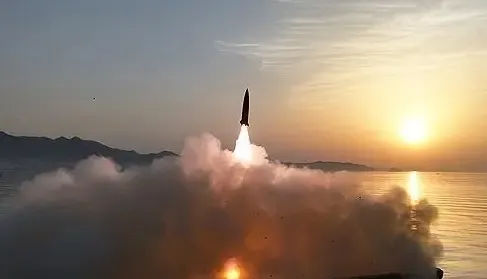
North Korea fired two short-range ballistic missiles toward the East Sea on Sunday, 20 September 2026 — its 14th ballistic missile launch of the year.
South Korea , the US , and Japan held emergency phone consultations on Monday, 21 September to share intelligence and align responses.
The launches are reportedly linked to the US-led Pacific Vanguard maritime exercise and are seen as a message ahead of the UN General Assembly and Trump-Xi summit .
The tests persist despite President Trump 's expressed willingness to resume talks with Kim Jong-un .
North Korean state media (KCNA) remained silent on the launches as of early Monday — an increasingly inconsistent pattern.
South Korea, the United States, and Japan held urgent telephone consultations on Monday, 21 September 2026, after North Korea fired two short-range ballistic missiles toward the East Sea the previous day — marking Pyongyang's 14th ballistic missile launch of the year and its first in eight days, according to the South Korean Joint Chiefs of Staff (JCS).
Who Spoke and What Was Discussed
Baek Yong-jin, director general for Korean Peninsula policy at Seoul's foreign ministry, held the call with David Wilezol, deputy assistant secretary for Northeast Asia at the US State Department, and Takashi Ariyoshi, a senior official at Japan's foreign ministry. The three officials shared relevant intelligence and discussed coordinated future responses, according to a ministry statement.
'The foreign affairs authorities of the three countries operate a channel for promptly sharing information and assessments whenever North Korea launches ballistic missiles,' the ministry said in its release.
Why Pyongyang Likely Fired Now
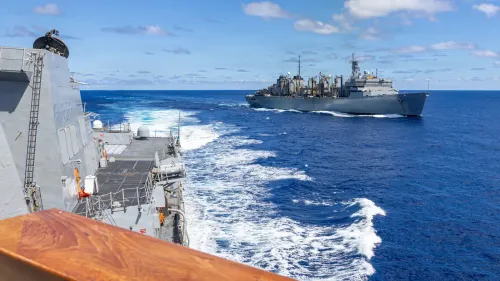
Sunday's launches are reportedly seen as a reaction to the multinational maritime exercise Pacific Vanguard, led by the US Navy's 7th Fleet, and other concurrent regional military activities. Analysts also view the timing as a deliberate external signal ahead of the UN General Assembly session beginning Tuesday and a summit between US President Donald Trump and Chinese President Xi Jinping scheduled for Thursday. The launches suggest Pyongyang intends to keep its military advancement on the agenda even as diplomatic channels re-open.
Trump's Outreach Has Not Halted Tests
Notably, the launches come despite President Trump's conciliatory posture toward the North, including publicly expressed willingness to resume direct dialogue with North Korean leader Kim Jong-un. The continued testing underscores a pattern: Pyongyang has historically used missile activity as leverage during periods of diplomatic flux rather than pausing in response to goodwill gestures. This is the 14th such launch this year, a pace that mirrors the escalatory curve seen in previous high-tension periods on the peninsula.
North Korean State Media Silent
Unusually, the Korean Central News Agency (KCNA) made no mention of Sunday's dual launches as of early Monday morning. North Korea has historically reported missile tests the following day, but that pattern has grown inconsistent in recent months — a shift analysts interpret as deliberate ambiguity designed to preserve operational flexibility. The silence could indicate that Pyongyang is calibrating its public messaging around the imminent Trump-Xi summit.
What Comes Next
With the UN General Assembly in session this week and a high-stakes US-China summit on the horizon, the diplomatic temperature on the Korean Peninsula is set to rise sharply. The trilateral channel between Seoul, Washington, and Tokyo — reinforced on Monday — will remain the primary mechanism for coordinating responses. Further missile activity before or after the Trump-Xi meeting cannot be ruled out, observers say.
Point of View
Pyongyang has not paused its test cadence even once. That raises an awkward question for Washington — whether goodwill gestures, unmatched by any tangible concession, are being read in Pyongyang as weakness rather than an opening. The trilateral Seoul-Tokyo-Washington channel is functioning, but coordination without a clear deterrence signal risks becoming a ritual that Pyongyang has already priced in.
NationPress
21 Sept 2026
Frequently Asked Questions
Why did North Korea fire ballistic missiles on 20 September 2026?
North Korea's latest launches are reportedly linked to the multinational Pacific Vanguard maritime exercise led by the US Navy's 7th Fleet and are seen as a signal ahead of the UN General Assembly and the Trump-Xi summit. Sunday's dual launches marked Pyongyang's 14th ballistic missile test of 2026.
Which countries held consultations after the North Korea missile launch?
Senior diplomats from South Korea, the United States, and Japan held telephone consultations on 21 September 2026 to share intelligence and coordinate responses. The call involved South Korea's Baek Yong-jin, the US State Department's David Wilezol, and Japan's Takashi Ariyoshi.
Has North Korea's missile testing continued despite Trump's diplomatic outreach?
Yes. North Korea has continued ballistic missile tests despite President Trump's conciliatory gestures, including his publicly stated willingness to resume dialogue with North Korean leader Kim Jong-un. The 14th launch of 2026 came without any pause in response to US overtures.
Why did North Korean state media stay silent on the missile launches?
The Korean Central News Agency made no mention of Sunday's dual missile launches as of early Monday — a growing departure from Pyongyang's usual practice of reporting tests the following day. Analysts suggest the silence may be deliberate, allowing North Korea flexibility in how it frames the tests around the Trump-Xi summit.
What is the Pacific Vanguard exercise that may have triggered the launches?
Pacific Vanguard is a multinational maritime exercise led by the US Navy's 7th Fleet conducted in the Indo-Pacific region. North Korea has historically used US-led military drills near the peninsula as justification for missile tests, framing them as defensive responses.