Tharoor at Berlin Forum: Middle Powers Must Lead Now
Synopsis
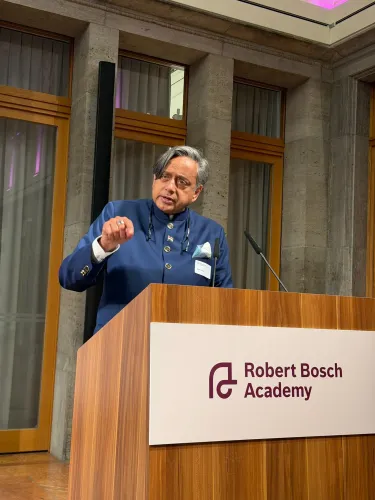
Congress MP Dr. Shashi Tharoor delivered the keynote at Berlin's Richard von Weizsäcker Forum on October 6, 2026, urging middle powers to fill the global leadership vacuum and drive institutional reform as the postwar order strains under great-power rivalry.
Key Takeaways
Shashi Tharoor delivered the keynote address at the Richard von Weizsäcker Forum in Berlin on October 6, 2026 .
The address was themed 'The Middle Power Moment' , arguing that receding uncontested leadership creates a strategic opening for mid-sized nations.
Tharoor urged middle powers to use their growing agency to sustain international cooperation in an increasingly divided world.
He called for reshaping global institutions — including the UN Security Council and Bretton Woods frameworks — to reflect contemporary geopolitical realities.
The speech aligns with India's long-standing push for a permanent UN Security Council seat and greater developing-world representation in multilateral bodies.
The Weizsäcker Forum, held in Germany — itself a model middle power — gave the address a pointed strategic resonance.
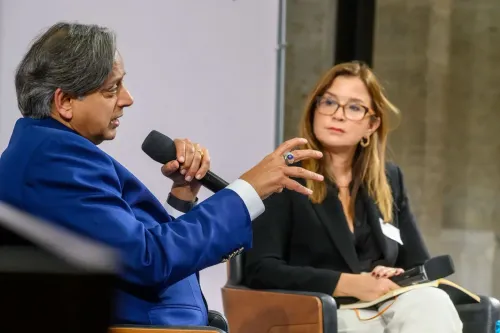
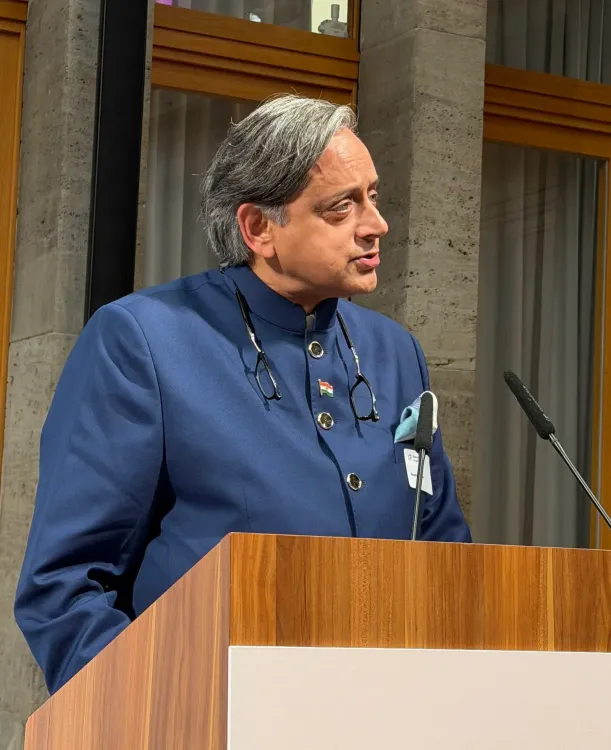
At a moment when the architecture of global order is visibly straining, Congress MP Dr. Shashi Tharoor delivered the keynote address at the Richard von Weizsäcker Forum in Berlin on Tuesday, October 6, 2026, arguing that the retreat of uncontested great-power leadership has opened a defining window for mid-sized nations to reshape the world.
The 'Middle Power Moment' argument unpacked
Tharoor's address centred on a single, sharp proposition: as dominant powers pull back from their postwar roles and multilateral institutions buckle under the weight of unrepresented voices, middle powers are no longer bystanders. They are, he argued, now indispensable brokers. His framing — 'The Middle Power Moment' — cast this not as a crisis but as an opportunity, one that nations like India are positioned to exploit.
The core of his argument rested on two obligations he placed on middle powers: first, to use their 'growing agency' to keep international cooperation alive in a world increasingly fractured along great-power fault lines; and second, to actively champion the reform of institutions — the UN Security Council, the Bretton Woods financial architecture, and multilateral trade forums among them — that were designed for a 1945 world order and no longer reflect where economic and political weight actually sits.
Why Berlin, and why the Weizsäcker Forum
The choice of platform is itself a signal. The Richard von Weizsäcker Forum is named after the former German Federal President who became a towering symbol of transatlantic liberal democracy and moral political leadership. Hosting this keynote in Berlin — the capital of a nation that is itself a textbook case of a middle power navigating great-power rivalry — lent the setting a pointed resonance.
Germany has for decades balanced its relationship with Washington, Beijing, and Moscow, and its current strategic recalibration mirrors precisely the kind of 'middle power agency' Tharoor described. For an Indian parliamentarian to keynote this forum signals that India's own aspirations for a larger institutional voice are being taken seriously in European policy circles.
India's diplomatic positioning in a multipolar era
Tharoor has been a consistent advocate for India's reform agenda at the United Nations, drawing on his years as UN Under-Secretary-General. His call for reshaping institutions 'that no longer reflect contemporary realities' aligns directly with New Delhi's long-standing push for a permanent seat on the UN Security Council and for stronger voting rights for developing economies in institutions like the IMF and World Bank.
The speech arrives at a pointed diplomatic moment: with G20 coalitions shifting, BRICS expanding, and transatlantic unity facing fresh stress tests, the question of who fills the multilateral leadership vacuum is no longer theoretical. It is a live, daily negotiation.
For Tharoor, the answer is clear — and it is not a retreat into narrow nationalism. It is a confident, coalition-building middle-power diplomacy that keeps the table intact even when the most powerful players threaten to walk away from it.
Point of View
He simultaneously projects India's reform agenda and positions himself — a former senior UN official — as a credible voice in that conversation. The speech also reflects a broader pattern within Indian foreign-policy thinking: pivoting away from non-alignment as a passive stance and recasting it as active, coalition-building agency. Whether India's domestic political constraints allow it to fully assume that brokering role remains the unresolved tension at the heart of the argument.
NationPress
6 Oct 2026
Frequently Asked Questions
What is the Richard von Weizsäcker Forum?
The Richard von Weizsäcker Forum is a German policy dialogue platform named after the former German Federal President Richard von Weizsäcker, a symbol of transatlantic liberal democracy and moral political leadership, held in Berlin.
What did Shashi Tharoor say at the Berlin forum?
Tharoor argued that as uncontested global leadership recedes and postwar institutions strain, middle powers have a greater responsibility to sustain international cooperation and reform multilateral bodies that no longer reflect contemporary realities.
What does 'Middle Power Moment' mean in Tharoor's speech?
The phrase refers to a strategic opening created by the retreat of dominant great powers, in which mid-sized nations like India can exercise greater agency to keep global cooperation functioning and to push for institutional reform.
Is Tharoor's speech related to India's UN Security Council bid?
While the speech did not explicitly name India's bid, his call to reshape institutions 'that no longer reflect contemporary realities' directly echoes India's long-standing demand for a permanent UN Security Council seat and greater representation in bodies like the IMF.
Why is Shashi Tharoor considered credible on UN reform?
Before entering Indian politics, Tharoor served as UN Under-Secretary-General, giving him direct institutional experience of multilateral governance that underpins his foreign-policy commentary.