Tharoor on Middle Powers: Who Speaks for the Rest?
Synopsis
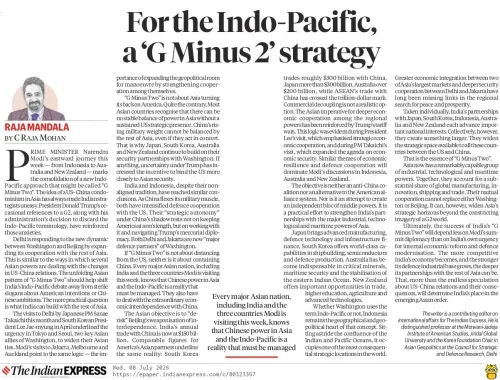
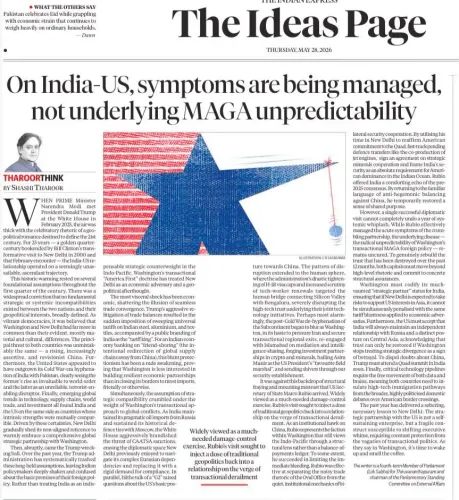
Congress MP Dr. Shashi Tharoor has called on middle powers to find a framework for constructive cooperation, warning that a world where only the strong prevail — invoking Thucydides — serves none of their interests. The post lands as geopolitical rivalry intensifies globally.
Key Takeaways
Shashi Tharoor posted on X on October 6, 2026 , urging middle powers to organise for collective global action.
He invoked the Thucydides Melian Dialogue — 'the strong will do as they can and the rest will suffer what they must' — to frame current geopolitical risks.
Tharoor, a former UN Under-Secretary-General , highlighted growing analyst interest in what middle powers will do amid global turbulence.
India is widely regarded as a leading middle-power voice, particularly through its G20 presidency legacy and Global South advocacy.
The post raises the structural challenge of coalition-building among nations with divergent interests under great-power pressure.
Tharoor's question — how middle powers 'cooperate constructively in the collective interest' — frames a core foreign-policy dilemma of the current decade.
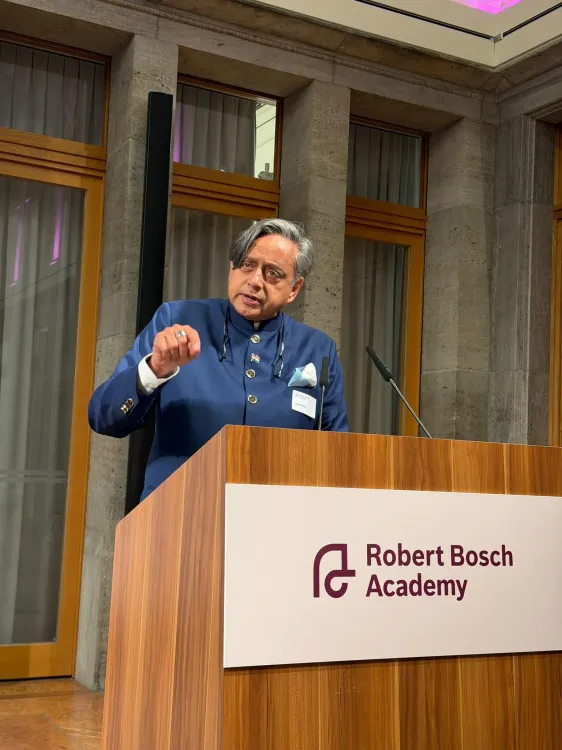
As global turbulence reshapes the world order, Congress MP Dr. Shashi Tharoor is asking the question that middle powers everywhere are quietly wrestling with: in a world where the strong dictate and the rest endure, how do nations like India organise themselves to matter? On Tuesday, October 6, 2026, Tharoor posted a pointed reflection on X, invoking one of history's starkest warnings about the limits of power and the vulnerability of those who fall outside it.
The Thucydides Warning That Tharoor Is Quoting
The phrase Tharoor cites — 'the strong will do as they can and the rest will suffer what they must' — is a near-direct echo of the Melian Dialogue from Thucydides' 'History of the Peloponnesian War', one of antiquity's most chilling lessons about power without restraint. The Athenians delivered that ultimatum to the small island of Melos roughly 2,400 years ago; the fact that it still resonates in 2026 says everything about how little the structural logic of great-power politics has changed.
Tharoor's use of the quote is not accidental. It signals that the current global moment — marked by geopolitical rivalry, fragmented multilateralism, and competing great-power blocs — feels, to many observers, uncomfortably Thucydidean. The 'rest' in that framing includes a wide arc of nations that are neither superpowers nor satellites: countries with real economic weight, demographic clout, and regional influence, but without the veto power or military reach to set the rules unilaterally.
India's Place in the Middle-Power Conversation
India sits squarely at the centre of this debate. As the world's most populous nation and one of its fastest-growing major economies, India has repeatedly positioned itself as a voice for the Global South — at the G20, at the United Nations, and in multilateral forums from climate negotiations to trade architecture. Tharoor, a former UN Under-Secretary-General and seasoned diplomat, is speaking from lived experience of exactly this tension: the gap between the legitimacy that large non-superpower nations command and the structural limits on their ability to act.
The 'middle powers' he references — a loose grouping that typically includes nations such as India, Brazil, Indonesia, Turkey, South Africa, and Nigeria, among others — have seen elevated interest from analysts and policymakers precisely because great-power confrontation is squeezing the space for independent foreign policy. Each of these countries is being asked, explicitly or implicitly, to pick a side.
Tharoor's Core Question — and Why It Is Harder Than It Sounds
The MP's framing cuts to the hardest part: 'How do we organise ourselves to cooperate constructively in the collective interest?' It sounds like a call for coalition-building, but the obstacles are formidable. Middle powers often have competing economic interests, unresolved bilateral disputes, and different threat perceptions. The Non-Aligned Movement of the Cold War era, which India helped found, offers a historical precedent — but also a cautionary tale about the difficulty of sustaining cohesion when member interests diverge.
What Tharoor is gesturing at is something more agile and issue-specific: flexible coalitions of the willing that can push back on great-power unilateralism in trade, climate finance, debt restructuring, and global governance reform — without locking themselves into binding blocs. Whether that vision can be operationalised is the defining foreign-policy challenge for the next decade.
In an era when the architecture of global order is being rewritten in real time, Tharoor's question is not rhetorical. It is a brief for action — and the world is listening for an answer.
Point of View
Each expecting greater alignment. By invoking Thucydides, he elevates the debate from tactical hedging to a principled argument about the structural illegitimacy of a purely transactional world order. As a former UN insider, his framing of 'organised cooperation' signals a preference for reformed multilateralism over ad-hoc bilateralism — a position that sits in some tension with India's current government's more transactional foreign-policy style. The post is likely to resonate across Global South capitals that are navigating the same squeeze.
NationPress
6 Oct 2026
Frequently Asked Questions
What did Shashi Tharoor say about middle powers on X in October 2026?
Tharoor posted on October 6, 2026, noting the growing global interest in what middle powers will do amid turbulence, and asked how they can organise to cooperate constructively in the collective interest rather than be subject to great-power dictates.
What is the Thucydides quote Tharoor referenced?
The phrase 'the strong will do as they can and the rest will suffer what they must' comes from the Melian Dialogue in Thucydides' History of the Peloponnesian War, describing Athens' ultimatum to the island of Melos around 416 BCE. It remains a foundational text on power and vulnerability in international relations.
Which countries are considered middle powers in global politics?
Middle powers typically include nations such as India, Brazil, Indonesia, Turkey, South Africa, and Nigeria — countries with significant economic or demographic weight and regional influence, but without superpower status or veto power in the UN Security Council.
Why is India considered a middle power?
India is the world's most populous country and one of its largest economies, and has historically championed Global South causes at the UN and G20. Its 'strategic autonomy' foreign-policy doctrine — avoiding binding alignment with any single great power — is itself a hallmark of middle-power statecraft.
What is Shashi Tharoor's background in international affairs?
Dr. Shashi Tharoor served as UN Under-Secretary-General and was a candidate for UN Secretary-General in 2006. He is currently the Congress MP from Thiruvananthapuram and has written extensively on international relations and India's global role.