Tharoor joins Global South panel at 28th Symi Symposium
Synopsis
Congress MP Dr. Shashi Tharoor participated in a high-level panel at the 28th Symi Symposium in Greece on 11 July 2026, debating Global South representation in global governance alongside senior diplomats from Spain, Egypt, Tunisia, and beyond.
Key Takeaways
Shashi Tharoor joined the 28th Symi Symposium in Greece on 11 July 2026 for a panel on Global South governance.
The panel theme was 'Interdependence, Justice, and the Global South: Whose Rules Shape the World?' Fellow panellists included UN High Representative Miguel Moratinos , former Arab League chief Amre Moussa , and former Tunisian PM Mehdi Jomaa .
The Symi Symposium was founded in 1997 by the Andreas Papandreou Foundation as an annual geopolitics forum.
India's Global South advocacy gained formal momentum during its 2023 G20 presidency , which admitted the African Union as a permanent member.
The engagement reflects India's broader push at the UN and BRICS to reform post-1945 institutions that under-represent developing nations.
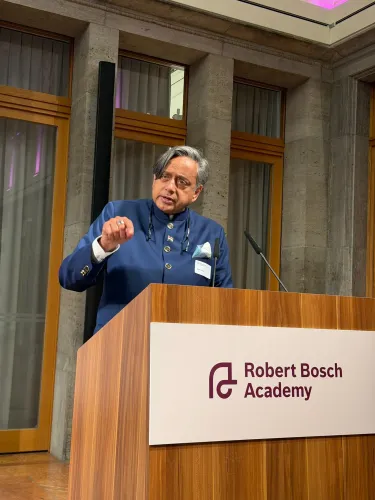
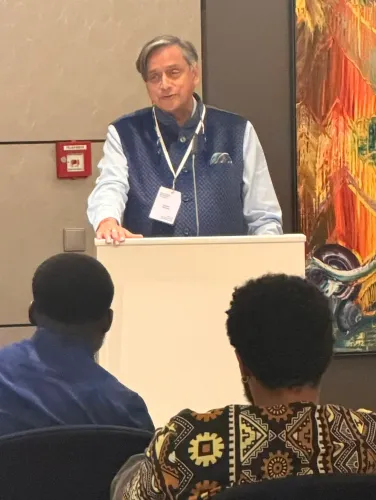
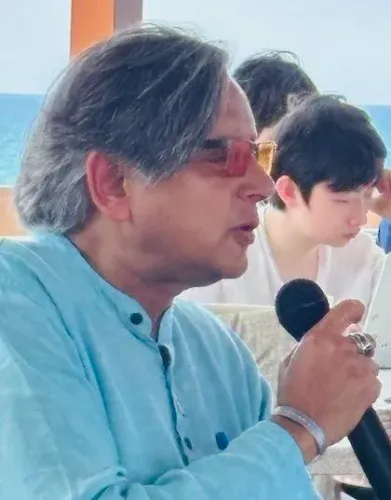
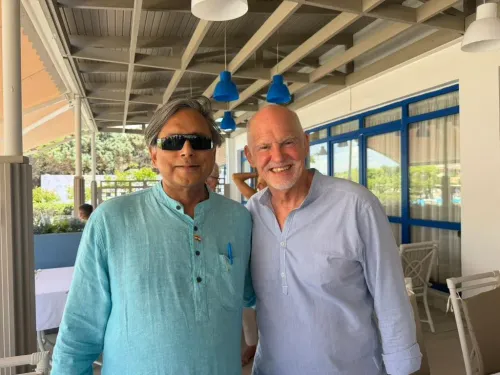
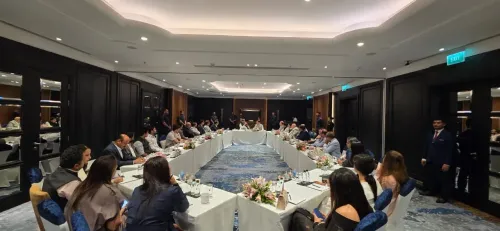
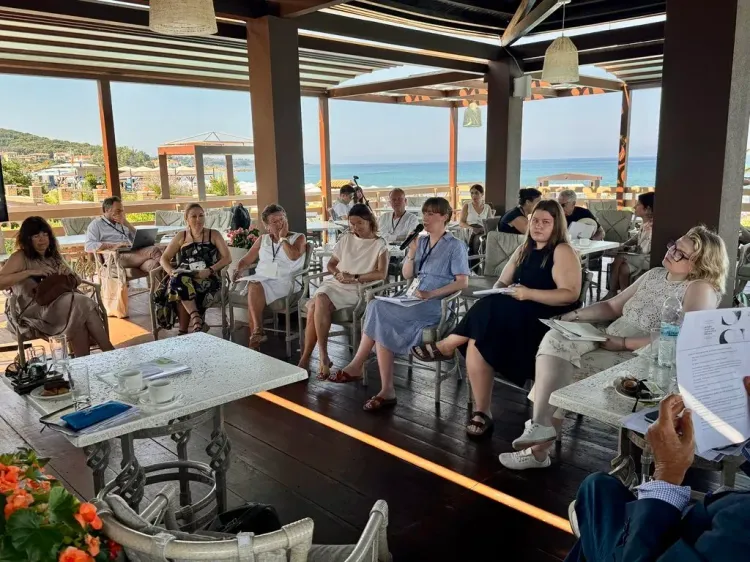
Congress MP Dr. Shashi Tharoor participated in a high-level panel discussion at the 28th Symi Symposium in Greece on Saturday, 11 July 2026, engaging with senior global diplomats on the theme 'Interdependence, Justice, and the Global South: Whose Rules Shape the World?'
Context
Tharoor, a former Union Minister and ex-UN Under-Secretary-General, described the session as 'thought-provoking,' noting that the conversation ranged from 'shifting geopolitical realities to the imperative of ensuring that the Global South has a genuine voice in shaping the international order.' The panel brought together statesmen from across the Arab world, Europe, Africa, and Asia.
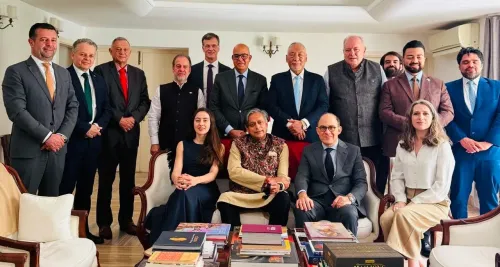
His fellow panellists included Miguel Moratinos, the UN High Representative for the Alliance of Civilizations and former Spanish Foreign Minister; Amre Moussa, former Arab League Secretary-General and Egyptian Foreign Minister; Mehdi Jomaa, former interim Prime Minister of Tunisia; as well as Jing Qian, Cesário Melantonio Neto, and Mona Makram Ebeid.
Policy Backdrop
The Symi Symposium, founded in 1997 by the Andreas Papandreou Foundation, is an annual Greek forum that convenes global leaders for off-the-record discussions on geopolitics and development. Its Mediterranean setting has made it a recurring venue for Euro-South dialogue on multilateral reform.
The panel theme resonates with a sustained Indian foreign-policy position. During India's G20 presidency in 2023, New Delhi formally secured the African Union's entry as a permanent G20 member and launched the Voice of Global South Summit, both designed to amplify developing-country perspectives in global governance institutions built in the post-1945 era.
Indian parliamentarians and former ministers have maintained a long-standing practice of engaging with Track-II and high-level European forums to project India's stance on multipolarity and institutional reform. Such participation mirrors calls voiced repeatedly at the UN and within BRICS for revising rules that under-represent the demographic and economic weight of the Global South.
Stakeholders and Impact
The panel's composition — drawing from the Arab League, the UN system, North Africa, and East Asia — reflects the breadth of coalitions being assembled around Global South governance reform. For India, Tharoor's participation reinforces New Delhi's image as a credible interlocutor between the developed world and emerging economies.
The conversation also occurs against the backdrop of intensifying major-power competition for influence across Africa, Asia, and Latin America, where questions about whose rules govern trade, security, and development finance carry concrete economic consequences for billions of people.
What's Next
Observers will watch for follow-up statements or joint declarations emerging from the 2026 UN General Assembly High-Level Week, where themes of Global South representation and multilateral reform are expected to feature prominently. Any announced India-EU or India-Greece bilateral mechanisms on institutional reform would signal whether symposium-level dialogue translates into formal diplomatic outcomes.
Point of View
UN system, and North Africa — signals that this is no longer merely an Indian talking point but a coalition in formation. With the 2026 UN General Assembly approaching, such off-the-record conversations often seed the language of formal resolutions. For the Congress party, the optics of a senior MP shaping global governance discourse also serve a domestic purpose: projecting foreign-policy credibility at a time when the party seeks to differentiate its international vision.
NationPress
10 Oct 2026
Frequently Asked Questions
What is the Symi Symposium?
The Symi Symposium is an annual geopolitics forum founded in 1997 by the Andreas Papandreou Foundation in Greece, bringing together global leaders for off-the-record discussions on international affairs and development.
Why did Shashi Tharoor attend the Symi Symposium in 2026?
Tharoor participated as a panellist on the theme 'Interdependence, Justice, and the Global South: Whose Rules Shape the World?', engaging with senior diplomats on reforming global governance to better represent developing nations.
Who were the other panellists with Tharoor at the Symi Symposium?
The panel included Miguel Moratinos (UN High Representative for the Alliance of Civilizations), Amre Moussa (former Arab League Secretary-General), Mehdi Jomaa (former Tunisian PM), Jing Qian, Cesário Melantonio Neto, and Mona Makram Ebeid.
What is India's position on Global South representation in global governance?
India has consistently advocated for greater Global South representation in multilateral institutions. During its 2023 G20 presidency, India secured the African Union's entry as a permanent G20 member and launched the Voice of Global South Summit.
What is the significance of Tharoor's participation for Indian foreign policy?
As a former UN Under-Secretary-General and Union Minister, Tharoor's engagement at high-level European forums reinforces India's role as a credible bridge between developed nations and the Global South, ahead of key events like the 2026 UN General Assembly.