Tharoor Joins Pune Business Round Table on Economy, Geopolitics
Synopsis
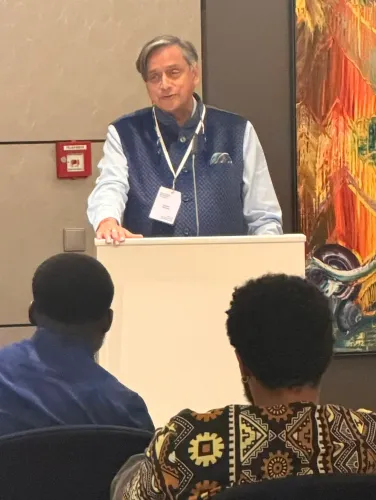
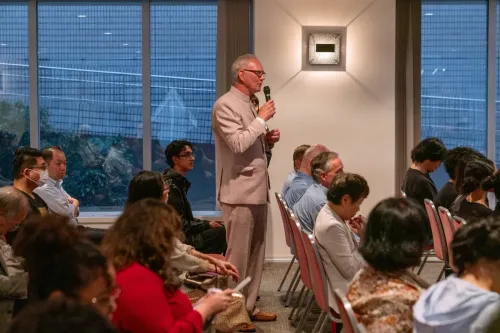
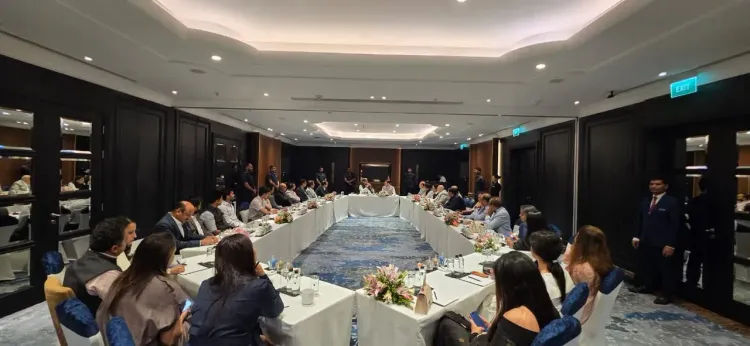
Congress MP Dr. Shashi Tharoor attended a closed-door Round Table in Pune on June 18 with the Global Business Strategy Group, fielding wide-ranging questions from entrepreneurs on the world economy, geopolitics, and national issues in a session led by Nitin Nyati.
Key Takeaways
Shashi Tharoor participated in a closed-door Round Table with the Global Business Strategy Group in Pune on Wednesday, June 18, 2026 .
The discussion covered the world economy , geopolitics , and national issues , drawing entrepreneurs and businesspeople.
The session was led by Nitin Nyati and was described by Tharoor as 'a fascinating interaction.' The event was closed-door; no specific deliberations were made public.
Tharoor brings a rare combination of parliamentary , diplomatic , and multilateral experience to such business engagements.
Subsequent parliamentary interventions or public statements on trade and foreign policy from Tharoor are worth watching.
Congress MP Dr. Shashi Tharoor participated in a closed-door Round Table discussion with the Global Business Strategy Group in Pune on Wednesday, June 18, 2026, engaging entrepreneurs and business leaders on questions spanning the world economy, geopolitics, and national issues.
Context
Tharoor, who represents Thiruvananthapuram in the Lok Sabha and previously served as a UN Under-Secretary-General and Union Minister of State for External Affairs, described the session as 'a fascinating interaction' led by Nitin Nyati. The discussion was closed-door, meaning its specific deliberations were not made public. The event brought together entrepreneurs and businesspeople with 'wide-ranging questions,' according to Tharoor's own account on X.
Pune is one of India's foremost industrial and educational hubs, frequently hosting business forums, policy dialogues, and strategy conclaves that draw national political figures and industry voices alike.
Policy Backdrop
Opposition MPs with strong diplomatic and international-affairs credentials have increasingly convened informal sessions with industry groups to discuss economic trends, global trade shifts, and geopolitical risks outside the formal structures of Parliament or party platforms. For figures like Tharoor, whose expertise spans multilateral diplomacy and foreign policy, such engagements serve as a bridge between legislative discourse and the concerns of India's private sector.
The themes reportedly on the table — the world economy, geopolitics, and national issues — reflect the anxieties of Indian business communities navigating global supply-chain disruptions, shifting trade alliances, and domestic policy uncertainty.
Stakeholders and Impact
The primary audience at Wednesday's Round Table comprised entrepreneurs and businesspeople associated with the Global Business Strategy Group. For this constituency, access to a legislator with Tharoor's international profile offers a rare opportunity to probe how geopolitical developments — from US-China tensions to West Asian instability — may affect Indian commerce and investment.
Such closed-door formats allow frank exchanges that are often more candid than public forums, giving business leaders direct insight into an opposition MP's reading of national and global trends without the constraints of on-record political positioning.
What's Next
Observers of Tharoor's parliamentary record will watch for whether themes from the Pune engagement surface in subsequent Lok Sabha interventions, public lectures, or written commentary on trade and foreign policy. His participation in such forums also signals the Indian National Congress's continued effort to maintain credibility with India's business community ahead of future electoral cycles.
Point of View
A space where the Congress has historically struggled to project economic credibility. The choice of a closed-door format signals a preference for substantive dialogue over optics, though it also limits public accountability for positions taken. For the Congress, such engagements are part of a longer effort to demonstrate policy seriousness to an urban, entrepreneurial audience that has largely drifted toward the ruling establishment. Whether these interactions translate into sharper legislative messaging on trade or geopolitics remains the test.
NationPress
19 Sept 2026
Frequently Asked Questions
Why did Shashi Tharoor visit Pune in June 2026?
Tharoor visited Pune on June 18, 2026, to participate in a closed-door Round Table discussion organised by the Global Business Strategy Group, where he engaged entrepreneurs and business leaders on the world economy, geopolitics, and national issues.
What is the Global Business Strategy Group?
The Global Business Strategy Group is a forum that convenes entrepreneurs and businesspeople for strategic discussions; the Pune session was led by Nitin Nyati, whom Tharoor credited for facilitating the interaction.
What topics did Shashi Tharoor discuss at the Pune Round Table?
According to Tharoor's own account, the discussion covered wide-ranging questions on the world economy, geopolitics, and national issues, though the closed-door format means specific deliberations were not made public.
Is Shashi Tharoor involved in business or economic policy?
Tharoor is a Congress MP from Thiruvananthapuram with a background in international diplomacy as a former UN Under-Secretary-General and former Union Minister of State for External Affairs, giving him a strong platform to engage on global economic and geopolitical themes.
What should we watch for after Tharoor's Pune business meeting?
Observers are watching for whether themes from the Pune engagement — global trade, geopolitics, national economic issues — appear in Tharoor's future Lok Sabha speeches, public lectures, or written commentary.