Chirag Paswan Backs PMFME Scheme as Engine of Youth Entrepreneurship

Synopsis
Union Food Processing Minister Chirag Paswan has championed the PMFME Scheme as the practical realisation of PM Modi's call for India's youth to become job creators, highlighting credit, technology, training and market linkages for micro food enterprises under the Rs 10,000 crore Aatmanirbhar Bharat initiative.
Key Takeaways
Union Food Processing Minister Chirag Paswan posted on 11 July 2026 linking the PMFME Scheme to PM Modi 's 'job creator' vision for Indian youth.
The PMFME Scheme was launched in June 2020 with a Rs 10,000 crore outlay to formalise unorganised micro food processing enterprises.
The scheme provides credit, technology, training and market linkages to small food processing units.
Paswan framed the initiative as 'the true strength of Aatmanirbhar Bharat ', reinforcing its ideological grounding in India's self-reliance push.
Key beneficiaries include micro food processors, youth entrepreneurs and small farmers seeking to add value to agricultural produce.
Parliamentary updates on scheme utilisation and state-level progress reports are expected in the 2026-27 budget and policy cycle.
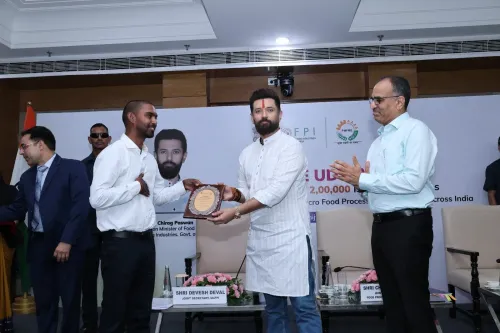
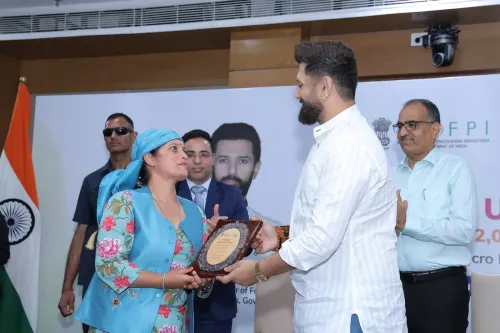
Union Food Processing Minister Chirag Paswan on Saturday, 11 July 2026 invoked Prime Minister Narendra Modi's call for India's youth to become job creators rather than job seekers, framing the PM Formalisation of Micro Food Processing Enterprises (PMFME) Scheme as the on-ground realisation of that vision.
Posting on X, Paswan wrote — 'छोटे खाद्य प्रसंस्करण उद्यमों को ऋण, तकनीक, प्रशिक्षण और बाज़ार से जोड़कर उन्हें मजबूत उद्यम बनने का अवसर मिल रहा है' ('Small food processing enterprises are getting the opportunity to become strong ventures by being linked to credit, technology, training and markets') — adding that this represents 'the true strength of Aatmanirbhar Bharat.'
Context
The post is a reply to Paswan's own handle, functioning as an extended ministerial statement on the PMFME Scheme's purpose. The minister explicitly anchors the scheme in Prime Minister Modi's May 2020 address, in which Modi urged the nation's youth to shift from a job-seeking to a job-creating mindset as part of India's economic revival push. Paswan's framing positions the PMFME Scheme not as a welfare measure but as a structural instrument of entrepreneurship.
Policy Backdrop
The PMFME Scheme was launched in June 2020 under the Aatmanirbhar Bharat package with a total outlay of Rs 10,000 crore, administered by the Ministry of Food Processing Industries. It targets unorganised micro food processing units — the vast majority of India's food sector — by providing credit-linked subsidies, technology upgrades, skill training and market-linkage support. The scheme sits at the intersection of MSME policy, agricultural value-chain development and rural non-farm employment generation.
Food processing has been designated a priority sunrise sector in successive Union Budgets and is complemented by the broader Production Linked Incentive (PLI) framework for the food industry. Reducing post-harvest losses and formalising micro enterprises remain twin policy imperatives driving the ministry's agenda.
Stakeholders and Impact
The primary beneficiaries of the PMFME Scheme are micro food processors, youth entrepreneurs and small and marginal farmers seeking to add value to agricultural produce. By formalising these units, the scheme aims to draw them into the regulated credit system, making them eligible for institutional finance and enabling scale-up.
Rural communities stand to gain from expanded non-farm employment, while the broader economy benefits from reduced food wastage and higher value realisation along the agricultural supply chain. Paswan's statement signals continued ministerial priority for this segment heading into the 2026-27 budget and parliamentary cycle.
What's Next
Parliamentary updates on PMFME utilisation rates and physical targets are expected during the ongoing budget session. State-level implementation progress reports from the Ministry of Food Processing Industries are also anticipated, which will provide a clearer picture of how effectively credit, technology and market linkages are reaching micro enterprises on the ground.
Paswan's public reaffirmation of the scheme's ideological grounding in the 'job creator' vision suggests the ministry intends to sharpen its outreach narrative, potentially ahead of fresh policy announcements or scheme reviews. The sustained emphasis on Aatmanirbhar Bharat as the overarching frame indicates that food processing formalisation will remain a centrepiece of the government's rural entrepreneurship agenda.
Point of View
Reinforcing NDA's narrative that flagship programmes are delivering on foundational promises. By invoking Modi's 'job creator' call, the minister elevates the PMFME Scheme from a technical formalisation exercise to a symbol of ideological continuity. The timing — mid-2026, ahead of expected budget and parliamentary reviews — suggests the ministry is building a public case for continued or expanded outlay. For the LJP (Ram Vilas), which holds this ministry, amplifying a scheme with direct rural and youth reach also carries clear electoral signalling value.
NationPress
10 Oct 2026
Frequently Asked Questions
What is the PMFME Scheme and who benefits from it?
The PMFME Scheme (Pradhan Mantri Formalisation of Micro Food Processing Enterprises) is a central government programme launched in June 2020 with a Rs 10,000 crore outlay. It benefits unorganised micro food processing units, youth entrepreneurs and small farmers by providing credit-linked subsidies, technology support, skill training and market linkages to help them become formal, viable enterprises.
What did PM Modi say about job creators vs job seekers?
In May 2020 , Prime Minister Narendra Modi called on Indian youth to shift from a job-seeking mindset to a job-creating one as part of his address on economic revival and the Aatmanirbhar Bharat initiative. Minister Chirag Paswan has cited this call as the ideological foundation of the PMFME Scheme.
What is Aatmanirbhar Bharat and how does food processing fit in?
Aatmanirbhar Bharat (Self-Reliant India) is an economic initiative announced in May 2020 encompassing sector-specific packages to strengthen domestic manufacturing and entrepreneurship. The food processing sector, including the PMFME Scheme, is a key pillar of this framework, aimed at reducing post-harvest losses and generating rural non-farm employment.
Who is Chirag Paswan and which ministry does he head?
Chirag Paswan is the Union Minister of Food Processing Industries in the NDA government formed in 2024. He is also the national president of the Lok Janshakti Party (Ram Vilas) , a key NDA ally.
What support does the PMFME Scheme provide to micro food enterprises?
The PMFME Scheme offers micro food processing enterprises access to credit-linked subsidies, technology upgrades, skill and entrepreneurship training , and market linkages . The aim is to bring informal units into the formal economy so they can scale up and access institutional finance.