Tharoor recalls defending the UN to a hostile America
Synopsis
Congress MP Dr. Shashi Tharoor has recalled his time as UN Under-Secretary-General, describing the deep American hostility toward the UN during the unipolar era and his personal effort to convince Americans why the organisation mattered to them.
Key Takeaways
Shashi Tharoor served as UN Under-Secretary-General for Communications and Public Information from 2002 to 2007 .
He described widespread American hostility toward the UN during the unipolar post-Cold War era.
The US withheld UN dues through the 1990s , resolved partly by the 1999 Helms-Biden Act .
The 2003 Iraq invasion without UN Security Council authorisation deepened US-UN tensions during Tharoor 's tenure.
Tharoor personally led public diplomacy efforts to rebuild American support for multilateralism.
His reflections connect to ongoing debates over UN funding, reform, and India 's push for a permanent Security Council seat.
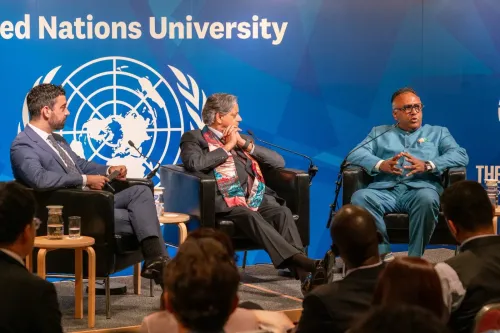
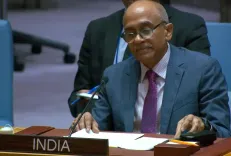
Congress MP Dr. Shashi Tharoor, who served as UN Under-Secretary-General for Communications and Public Information from 2002 to 2007, has shared a candid recollection of his efforts to persuade a sceptical American public of the United Nations' relevance during the height of US unilateralism.
Context
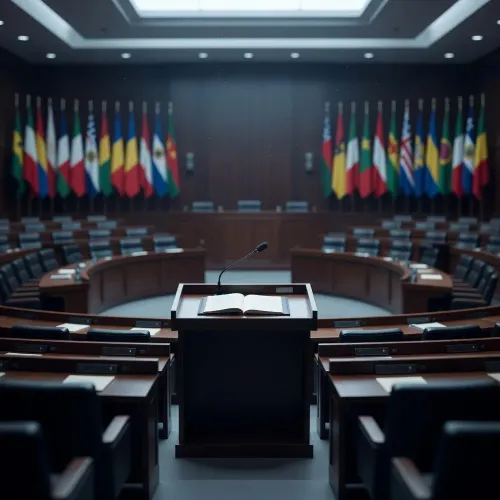
In his post, Dr. Tharoor described 'a lot of American hostility' toward the UN during that period, characterising the organisation as being viewed by many Americans as 'a bunch of foreigners seeking to curb the unfettered freedom of the sole superpower in the unipolar world of that era.' He noted that he personally 'took on the challenge of explaining to Americans why they needed the United Nations.'
The remarks offer a rare first-hand account from a senior UN official who was at the centre of the organisation's public diplomacy machinery at one of its most contested moments.
Policy Backdrop
The era Dr. Tharoor describes was marked by deep institutional friction between Washington and New York. The United States had withheld UN dues through much of the 1990s over sovereignty concerns, a standoff that culminated in the 1999 Helms-Biden Act, which conditioned the release of arrears on specific organisational reforms.
Tensions reached a peak when the US-led invasion of Iraq in 2003 proceeded without explicit UN Security Council authorisation, sharply intensifying American scepticism toward multilateral institutions. Secretary-General Kofi Annan, under whom Dr. Tharoor served, was left navigating a profound credibility crisis for the organisation.
Against this backdrop, the UN's communications department — led by Dr. Tharoor — was tasked with sustaining public and political support for multilateralism inside the very country most hostile to it.
Stakeholders and Impact
The audience Dr. Tharoor was addressing was not merely the American public at large, but also US Congress members, think-tanks, and media circles that shaped the political climate around UN funding and reform. Public diplomacy by senior officials was one of the few levers available to an organisation that had no coercive authority over its most powerful member.
For India, the episode carries a particular resonance: an Indian diplomat was among those most visibly defending the multilateral order at its most vulnerable point, a fact that informed Dr. Tharoor's subsequent advocacy for UN Security Council reform and India's permanent membership.
What's Next
The tensions Dr. Tharoor describes have not fully dissipated. Debates over US contributions to the UN, the authority of the Security Council, and the pace of institutional reform remain live issues ahead of upcoming UN General Assembly sessions. His reflections arrive as multilateralism again faces stress-tests from great-power competition and renewed unilateralist impulses, lending his account a relevance that extends well beyond personal memoir.
Point of View
He implicitly draws a contrast with today's multipolar moment, where the case for multilateralism must again be made against unilateralist headwinds. For an Indian politician who built his global profile inside the UN system, the post also reinforces his credentials as a credible voice on international institutional reform. The subtext — that even the world's most powerful nation ultimately needs the UN — carries a quiet but unmistakable normative charge.
NationPress
19 Sept 2026
Frequently Asked Questions
What was Shashi Tharoor's role at the United Nations?
Dr. Shashi Tharoor served as UN Under-Secretary-General for Communications and Public Information from 2002 to 2007, overseeing the organisation's global public diplomacy and outreach efforts.
Why was the United States hostile to the UN in the early 2000s?
The US viewed the UN as a potential constraint on its freedom of action as the sole superpower. Specific flashpoints included disputes over dues, sovereignty concerns, and the organisation's failure to authorise the 2003 Iraq invasion.
What was the Helms-Biden Act?
The Helms-Biden Act of 1999 was US legislation that conditioned the release of withheld American arrears to the UN on the organisation undertaking specific internal reforms.
Why did the US invade Iraq without UN authorisation in 2003?
The US and its coalition partners proceeded with the invasion after failing to secure explicit UN Security Council authorisation, arguing their existing legal authority was sufficient — a move that sharply strained US-UN relations.
What is Shashi Tharoor's current political position?
Dr. Shashi Tharoor is a Member of Parliament from Thiruvananthapuram, Kerala, representing the Indian National Congress, and is a former Union Minister of State for External Affairs and Human Resource Development.