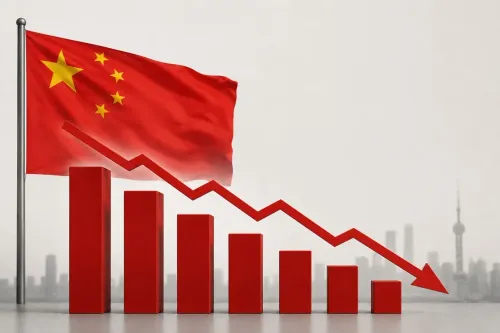
China economy in deep stress: Deflation, weak demand threaten growth
Synopsis
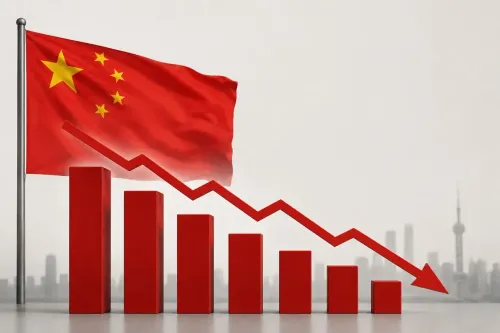
China's deflationary spiral is no longer a fringe concern — Beijing's own central bank advisers are publicly sounding the alarm. With auto sales down 16.1%, household spending in retreat, and a social security budget at just 8% of GDP, the world's second-largest economy is caught between a demand crisis and an ideology that blocks the most direct cure.
Key Takeaways
China's auto sales fell 16.1% year-on-year in May 2026 ; building materials dropped 13.6% , jewellery 8.9% , and home appliances 5.6% .
Current and former central bank advisers at the China Macroeconomic Forum on 27 June publicly warned that deflation is undermining technological innovation.
One adviser called for rural and urban unemployed pension payments to rise from roughly $30 to $150 per month.
China's social security spending stands at just 8% of GDP , far below the 20–25% norm in developed economies and below peers like Brazil and Thailand .
President Xi Jinping warned against Western-style welfare in a 2022 party journal article, a position that continues to constrain demand-side stimulus options.
China's economy is exhibiting serious signs of structural strain, with retail sales shrinking, property values continuing their prolonged slide, and households sharply curtailing major purchases — even as Beijing's own economic advisers now openly warn that collapsing domestic demand is undermining growth potential and technological innovation. The assessment draws on analysis published by Mizzima, a Myanmar-based news outlet.
Key Demand Indicators in Freefall
The scale of the consumption retreat is stark. China's auto sales plunged 16.1% year-on-year in May 2026, while home appliances and electronics declined 5.6%, building materials dropped 13.6%, and jewellery fell 8.9%. These are the high-value, confidence-sensitive categories that economists watch as proxies for household optimism about future income. Double-digit contractions in such segments suggest households are not merely being cautious — they are, according to the analysis, 'bracing for something worse.'
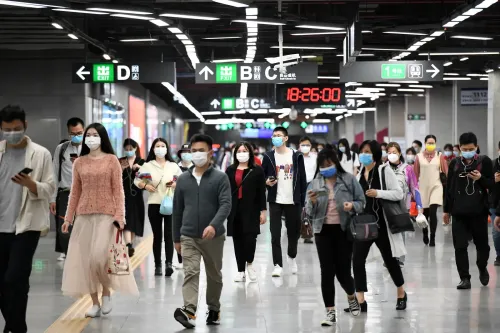
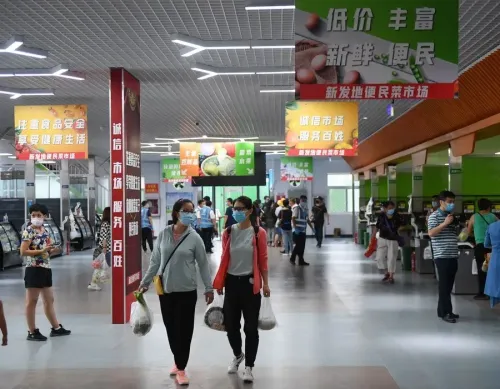
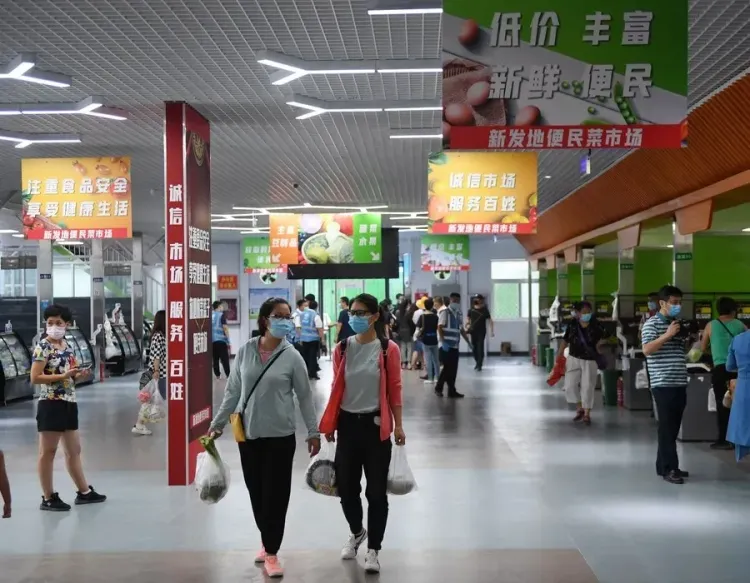
The picture on the ground is equally telling. Supermarket aisles across Chinese cities are reportedly well-stocked, yet foot traffic and transaction volumes remain depressed — a visible marker of deflationary pressure that, according to the analysis, official statistics can no longer fully obscure.
Beijing's Own Advisers Sound the Alarm
At the China Macroeconomic Forum's mid-year session held in Beijing on 27 June, current and former central bank advisers broke publicly from the customary deference to leadership. They identified what they described as the core contradiction facing the world's second-largest economy: supply capacity remains robust, but demand is collapsing — creating a self-reinforcing loop in which weak spending depresses prices, which compresses incomes, which further suppresses spending.
One adviser reportedly stated that a country trapped in deflation cannot sustain technological innovation. Another argued that Chinese household savings rates must fall, and called for pension payments to rural and unemployed urban residents — currently around 200-plus yuan (approximately $30) per month — to quadruple to roughly $150 monthly. That such proposals are being aired by institutional insiders, rather than dissidents, signals the depth of concern within Beijing's own technocratic establishment.
Ideology as Obstacle to Stimulus
Despite global precedents for direct household relief during deflationary episodes, China's leadership has resisted expanding social spending on ideological grounds. In a 2022 party journal article, President Xi Jinping explicitly cautioned against Western-style welfarism, arguing that generous social transfers breed dependency, strain public finances, and risk locking China in the so-called 'middle-income trap.' That framing has since been reiterated across Politburo and State Council sessions.
The consequence is a social security budget that consumes roughly 8% of GDP — well below the 20–25% typical of developed economies, and even below the 15%-plus recorded in developing peers such as Brazil, South Africa, and Thailand.
What This Means for the Global Economy
China's demand slump carries implications well beyond its borders. As the world's largest goods exporter and a key driver of commodity demand, a prolonged deflationary cycle in China risks exporting disinflationary pressure globally — squeezing export revenues for commodity-dependent economies, including several in South and Southeast Asia. Notably, this deterioration comes at a time when China is also navigating elevated trade tensions with the United States and a protracted real-estate sector correction.
Whether Beijing pivots toward more aggressive demand-side intervention — or holds the ideological line — may determine not just China's near-term growth trajectory, but the pace of global recovery in the second half of 2026.
Point of View
The polite fiction of managed deceleration collapses. Beijing's ideological resistance to welfare expansion is now a measurable macroeconomic cost: an 8% social-security-to-GDP ratio in a deflationary environment is not fiscal prudence, it is demand destruction by policy choice. The risk for the rest of the world, including India, is that a China exporting deflation through suppressed domestic prices is a China that undercuts manufacturing competitiveness globally — precisely when India is trying to position itself as the alternative production hub.
NationPress
9 Oct 2026
Frequently Asked Questions
What is happening with China's economy in 2026?
China's economy is experiencing significant deflationary stress, with consumer demand falling sharply across key categories. Auto sales dropped 16.1% year-on-year in May 2026, while building materials, electronics, and jewellery also recorded steep declines, signalling a broad retreat in household spending confidence.
Why are China's own advisers warning about the economy?
At the China Macroeconomic Forum's mid-year session on 27 June, current and former central bank advisers publicly stated that weak demand is feeding a deflationary loop that threatens both growth and technological innovation. Their willingness to break from the official script reflects how serious insiders believe the situation has become.
Why isn't China expanding social spending to boost demand?
President Xi Jinping argued in a 2022 party journal article that Western-style welfare spending breeds dependency and risks trapping China in the middle-income trap. This ideological position has been reinforced in Politburo and State Council meetings, keeping China's social security budget at roughly 8% of GDP — well below global peers.
How does China's social spending compare to other countries?
China's social security budget accounts for approximately 8% of GDP, compared to 20–25% in developed economies. Even developing-country peers such as Brazil, South Africa, and Thailand allocate more than 15% of GDP to social spending.
What are the global implications of China's demand slump?
A prolonged deflationary cycle in China risks exporting disinflationary pressure to global markets, squeezing commodity exporters and undercutting manufacturing competitors. The slowdown coincides with heightened US-China trade tensions and an ongoing real-estate sector correction, compounding the external risk.