China consumer stocks near 10-year low as MSCI index plunges 18% in six months
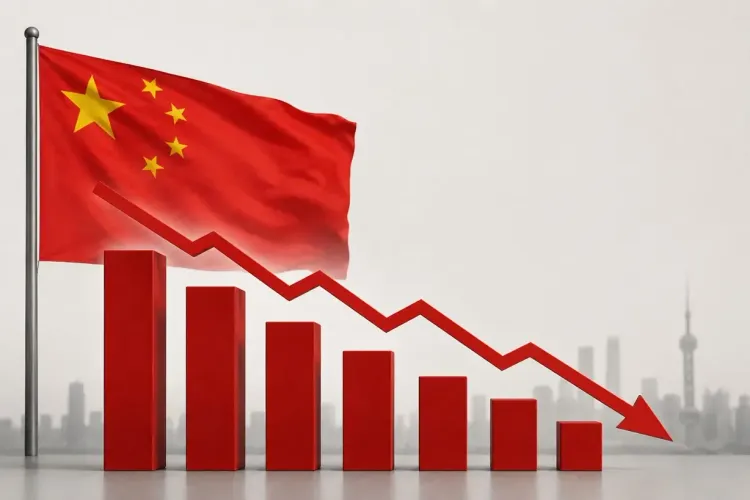
Synopsis
China's consumer stocks are in freefall — down 18% in six months and nearing a decade-low — while companies in the sector missed earnings expectations by nearly 50%. With retail sales barely growing and independent analysts putting real GDP at 2–3% rather than the official 4.5–5%, the gap between Beijing's economic narrative and ground reality is narrowing fast.
Key Takeaways
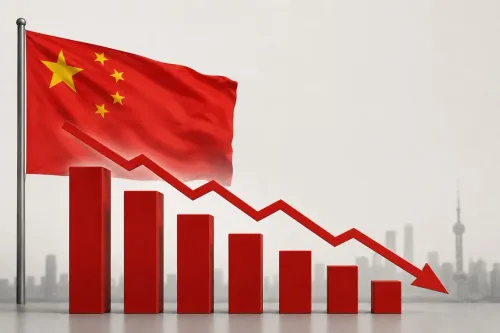
MSCI China consumer goods sub-indices have dropped roughly 18% in six months, nearing a 10-year low .
Consumer durable companies in the index missed profit expectations by nearly 50% in the latest earnings season.
Retail sales grew just 0.4% in August 2026 and 1% in June 2026 , signalling near-stagnation in household spending.
Independent analysts estimate China's real GDP growth at 2–3% , well below the official 4.5–5% range.
Investors have rotated out of consumption stocks into AI and technology plays, leaving the sector, in expert terms, 'sold indiscriminately.' China's property sector collapse and surging local government debt are compounding consumer confidence pressures.
MSCI China's consumer goods sub-indices have plunged roughly 18% over the past six months, approaching a 10-year low, as weak household demand and a deepening structural imbalance weigh on the world's second-largest economy. The slide underscores a widening divergence between China's technology-driven investment narrative and the faltering real-economy conditions facing ordinary consumers.
Consumer Sector Takes the Hardest Hit
During the latest earnings season, consumer durable companies listed in the MSCI China index missed profit expectations by nearly 50%, according to reports — a staggering shortfall that signals demand destruction rather than a temporary blip. Retail sales growth came in at just 0.4% in August 2026, a figure analysts describe as consistent with near-stagnation in consumer activity. As a point of comparison, retail sales expanded by barely 1% in June 2026, reflecting a population that is increasingly saving rather than spending amid economic uncertainty.
Investors Crowd Into AI, Abandon Consumption
Market experts note that investor capital has become increasingly concentrated in artificial intelligence and technology companies, while the consumption sector has, in their words, 'been sold indiscriminately.' The result is a lopsided market that mirrors a lopsided economy — one where state-backed industrial output and tech investment continue to attract attention, even as the consumer engine sputters. This bifurcation between China's AI-driven capital markets narrative and its domestic consumption reality is becoming harder for policymakers to paper over.
Broader Economic Cracks Widen
China's economy, once among the world's fastest-growing major economies, is now contending with key sectors in contraction and unemployment on the rise. Official GDP growth figures continue to hover in the 4.5–5% range, but independent analysts and institutions suggest the real figure may be considerably lower — closer to 2–3%, according to assessments cited in regional media reports. Critics argue the gap between official data and ground reality reflects the pressure on authorities to maintain the appearance of robust growth. The Chinese Communist Party (CCP), analysts note, has long tied its political legitimacy to economic performance, making transparent reporting of deterioration politically sensitive. 'The cracks are now too wide to ignore,' one cited analysis states, pointing to a property sector that 'once was the engine of household wealth' but has since collapsed.
Property Collapse and Debt Overhang Compound Pressure
The implosion of China's real-estate market remains a central drag on consumer wealth and confidence. Households that once parked savings in property assets have seen those holdings lose value, dampening willingness to spend. Simultaneously, debt levels among local governments have, according to reports, risen to unsustainable heights — constraining fiscal space for meaningful stimulus. This combination of a deflated property sector, cautious consumers, and debt-burdened local administrations creates a feedback loop that standard monetary easing has so far failed to break.
What to Watch
Markets and analysts will closely monitor China's next retail sales print and any policy stimulus announcements from Beijing as the government attempts to rebalance growth toward domestic consumption. Whether Beijing can credibly shift its growth model — or whether the structural imbalances deepen further — will have consequences not just for Chinese equities but for global supply chains, commodity demand, and emerging market sentiment broadly.
Point of View
More recently, AI investment could substitute for genuine domestic consumption growth, but the earnings data now show that bet is failing in real time. The 50% profit miss across consumer durables is the kind of number that cannot be attributed to seasonal noise. More troubling is the credibility gap: if independent analysts are right that actual GDP growth is closer to 2–3%, then the official 4.5–5% figure is masking a far more serious deceleration, and policy responses calibrated to the official number will be systematically insufficient. The downstream risk for global markets — commodity demand, supply-chain investment decisions, and EM equity flows — is underappreciated.
NationPress
29 Sept 2026
Frequently Asked Questions
How much have China's consumer stocks fallen in 2026?
MSCI China's consumer goods sub-indices have dropped roughly 18% over the past six months as of late September 2026, bringing the index close to its lowest level in a decade. Weak retail sales and a steep earnings miss have driven the decline.
Why are China's consumer companies missing profit expectations?
Consumer durable companies in the MSCI China index missed earnings forecasts by nearly 50% in the latest reporting season, reflecting depressed household demand. Retail sales grew just 0.4% in August 2026, consistent with a population that is saving rather than spending amid economic uncertainty.
Is China's official GDP growth figure accurate?
China's official GDP growth is reported at 4.5–5%, but independent analysts and institutions cited in regional media assessments suggest the real figure may be closer to 2–3%. Critics argue political incentives within the Chinese Communist Party create pressure to overstate growth performance.
What role has the property sector collapse played in China's consumer slowdown?
China's property sector, once the primary store of household wealth, has collapsed — eroding the balance-sheet confidence of millions of homeowners. Combined with rising local government debt and limited fiscal room for stimulus, the property downturn has reinforced a cycle of cautious consumer behaviour that is now visible in retail sales data.
Why are investors abandoning China's consumption sector for AI stocks?
According to market experts, investors have grown increasingly concentrated in AI and technology companies, which carry a more optimistic growth narrative, while consumer-facing stocks have been, in their description, 'sold indiscriminately.' The shift reflects a broader loss of confidence in China's domestic demand recovery.