China prioritises big tech over consumers, fuelling export surplus: Analysis
Synopsis
Beijing is running a calculated trade-off: starve domestic consumers to power an export machine. With a 3.99 trillion yuan goods surplus in just six months, a yuan the IMF calls 20% undervalued, and Xi Jinping's own 2021 essay blocking welfare transfers, China's leadership has made its bet — national power over household welfare. The rest of the world is absorbing the cost.
Key Takeaways
China's Politburo dropped 'special initiatives to boost consumption' from its strategy document this year, signalling a formal deprioritisation of household welfare.
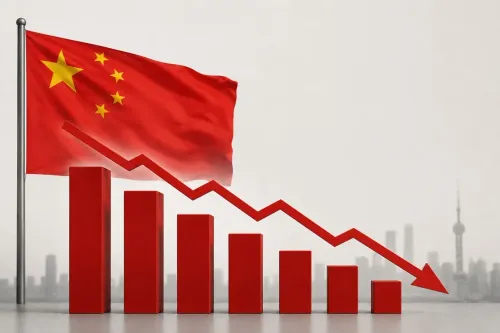
China recorded a goods trade surplus of 3.99 trillion yuan in the first half of this year , with exports up 17.6 per cent in dollar terms.
The IMF estimates the yuan is approximately 20 per cent undervalued and notes state banks appear to be intervening to slow its rise.
Beijing rejected an IMF proposal to spend roughly a trillion dollars completing pre-sold housing or compensating buyers.
Xi Jinping's 2021 common prosperity essay, which still governs policy, explicitly opposes direct welfare transfers to citizens.
The export-dependent model structurally disadvantages trading partners, including India , through artificially cheap Chinese goods.
China's leadership is doubling down on its 'AI plus' initiative and frontier technology ambitions while deliberately sidelining domestic consumer demand — a strategic trade-off that keeps factory goods cheap for foreign buyers and sustains a ballooning trade surplus, according to an analysis published in Foreign Policy magazine.
The Deliberate Neglect of the Household
The Foreign Policy piece argues that Beijing's indifference to weak consumer spending is not an oversight but a conscious policy choice. 'The neglect of the household is a top-down decision, a cost that the Chinese leadership has determined is worth paying for the sectors it counts on for national power,' the article states.
Notably, the Chinese Politburo's strategy document for this year has dropped even the limited 'special initiatives to boost consumption' that appeared in last year's version — a signal, analysts argue, that household welfare has been formally deprioritised.
IMF Warning and Beijing's Rebuttal
The International Monetary Fund (IMF), in its latest review of China's economy, reportedly proposed that Beijing spend roughly a trillion dollars completing the country's unfinished pre-sold apartments or compensating buyers who are left in limbo. Beijing rejected the suggestion outright, stating it planned no additional spending to finish pre-sold housing and that broader social spending would have to wait on fiscal sustainability.
Some Chinese economists have long argued for direct transfers — cash or vouchers — placed directly in consumers' hands. However, Xi Jinping's 2021 essay on common prosperity, which the article notes still governs policy, explicitly warned that the state must never fall into the trap of a welfarism that 'raises lazy people.'
Currency Undervaluation and the Export Engine
China recorded a goods trade surplus of 3.99 trillion yuan in the first half of this year, with exports rising 17.6 per cent in dollar terms. According to the article, this surplus would ordinarily push the yuan significantly higher than its current level of approximately 6.79 to the dollar — but Beijing has shown no appetite for a stronger currency.
The IMF's new External Sector Report states that the yuan is around 20 per cent undervalued, and notes that state banks appear to have been intervening to slow its appreciation — a charge that Beijing has not publicly addressed.
The Structural Lock-In
The Foreign Policy analysis argues that China's economic model creates a self-reinforcing trap. With large-scale government funds flowing into technology drives and stock market support, little fiscal headroom remains for household income boosts. This locks the economy onto export dependence, which in turn requires a weak currency to remain competitive.
The article notes that if Beijing reversed course — spending heavily to lift household incomes — Chinese factories would sell more domestically, imports would rise, and the trade surplus would shrink. But a serious consumption boost would, in effect, undermine the geopolitical leverage that Beijing has built from its sustained trade surplus. This comes amid growing international scrutiny of China's export-led model and mounting trade tensions with both the United States and Europe.
What This Means for Global Trade
For trading partners, including India, the implications are significant. Cheap Chinese exports — subsidised indirectly by suppressed domestic consumption — continue to flood global markets, putting pressure on domestic manufacturers. As long as Beijing maintains this model, the structural imbalance in global trade is unlikely to correct itself.
Point of View
Leaving technocrats without a politically viable demand-stimulus tool. The yuan undervaluation finding from the IMF's External Sector Report deserves more attention than it has received — state bank intervention to suppress the currency is, in effect, a hidden subsidy to Chinese exporters paid for by suppressed Chinese wages. For India and other emerging markets competing in the same export categories, this is not an abstract macroeconomic debate; it is a live competitive threat with no near-term resolution in sight.
NationPress
27 Sept 2026
Frequently Asked Questions
Why is China ignoring domestic consumer demand?
According to a Foreign Policy analysis, it is a deliberate top-down decision by China's leadership to prioritise national power — specifically its 'AI plus' technology drive and new pillar industries — over household welfare. The logic is that suppressing domestic consumption keeps goods cheap for foreign buyers and sustains China's export surplus.
How large is China's current trade surplus?
China recorded a goods trade surplus of 3.99 trillion yuan in the first half of this year, with exports rising 17.6 per cent in dollar terms. The IMF has noted that the yuan appears to be around 20 per cent undervalued, partly due to apparent state bank intervention.
What did the IMF recommend, and how did Beijing respond?
The IMF proposed that Beijing spend roughly a trillion dollars to complete unfinished pre-sold apartments or compensate buyers. Beijing rejected the proposal, stating it planned no additional housing expenditure and that social spending would have to wait on fiscal sustainability.
Why won't China introduce direct cash transfers or welfare payments to citizens?
Xi Jinping's 2021 essay on common prosperity, which still governs policy, explicitly warned against welfarism that 'raises lazy people.' This ideological constraint has effectively blocked direct transfers, even as Chinese economists have argued for them for years.
How does China's export model affect countries like India?
Artificially cheap Chinese exports — made possible by suppressed domestic consumption and a reportedly undervalued yuan — flood global markets and undercut domestic manufacturers in competing economies, including India. As long as Beijing maintains this model, the structural trade imbalance is unlikely to self-correct.