CM Fadnavis launches CM Fellowship 2026, backs youth-led governance reform
Synopsis
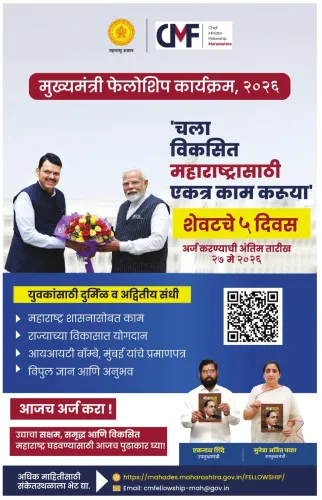
Chief Minister Devendra Fadnavis launched the CM Fellowship Programme 2026 on Independence Day, crediting outgoing fellows with contributions to GIS mapping, war rooms, chatbots and tribal welfare, while urging the new batch to lead governance change from within.
Key Takeaways
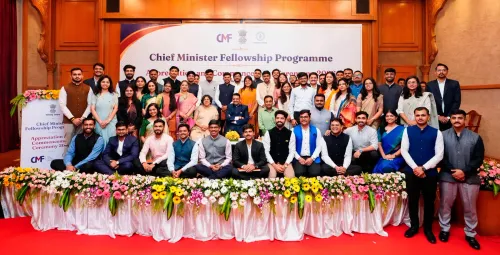
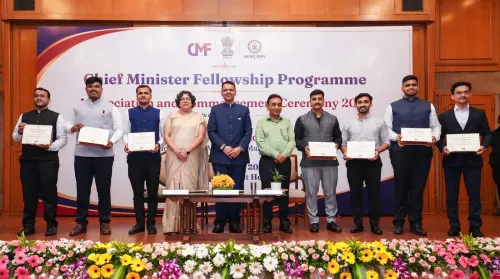
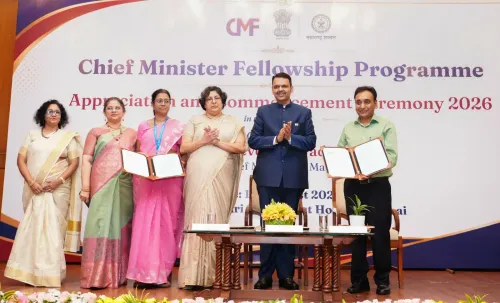
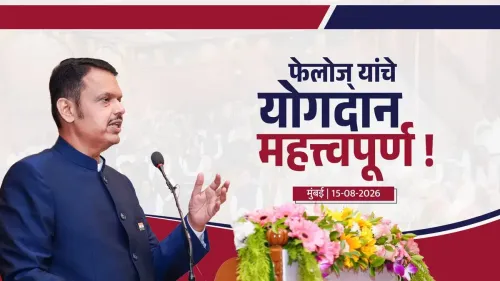
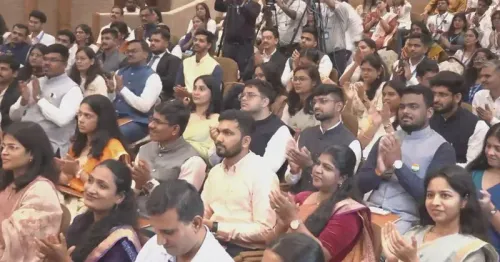
CM Devendra Fadnavis presided over the CM Fellowship Programme 2026 felicitation and launch on 15 August 2026 .
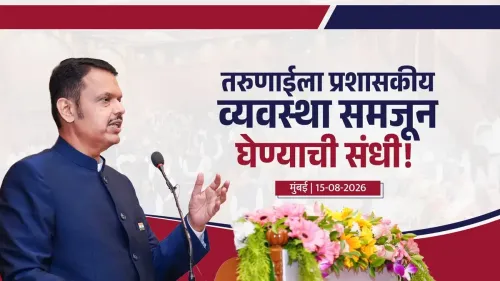
Fadnavis acknowledged that long-serving bureaucrats can lose creative edge, making youth infusion into administration essential.
Outgoing fellows contributed to Jalayukt Shivar GIS mapping , district war rooms, governance dashboards, chatbots, and the Maharashtra Unique Infra ID .
Fellows also drove ground-level work under Lakhpati Didi , Magel Tyala Shettale , the 100-day and 150-day action programmes , and tribal education and health projects.
Fadnavis called for a new work culture where citizen-friendly processes are adopted first and formal government orders follow — not the reverse.
The incoming 2026 batch was challenged to outperform its predecessors and begin change within their own sphere of work.
Fresh ideas over entrenched habit — that is the governing philosophy Chief Minister Devendra Fadnavis put at the centre of the CM Fellowship Programme 2026 felicitation and launch ceremony held on Saturday, 15 August 2026 in Maharashtra. Speaking at the event, Fadnavis made an unusually candid admission: even the most experienced bureaucrats can lose creative edge and ground-level touch over time, and that gap is precisely what young fellows are expected to fill.
Why Fadnavis says the bureaucracy needs a jolt from the outside
The Chief Minister did not mince words. 'दीर्घकाळ एकाच पद्धतीने काम करताना कल्पकता आणि ग्राउंडशी असलेला संपर्क काही प्रमाणात कमी होऊ शकतो' — 'working in the same manner for a long time can gradually erode creativity and connection with the ground,' he said. The fellowship, he argued, is not a one-way street where young professionals simply absorb administrative wisdom. The exchange runs both ways: fellows bring startup sensibilities, data fluency and fresh questions that a career official may no longer think to ask. Without understanding the aspirations and working styles of the new generation, he said, truly inclusive governance is impossible.
What the outgoing batch actually built
Fadnavis credited the previous cohort with meaningful contributions across a striking range of initiatives: the state's Startup Policy, the Maharashtra State Innovation Society, district-level war rooms, governance dashboards, GIS mapping for the Jalayukt Shivar Abhiyan water-conservation scheme, the 'Magel Tyala Shettale' farm-pond scheme, e-governance and grievance-redressal systems, AI-powered chatbots, and the Maharashtra Unique Infra ID framework. Fellows also contributed to the government's high-profile 100-day and 150-day action programmes, and worked on the ground in housing schemes, the Mukhyamantri Samruddha Panchayat Raj Abhiyan, the Lakhpati Didi initiative, market-linkage drives for farmers and women's self-help groups, and education and health projects in tribal areas.
The call to the 2026 batch: start the change yourself
Fadnavis closed with a challenge aimed squarely at the incoming fellows. Do not ask, he said, 'मी एकटा किती परिवर्तन करू शकणार?' — 'how much change can I alone bring?' — and wait for someone else to act. Begin the transformation from within your own sphere, use the fellowship experience to understand what communities actually need, and set a higher bar than the batch before you. He also called for a cultural shift inside government itself: rather than waiting for a formal administrative order before adopting citizen-friendly processes, officials should embrace simpler, people-first methods first and let the paperwork follow.
Point of View
This could become a replicable model other states benchmark against.
NationPress
16 Aug 2026
Frequently Asked Questions
What is the CM Fellowship Programme in Maharashtra?
The CM Fellowship Programme is a Maharashtra government initiative that embeds young professionals within the state administration to bring fresh ideas, technology and innovation to governance. Fellows work across departments on projects ranging from e-governance to rural welfare schemes.
What did CM Devendra Fadnavis say at the CM Fellowship 2026 launch?
Fadnavis said long-serving officials can lose creative edge over time, making youth participation in governance essential. He urged the new batch to initiate change themselves rather than waiting for top-down orders, and called for a culture where people-friendly processes come before formal administrative decisions.
What projects did CM Fellows contribute to before the 2026 launch?
Previous CM Fellows contributed to the Maharashtra Startup Policy, the Maharashtra State Innovation Society, district war rooms, governance dashboards, GIS mapping for Jalayukt Shivar, the Magel Tyala Shettale farm-pond scheme, e-governance systems, chatbots, and the Maharashtra Unique Infra ID, among other initiatives.
What is the Jalayukt Shivar Abhiyan and how are CM Fellows involved?
Jalayukt Shivar Abhiyan is Maharashtra's flagship water conservation programme. CM Fellows contributed GIS mapping work to the scheme, helping track and monitor water conservation sites using geospatial technology.
When was the CM Fellowship Programme 2026 launched?
The CM Fellowship Programme 2026 felicitation and launch ceremony was held on 15 August 2026 , Independence Day, presided over by Chief Minister Devendra Fadnavis.