China's Inflated Growth Metrics Masking Serious Economic Crisis: Report

Synopsis
A recent investigation reveals alarming truths about China's economic health, exposing inflated growth figures and highlighting critical issues such as soaring debt and a declining birth rate. Discover how these factors threaten the stability of the world's second-largest economy.
Key Takeaways
China's actual growth rate is estimated at 2.5% to 3.0%.
The country faces significant bad debt challenges.
An aging population and low birth rates contribute to economic strain.
Government revenues are projected to decline by 1.7% in 2025.
Youth unemployment may exceed 40% .
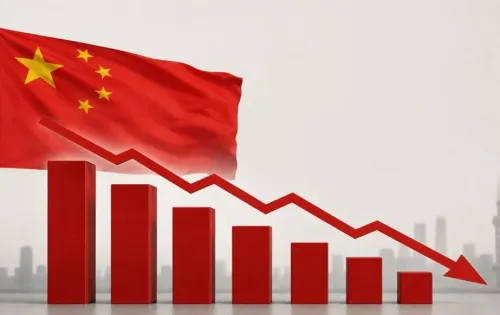
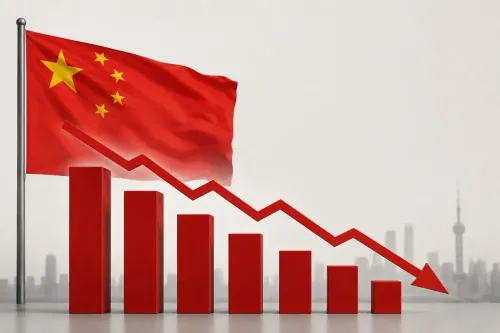
New Delhi, April 2 (NationPress) A recent report has revealed that China’s official growth statistics are misleading, indicating that the nation’s economy is facing significant threats from escalating bad debt and a swiftly aging population. According to Japanese news outlet Nippon.com, the Rhodium Group, a US think tank, estimates that the actual growth rate of China's economy is approximately 2.5–3.0 percent, in stark contrast to the government's projected GDP growth rate of 5 percent for 2025.
Experts monitoring China's economy suggest that the country may be experiencing virtually no growth at all.
The report identifies two critical challenges confronting China's economic future: an overwhelming amount of bad debt stemming from a financial bubble and a reversed demographic structure due to low birth rates and an aging populace.
Furthermore, the report indicates persistent signs of deflation, with real growth outpacing nominal growth for three consecutive years.
It also mentioned a 1.7 percent decline in total government revenues in 2025, marking the first such decrease since the COVID-19 pandemic began in 2020.
The volume of non-performing loans in China is reportedly much higher than Japan’s post-bubble economic burden, which is approaching a critical credit bubble situation.
“Following the collapse of its bubble economy, Japan faced roughly ¥100 trillion in bad debts. In comparison, China’s non-performing loans are estimated to be around ¥1.5 quadrillion,” the report cautioned.
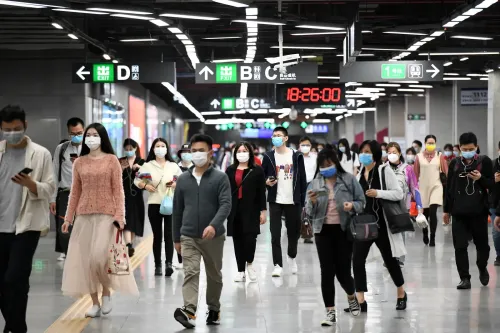
Visible signs of economic distress can be seen on social media and in real life, with streets filled with shuttered businesses, vacant shopping malls, and individuals struggling for survival.
The report further suggests that certain economists in China believe the youth unemployment rate exceeds 40 percent. China's population has declined from its peak in 2021, with only 7.92 million births recorded in 2025 compared to 15 million annually up until 2018.
The media has attributed China’s deteriorating economic situation to President Xi Jinping’s mismanagement, which favors larger, state-owned enterprises while stifling innovation.
aar/pk
Point of View
I observe that the report's findings on China's economic indicators raise significant concerns. The discrepancies in growth data, coupled with alarming debt levels and demographic challenges, paint a troubling picture for the nation's economic future. It is imperative for policymakers and citizens alike to address these issues seriously.
NationPress
3 Oct 2026
Frequently Asked Questions
What are the actual growth figures for China's economy?
The actual growth of China's economy is estimated to be between 2.5% and 3.0%, significantly lower than the government's reported 5% for 2025.
What challenges is China's economy currently facing?
China's economy is facing major challenges, including mounting bad debt and a rapidly aging population.
How has the youth unemployment rate in China changed?
Some economists estimate that the youth unemployment rate in China exceeds 40%.
What signs of economic distress are visible in China?
Visible signs include shuttered shops, empty malls, and reports of homelessness in urban areas.
How does China's non-performing loans compare to Japan's?
China's non-performing loans are estimated at about ¥1.5 quadrillion, significantly higher than Japan's post-bubble bad debts.