UN chief calls UNSC reform 'absolute priority', decries veto-power impunity
Synopsis
UN chief António Guterres has gone further than usual — naming P5 conduct itself as a driver of global lawlessness and calling UNSC reform an 'absolute priority'. With ongoing vetoes blocking action on Gaza, Ukraine, and Sudan, his remarks at the General Assembly high-level week land at a moment of maximum pressure on a body that has not fundamentally changed since 1945.
Key Takeaways
UN Secretary-General António Guterres declared Security Council reform an 'absolute priority' on 17 September at UN headquarters, New York .
He argued the Council's 1945 composition no longer reflects today's world, calling it a structural driver of paralysis.
Guterres said P5 conduct has created an 'environment of impunity' that encourages nations to violate international law , humanitarian law , and human rights law .
Countries such as India exceed some permanent members in economic and political weight yet have no permanent seat on the Council.
Calls for reform include both expanding permanent membership and restricting veto use in cases involving humanitarian crises or direct P5 interest.
Reform faces a structural obstacle: amending the UN Charter requires unanimous approval from all five current permanent members.
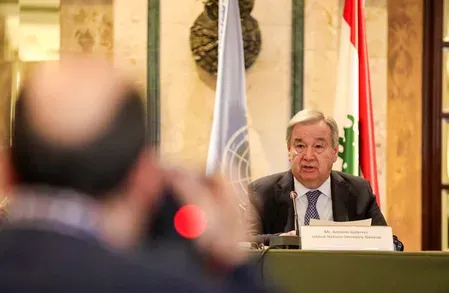
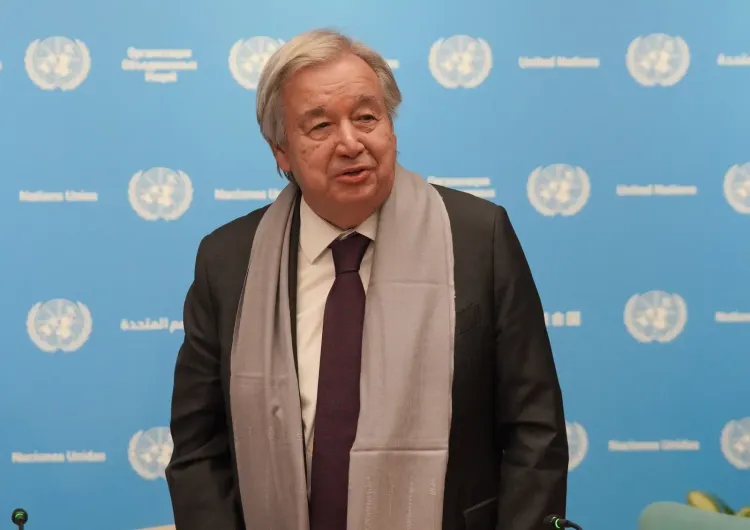
United Nations Secretary-General António Guterres on Wednesday, 17 September condemned the UN Security Council's structural paralysis as unacceptable, declaring its reform an 'absolute priority' and warning that the conduct of permanent members has fostered a global 'environment of impunity' that emboldens nations to defy international law.
A Council Frozen in 1945
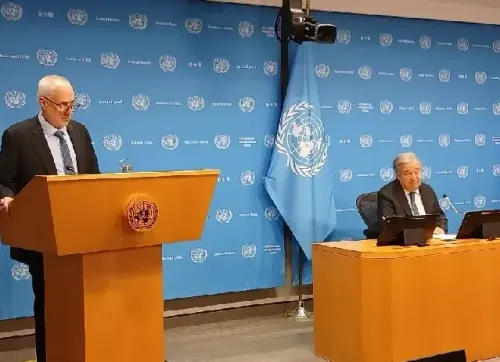
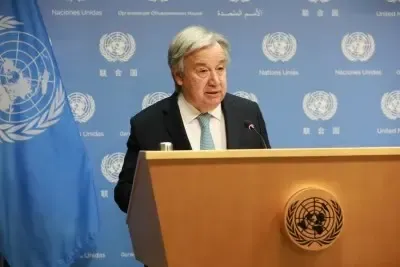
Speaking at a press conference at United Nations headquarters in New York, Guterres argued that the Security Council's composition remains rooted in the post-World War II order of 1945, when the victors of the war were awarded permanent seats and veto powers. 'It is unacceptable to have a Security Council with a composition that reflects the world that existed many decades ago, instead of reflecting today's world, and that is a factor of paralysis,' he said.
The Council, the UN's highest decision-making body, has five permanent members — the United States, United Kingdom, France, Russia, and China — each holding veto authority. Since 1945, the global order has shifted dramatically, with the emergence of the Global South through successive waves of post-war independence movements. Nations from Africa, Asia, and Latin America now dominate the UN's overall membership yet remain effectively locked out of the Council's permanent power structure.
India and Others Left Out of Power Equation
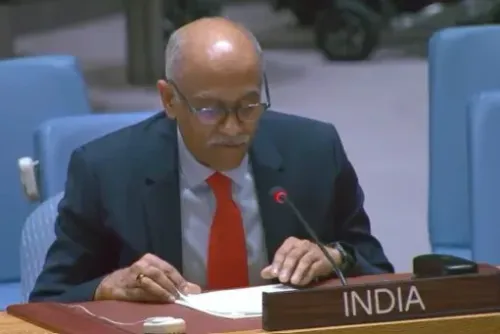
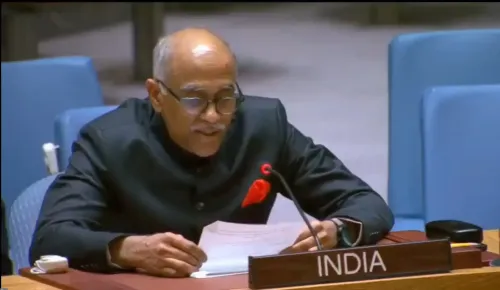
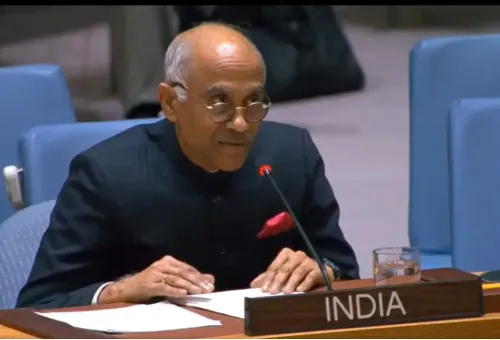
Guterres pointedly noted that countries such as India — as well as others across Asia and Europe — surpass some existing permanent members in both economic scale and geopolitical influence, yet have no permanent voice in the body that shapes global peace and security. The remark underscores a long-standing demand by India, Brazil, Germany, and Japan — the so-called G4 — for permanent seats on an expanded Council.
Beyond simply enlarging the Council's membership, reformers have also called for restricting the use of the veto, particularly in cases where permanent members have a direct interest, or where potential crimes against humanity or humanitarian crises are at stake.
Impunity Breeds Lawlessness, Guterres Warns
The Secretary-General made his sharpest remarks on the culture of impunity he believes the Council's dysfunction has generated. 'We have powers that themselves violate international law and sit in the Security Council' — a body charged with maintaining global peace, he said, adding that geopolitical divides have rendered it effectively non-functional in the face of active crises.
'The example coming from the biggest powers is not a good example, and every country around the world feels that they are entitled to do whatever they want,' Guterres said. He warned that this has produced a cascade of violations: 'More and more countries violating international law, more and more countries violating international humanitarian law, more and more countries violating human rights law — and doing it in total impunity.'
This comes amid ongoing conflicts in Ukraine, Gaza, and Sudan, where the Security Council has repeatedly failed to reach consensus, with vetoes blocking or delaying action. Notably, this is not the first time Guterres has raised the alarm — but the language on Wednesday was notably sharper, framing P5 conduct itself as a source of global disorder.
The Case for Structural Reform
Reform of the Security Council has been debated for decades with little tangible progress, largely because any amendment to the UN Charter requires the approval of all five permanent members — each of whom stands to lose relative influence. Critics argue this creates a structural conflict of interest that makes meaningful reform virtually self-blocking.
With the UN General Assembly's high-level week under way in New York, Guterres's remarks are expected to intensify diplomatic conversations around the 'Pact for the Future' reform agenda adopted at the Summit of the Future. Whether those conversations translate into binding commitments remains an open question.
Point of View
Which has the world's largest population and the fifth-largest economy yet no permanent seat, this moment is both vindicating and frustrating — it confirms the inequity without offering a remedy. The 'Pact for the Future' gives reformers a rhetorical foothold, but absent P5 buy-in, the Council's composition in 2036 is likely to look exactly as it does today.
NationPress
17 Sept 2026
Frequently Asked Questions
What did UN Secretary-General Guterres say about the Security Council?
Guterres said Security Council reform must be an 'absolute priority', arguing that its outdated 1945 composition is a key factor behind its paralysis in the face of active global crises. He also warned that permanent members' own violations of international law have created a global environment of impunity.
Why is the UN Security Council considered outdated?
The Security Council was established in 1945 with five permanent members — the US, UK, France, Russia, and China — reflecting the post-World War II power order. Since then, the Global South has emerged as a dominant force in global politics and now constitutes the majority of UN membership, yet remains without permanent representation on the Council.
What reforms are being proposed for the Security Council?
The main proposals include expanding the number of permanent seats to reflect contemporary geopolitical realities — with India, Brazil, Germany, and Japan among the frontrunners — and restricting or reforming the veto power, especially for cases involving humanitarian crises or issues where permanent members have a direct interest.
Why is UNSC reform so difficult to achieve?
Reforming the UN Security Council requires an amendment to the UN Charter, which must be approved by all five current permanent members. Since each P5 member would lose relative power under most reform scenarios, there is a structural conflict of interest that has kept the Council's composition unchanged for over seven decades.
How does India factor into the Security Council reform debate?
India is widely cited as one of the strongest candidates for a permanent seat on an expanded Security Council, given that it surpasses some existing permanent members in economic scale and geopolitical influence. Guterres specifically referenced countries like India as examples of powers excluded from the Council's permanent structure despite their global weight.