Is India Right to Worry About 'Parallel' Platforms to the UN?
Synopsis
India has raised alarms about the emergence of platforms that operate independently alongside the UN, threatening its authority in peace and security matters. As the Security Council struggles with paralysis, the call for reform grows louder. Explore the implications of these developments on global governance and the future of international law.
Key Takeaways
India is concerned about the rise of alternative platforms to the UN.
Calls for UN reform are growing louder amid Security Council paralysis.
The Board of Peace poses a challenge to the UN's authority.
Effective global governance requires adaptation to contemporary realities.
Veto powers hinder the Council's ability to respond to crises.
United Nations, Jan 27 (NationPress) India has voiced its apprehensions regarding the rise of platforms that operate in a “parallel” manner to the United Nations, attempting to assume roles related to peace and security amid the current standstill of the Security Council.
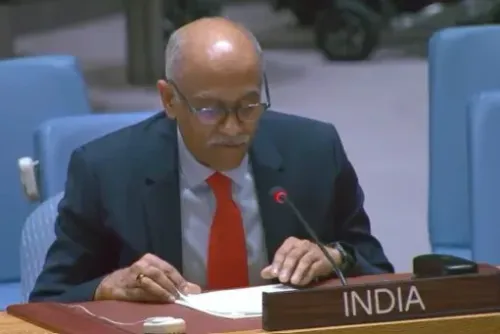
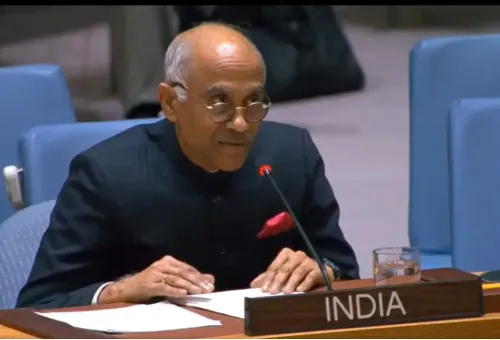
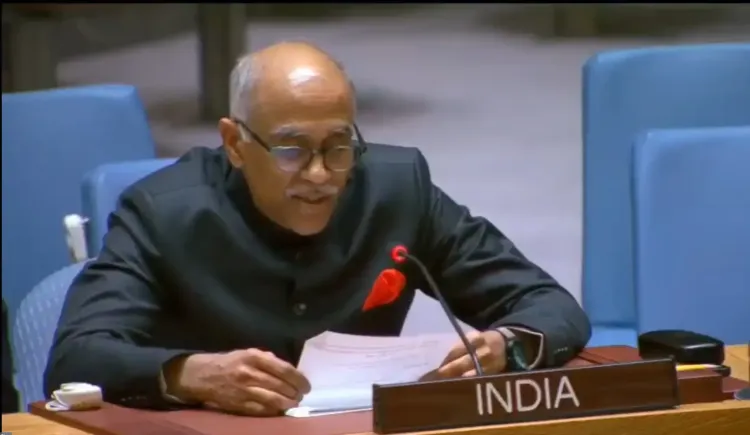
“Discussions surrounding security have shifted towards parallel plurilateral frameworks, which sometimes involve private sector participants striving for outcomes on peace and security outside the auspices of the United Nations,” cautioned India’s Permanent Representative, P. Harish, on Monday, advocating for reform within the Council.
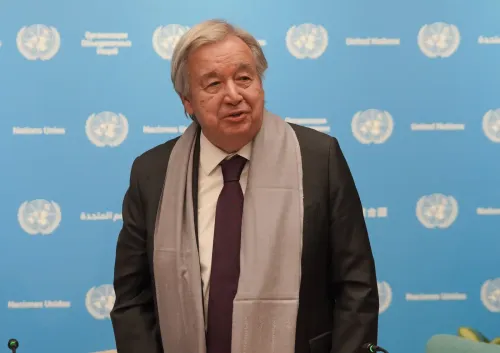
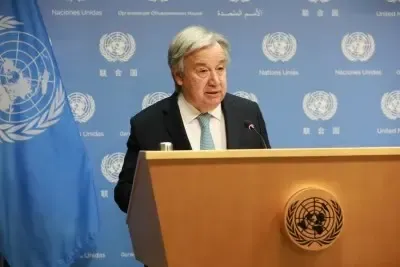
Secretary-General Antonio Guterres emphasized that no organization or “ad-hoc” coalition can usurp the authority of the Council.
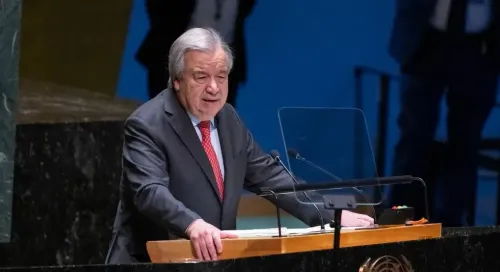
He stated that only the Security Council possesses the ability to make decisions that are binding on all members, and “no other body or ad-hoc coalition can legally obligate all member states to adhere to decisions regarding peace and security,” during a high-level debate on “Reaffirming International Rule of Law”.
“The Security Council is the sole body that can authorize the use of force under international law, as outlined in the Charter,” he reiterated. “Its duties are singular and its obligations are universal.”
Consequently, he asserted that reform of the Council is imperative.
“That is why we must act promptly to improve the representation and effectiveness of this Council,” he added.
Guterres’ mention of an “ad hoc coalition” and Harish’s reference to “parallel plurilateral frameworks” pertained to the Board of Peace established by US President Donald Trump, which is viewed as a challenge to the UN.
With diplomatic skill, they deliberately avoided naming him or the Board.
Trump stated last week at Davos: “Once this (Peace) Board is completely formed, we can do pretty much whatever we want to do.”
Although he added a caveat, “We’ll do it in conjunction with the United Nations,” it still signaled a diminished role for the UN, suggesting it would lose its monopoly under the Charter for enforcing international peace and security.
Trump introduced the Board as part of his Gaza peace initiative, which is intended to supervise the reconstruction of the devastated area.
The proposal garnered the support of the Security Council.
Trump has since indicated that the Board could assume a wider role in international security.
The Board of Peace consists of 22 members, including Pakistan, and Trump has offered “permanent” membership in exchange for contributions of $1 billion.
Western nations, with the exception of Belgium, have largely refrained from joining the Board, which is predominantly composed of Muslim-majority countries, with 13 members.
Advocating for immediate reform of the Council and the addition of permanent members, Harish stressed that it is vital to enhance the effectiveness of the international rule of law, particularly when the global organization “at its core is under strain.”
The paralysis and inefficacy in addressing conflicts pose a significant challenge, undermining the UN’s credibility.
Due to the veto powers held by permanent members, the Council has been unable to respond effectively to crises like those in Gaza and Ukraine.
“For multilateralism and international rule of law to remain effective and credible, global governance structures must evolve to mirror contemporary realities,” he stated.
While the international landscape has undergone a significant transformation in the 80 years since the UN’s inception, the Council remains mired in a bygone era, he asserted.
Given the shifts in “power dynamics, demographics, and the nature of global challenges,” there is an urgent and compelling need for comprehensive reform, encompassing expansion in both the permanent and non-permanent categories, according to the Indian diplomat.
Point of View
It is crucial to recognize India's apprehensions regarding the emergence of alternative platforms to the United Nations. While the UN faces challenges in addressing global crises, the call for reform is not just about representation; it is about enhancing the efficacy of international governance. The dynamics of global politics are shifting, and the UN must adapt to maintain its relevance.
NationPress
28 Sept 2026
Frequently Asked Questions
What are the implications of parallel platforms to the UN?
The emergence of parallel platforms could undermine the authority of the UN, leading to fragmented international governance and challenges in enforcing global peace.
Why is UN reform considered essential?
Reform is essential to enhance the UN's representation and effectiveness, ensuring it can address contemporary global challenges adequately.
How does the Security Council's paralysis affect global peace?
The paralysis of the Security Council prevents timely and effective responses to conflicts, diminishing the UN's credibility and authority.
What role does the Board of Peace play?
The Board of Peace, established by President Trump, aims to oversee peace efforts and reconstruction in regions like Gaza, potentially challenging the UN's traditional role.
What changes are being proposed for the UN?
Proposals include expanding the permanent and non-permanent membership of the Security Council to better reflect current global power dynamics.