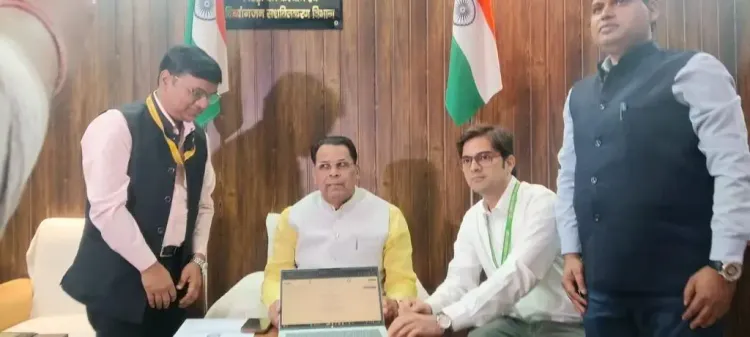
UP minister Narendra Kashyap joins Census 2027 self-enumeration drive
Synopsis
With Census 2027 long overdue after pandemic-era delays, Uttar Pradesh is moving early — and visibly. Senior ministers publicly completing self-enumeration is a deliberate signal to a state of over 200 million people that participation is expected at every level. The 15-day digital window, followed by house-listing from 22 May, sets a tight operational clock.
Key Takeaways
Narendra Kashyap , UP Minister for Backward Class Welfare and Divyangjan Empowerment, completed his Census 2027 self-enumeration on 8 May in Lucknow .
Chief Minister Yogi Adityanath formally inaugurated the first phase of Census 2027 in Uttar Pradesh on Thursday, 7 May .
The self-enumeration window runs for 15 days , after which house-listing operations begin on 22 May .
Citizens can submit personal and family details online via the official census portal.
The state government has assured strict data security and confidentiality standards throughout the process.
Help desks and awareness campaigns are being set up from state level down to districts and villages .
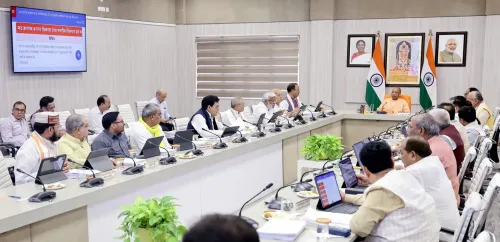
Uttar Pradesh Minister Narendra Kashyap on Friday, 8 May completed his self-enumeration process at his official residence in Lucknow, formally joining the state's newly launched digital census campaign ahead of Census 2027. The development comes a day after Chief Minister Yogi Adityanath inaugurated the first phase of Census 2027 in the state, signalling the Uttar Pradesh government's push for a technology-driven, transparent nationwide headcount.
What the Self-Enumeration Drive Involves
Under the initiative, citizens can submit personal and family details online through the official census portal, enabling direct public participation in the nationwide exercise. The 15-day self-enumeration window is designed to accelerate data collection while minimising errors, according to officials. Once the self-enumeration phase concludes, formal house-listing operations are scheduled to begin from 22 May.
What the Government Said
Narendra Kashyap, Minister of State (Independent Charge) for Backward Class Welfare and Divyangjan Empowerment, directed officials and employees to ensure effective implementation of the programme in line with Chief Minister Adityanath's instructions. He urged them to encourage greater public participation in the campaign. The Minister said Census 2027 would give a new direction to the self-enumeration process and that the data collected would play an important role in planning and implementing development-oriented welfare schemes across the state.
Data Security and Outreach Measures
The state government has assured citizens that all standards related to data security and confidentiality will be strictly followed during the self-enumeration phase. To maximise participation, an extensive awareness campaign has been planned — cascading from the state level down to districts and villages. Instructions have also been issued for the establishment of help desks and assistance centres to support citizens unfamiliar with the digital process.
Broader Context
India's census, last conducted in 2011, was delayed significantly due to the Covid-19 pandemic, making Census 2027 a long-awaited exercise for policymakers and planners. The data is critical for updating welfare scheme beneficiary lists, delimitation of constituencies, and resource allocation across states. Uttar Pradesh, as India's most populous state, holds particular significance in the national headcount. The state government's early mobilisation — beginning with senior ministers publicly completing self-enumeration — is aimed at setting a visible example for the broader population.
Point of View
Particularly in eastern districts, lacks reliable internet connectivity. The help-desk network will be the real test of whether this digital-first census reaches those who need welfare scheme benefits the most — and who are most likely to be missed.
NationPress
22 Sept 2026
Frequently Asked Questions
What is the Census 2027 self-enumeration process in Uttar Pradesh?
It is a digital initiative that allows citizens to submit personal and family details online through the official census portal, enabling direct participation in Census 2027. The self-enumeration window runs for 15 days, after which formal house-listing operations begin on 22 May.
Who inaugurated Census 2027 in Uttar Pradesh?
Chief Minister Yogi Adityanath formally inaugurated the first phase of Census 2027 in Uttar Pradesh on Thursday, 7 May. Minister Narendra Kashyap completed his own self-enumeration the following day, on 8 May.
When will house-listing operations begin in UP for Census 2027?
Formal house-listing operations are scheduled to begin from 22 May, after the 15-day self-enumeration phase concludes.
How is the UP government ensuring data security during Census 2027?
The state government has assured that all standards related to data security and confidentiality will be strictly followed during the self-enumeration phase. Help desks and assistance centres are also being established to support citizens through the process.
Why is Census 2027 important for Uttar Pradesh?
Census data is critical for updating welfare scheme beneficiary lists, delimiting constituencies, and allocating resources. India's last census was conducted in 2011, making the upcoming exercise especially significant after years of delay due to the Covid-19 pandemic.