7 Science Highlights: Chip Prodigy, Coal Waste Minerals, Drone Swarms

Synopsis
A Chinese chip prodigy's homecoming, a coal-waste mineral extraction breakthrough, and drone swarm advances dominate a fortnight of science highlights — each carrying direct implications for the global tech and geopolitical balance.
Key Takeaways
A Chinese chip prodigy has reportedly returned to China , intensifying the global semiconductor talent race against companies like TSMC .
Chinese scientists have developed a method to extract critical minerals from coal waste , potentially reducing import dependence for battery and chip supply chains.
Liu Bin , the Chinese archaeologist who discovered a 5,000-year-old prehistoric city, has pleaded guilty to bribery and embezzlement.
Advances in drone swarm coordination are opening new applications in logistics and defence across the Asia-Pacific region.
SpaceX 's Starship and the future of Moore's Law remain focal points in broader debates about the pace of aerospace and semiconductor progress.
A Chinese chip prodigy's return to China, a breakthrough in extracting critical minerals from coal waste, and advances in drone swarm technology headline a packed fortnight of science and technology developments across Asia and beyond, spanning archaeology, space exploration, and semiconductor innovation.
Chip Prodigy Returns to China
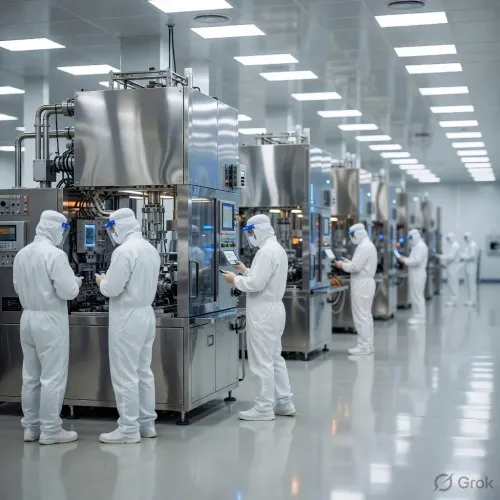
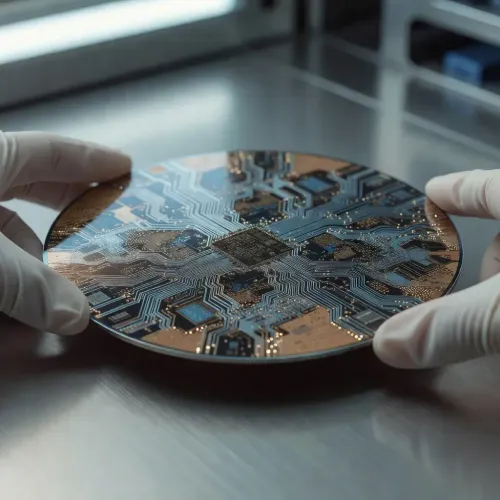
In one of the most closely watched talent-flow stories of the year, a Chinese semiconductor prodigy has reportedly returned to China, raising fresh questions about the ongoing global competition for chip engineering talent. The move is seen as significant against the backdrop of intensifying US-China technology restrictions and efforts by companies including Huawei Technologies to rebuild domestic chip design capabilities.
Industry analysts noted that talent repatriation has become a strategic lever for Chinese chipmakers seeking to close the gap with TSMC and other leading foundries, even as export controls limit access to advanced manufacturing equipment.
Coal Waste Tapped for Critical Minerals
Chinese scientists have demonstrated a method for recovering critical minerals from coal waste, according to reports, potentially unlocking a domestic supply of materials essential for batteries, semiconductors, and defence applications. The research addresses a strategic vulnerability: China produces vast quantities of coal by-products but has historically relied on conventional mining for rare and critical mineral supply chains.
If scaled, the technique could reduce import dependence and provide a cost-competitive feedstock for the country's rapidly expanding clean-energy and electronics manufacturing sectors.
Archaeologist Behind 5,000-Year-Old City Discovery Pleads Guilty
Liu Bin, the Chinese archaeologist credited with unearthing a vast 5,000-year-old prehistoric city that reshaped the understanding of early Chinese civilisation, has pleaded guilty to taking bribes and embezzlement. The case has drawn widespread attention given Liu Bin's stature in the field and the cultural significance of his discoveries.
The prehistoric city he helped excavate is widely regarded as among the most important archaeological finds in modern China, predating many previously known centres of early civilisation in the region.
Drone Swarms, Starship, and Moore's Law
Elsewhere in the science digest, advances in drone swarm coordination algorithms are reportedly enabling new levels of autonomous collective behaviour, with potential applications ranging from logistics to defence. SpaceX's Starship programme, championed by Elon Musk, continues to generate discussion around the future of heavy-lift launch capabilities and the cadence of iterative aerospace engineering.
Separately, researchers and industry observers revisited the relevance of Moore's Law in an era of 3D chip stacking and heterogeneous integration, with some analysts arguing the principle is evolving rather than ending. The debate has direct implications for companies like TSMC and Huawei Technologies as they chart their next-generation roadmaps.
What's Next
The convergence of talent repatriation, domestic mineral sourcing, and accelerating drone and space programmes signals that the Asia-Pacific technology and science landscape is entering a period of heightened strategic competition. Watch for policy responses from Japan, Taiwan, and Western governments as these developments unfold over the coming months.
Point of View
From raw materials to advanced design. Mainstream coverage tends to treat each development in isolation, but together they illustrate a supply-chain self-sufficiency strategy that has been accelerating since 2022 export control escalations. The Liu Bin corruption case is a reminder that prestige scientific institutions are not immune to the governance pressures reshaping Chinese public life. Meanwhile, the Moore's Law debate quietly signals that the next competitive frontier is architectural innovation, not just process-node shrinkage — a shift that could partially offset TSMC's manufacturing lead.
NationPress
20 Oct 2026
Frequently Asked Questions
Who is the Chinese chip prodigy who returned to China?
Reports indicate a notable Chinese semiconductor engineer has returned to China , though specific identity details were not fully disclosed in available reports. The development is significant because it reflects a broader trend of talent repatriation driven by Huawei Technologies and other domestic chipmakers seeking to build advanced design capabilities amid US export restrictions.
How can coal waste be used to produce critical minerals?
Chinese scientists have reportedly demonstrated a technique for extracting critical minerals — including materials used in batteries and semiconductors — directly from coal waste by-products. If successfully scaled, the method could give China a cost-effective domestic supply of strategic materials without expanding conventional mining operations.
Who is Liu Bin and why did he plead guilty?
Liu Bin is a prominent Chinese archaeologist credited with discovering a 5,000-year-old prehistoric city considered one of the most significant finds in modern Chinese history. He has pleaded guilty to accepting bribes and embezzlement, a case that has shocked the academic community given his cultural standing.
What is the significance of drone swarm advances for Asia-Pacific?
New drone swarm coordination algorithms are enabling autonomous collective behaviour at a scale not previously achievable, with applications in logistics, surveillance, and defence. For the Asia-Pacific region, these advances carry particular strategic weight given ongoing territorial and security tensions.
Is Moore's Law still relevant in 2026?
Researchers and industry analysts are debating whether Moore's Law remains a useful framework as the industry shifts toward 3D chip stacking and heterogeneous integration rather than pure transistor-count scaling. The outcome of this debate has direct implications for TSMC , Huawei Technologies , and any company planning next-generation chip roadmaps.