Pilot slams Centre over NEET paper leak, mourns Bagru student

Synopsis
Congress general secretary Sachin Pilot condoled the reported suicide of a Bagru student over NEET stress and accused the BJP-led central government of shelving the paper-leak probe, warning that India's Gen Z will no longer tolerate examination malpractice.
Key Takeaways
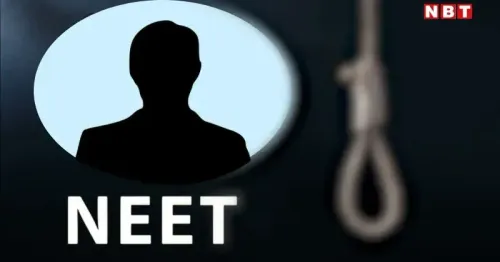
Congress leader Sachin Pilot expressed condolences to the family of a student from Bagru, Rajasthan who allegedly died by suicide under stress linked to the NEET examination .
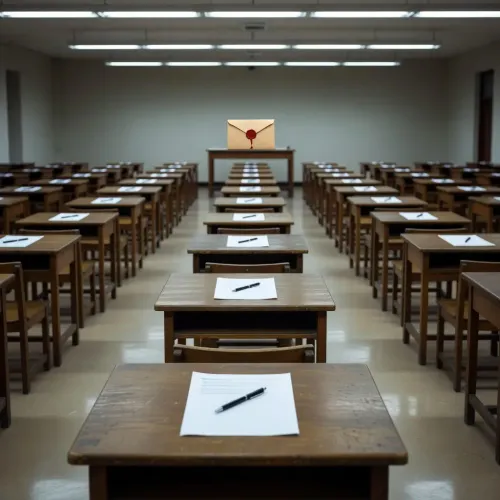
Pilot accused the central government of maintaining silence on the NEET paper-leak case and called the investigation a mere formality.
NEET has been India's sole national medical entrance examination since 2016 ; the National Testing Agency (NTA) has conducted it since 2017 .
Widespread paper-leak allegations and student protests erupted in 2024 , leading to Supreme Court petitions against the NTA.
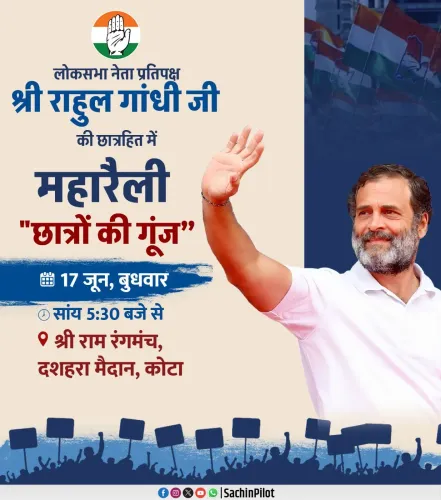
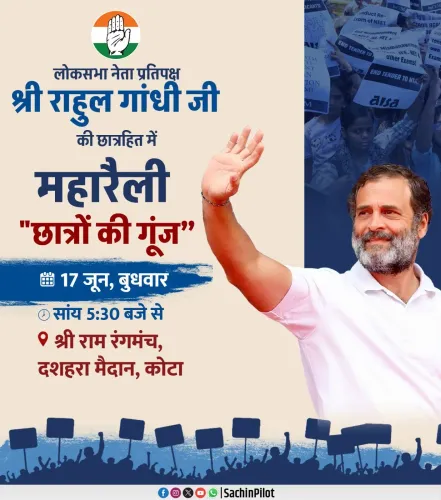
Pilot cited the student movement originating from Kota as evidence that Generation Z is demanding systemic reform and will not accept examination malpractice.
The Congress leader warned the BJP that students 'will not back down,' signalling the party's intent to keep the issue politically active.
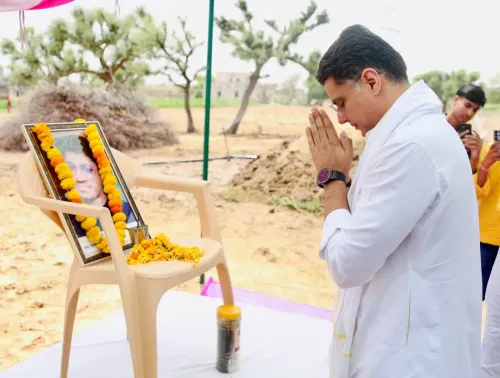
Congress leader and party general secretary Sachin Pilot on Sunday, 5 July 2026, expressed deep condolences over the reported suicide of a student from Bagru, Rajasthan, allegedly driven by stress linked to the NEET examination, and launched a sharp attack on the central government over its handling of the NEET paper-leak controversy.
Context
In his post on X, Pilot conveyed his grief to the bereaved family of the Bagru student, writing — 'is dukkhad aur kathin samay mein meri gehri samvednaein shok santapt parijanon ke saath hain' ('in this sorrowful and difficult time, my deepest condolences are with the grieving family'). He prayed that God give the family strength to bear the loss. The incident has reignited public anger over what critics call systemic failures in India's high-stakes national examinations.
Pilot also pointed to widespread national outrage over the NEET paper-leak case, accusing the central government of maintaining silence long after the controversy broke. 'It appears the matter has been shelved and the investigation is merely a formality,' he wrote, characterising the government's response as inadequate and evasive.
Policy Backdrop
NEET became India's single national medical entrance examination from 2016, following Supreme Court directions that ended state-level tests. The National Testing Agency (NTA), established in 2017 under the Ministry of Education, was tasked with conducting NEET, JEE, and other national-level exams to ensure standardisation and integrity.
Widespread allegations of paper leaks and procedural irregularities in NEET surfaced in 2024, triggering Supreme Court petitions and student protests across the country. Opposition parties, including the Indian National Congress, have consistently framed these lapses as evidence of governance failure, demanding accountability from the NTA and the central government. Despite repeated assurances, allegations of exam malpractice have persisted, fuelling anxiety among lakhs of aspirants who invest years of preparation.
Stakeholders and Impact
At the centre of this controversy are NEET aspirants — students who dedicate years, often relocating to coaching hubs such as Kota, Rajasthan, to prepare for a single examination that determines their entry into medical education. Pilot specifically noted the groundswell of support that emerged from Kota, saying the echo of students' voices had made it clear that Generation Z is 'openly discussing education reform, examination systems, career pressures, and will not tolerate this injustice.'
The Congress leader warned the BJP directly: 'Students will not back down now.' His remarks reflect a broader political mobilisation of youth discontent, with the NEET controversy serving as a flashpoint for deeper frustrations over examination integrity, mental health pressures on students, and the perceived unresponsiveness of the administration.
What's Next
With the monsoon session of Parliament approaching, the NEET paper-leak issue is expected to feature prominently in parliamentary debates and question hours, with opposition lawmakers likely to press the government on the status of investigations and reforms to the NTA's examination framework. Any fresh directives from the Supreme Court on the ongoing NEET probe could further intensify political and public scrutiny.
Pilot's post signals that the Congress intends to keep student welfare and examination integrity at the forefront of its political agenda. The sustained anger among young voters — particularly from states like Rajasthan with a large NEET aspirant base — could shape the political calculus ahead of future electoral contests, making the government's response to the NEET crisis a litmus test of its commitment to educational reform.
Point of View
While simultaneously positioning the Congress as the voice of an increasingly assertive youth constituency. By invoking Gen Z and the Kota protest movement, Pilot is signalling that the party sees student anger as a durable electoral asset, not a passing episode. The BJP faces a credibility deficit on examination integrity that opposition parties have steadily widened since the 2024 paper-leak row. Unless the government delivers visible accountability — through judicial findings or structural NTA reform — the NEET controversy risks becoming a defining youth-welfare issue in the political cycle ahead.
NationPress
5 Jul 2026
Frequently Asked Questions
What did Sachin Pilot say about the NEET paper leak?
Sachin Pilot accused the central government of shelving the NEET paper-leak investigation and called the probe a mere formality, saying the government had maintained silence long after the controversy erupted. He warned the BJP that students would not back down.
Who is the Bagru student who died by suicide over NEET?
Sachin Pilot's post refers to a student from Bagru in Rajasthan who allegedly died by suicide under stress linked to the NEET examination. Specific details of the individual have not been independently verified in established public records.
What is the NEET paper leak controversy?
Widespread allegations of question paper leaks and procedural irregularities in the National Eligibility cum Entrance Test (NEET) for medical admissions surfaced prominently in 2024, triggering student protests, Supreme Court petitions, and political demands for accountability from the National Testing Agency (NTA).
What is the NTA and why is it under scrutiny?
The National Testing Agency (NTA) is an autonomous body under the Ministry of Education, established in 2017 to conduct NEET, JEE, and other national-level examinations. It has faced scrutiny over alleged paper leaks, irregularities, and inadequate safeguards that critics say have compromised examination integrity.
Why are students protesting from Kota over NEET?
Kota in Rajasthan is India's largest coaching hub for NEET and JEE aspirants, making it a focal point for student discontent. Protests from Kota over examination malpractice and systemic pressures have drawn nationwide attention, with Sachin Pilot noting that the movement reflects Gen Z's demand for education and examination reform.