Rijiju Flags Youth Empowerment With #YuvaShakti Post

Synopsis
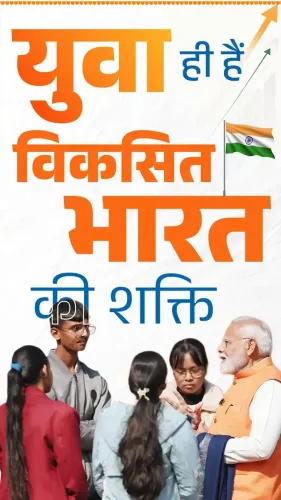
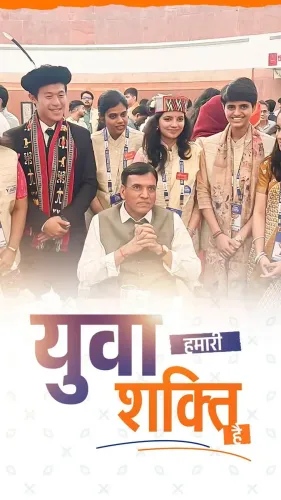
Union Parliamentary Affairs Minister Kiren Rijiju posted the hashtag #YuvaShakti on X on 5 July 2026, accompanied by a video, reinforcing the BJP government's sustained focus on youth empowerment and India's demographic dividend as a governance and political priority.
Key Takeaways
Kiren Rijiju , Union Minister of Parliamentary Affairs and Minority Affairs, posted #YuvaShakti on 5 July 2026 .
The post included a video, amplifying its reach to younger, video-first audiences on social media.
The phrase Yuva Shakti ('Youth Power') is a recurring motif in BJP political and governance communications.
India's National Youth Policy (2014) remains the foundational framework for government youth empowerment programmes.
India has an estimated 600 million citizens below the age of 25, making youth welfare a high-stakes policy and electoral issue.
Parliamentary discussions on youth employment schemes and education policy are expected in upcoming sessions.
Union Parliamentary Affairs Minister Kiren Rijiju invoked the theme of youth empowerment on Sunday, 5 July 2026, posting the hashtag #YuvaShakti on X alongside a video, signalling the ruling BJP's continued focus on harnessing India's demographic dividend.
Context
Rijiju, who represents Arunachal Pradesh in Parliament and holds the portfolios of Parliamentary Affairs and Minority Affairs, is among the senior BJP leaders who regularly use social media to amplify the party's governance messaging. The single-hashtag post — Yuva Shakti, meaning 'Youth Power' — accompanied by a video underscores the government's recurring emphasis on young Indians as a central pillar of national development.
The phrase Yuva Shakti has been a consistent motif in BJP communications, appearing across campaigns, rallies, and policy announcements aimed at India's youth demographic, which constitutes a significant share of the country's electorate and workforce.
Policy Backdrop
India's approach to youth welfare has been institutionally anchored since the National Youth Policy of 2014, which prioritised empowerment, skill development, and civic participation for citizens between the ages of 15 and 29. Successive governments have built upon this framework through schemes targeting vocational training, entrepreneurship, and higher education access.
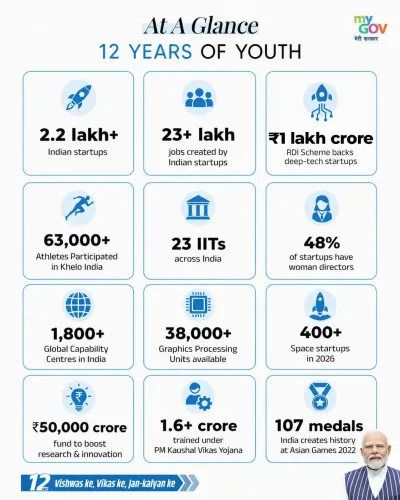
The BJP-led government has repeatedly positioned youth employment and skilling as flagship governance priorities, channelling resources through programmes designed to convert India's large young population into an economic asset — a concept economists refer to as the 'demographic dividend.' Parliamentary sessions have increasingly seen debates on youth employment data, apprenticeship schemes, and education funding.
Stakeholders and Impact
The primary stakeholders in any youth-focused policy communication are India's estimated 600 million citizens below the age of 25, who represent both the country's greatest economic opportunity and its most pressing challenge in terms of employment generation. Minority youth, a community that falls under Rijiju's Minority Affairs portfolio, are a specific sub-group with targeted welfare schemes under the Ministry of Minority Affairs.
Political observers note that youth-centric messaging from senior ministers carries electoral weight, given that first-time voters and young urban professionals have been a contested demographic in recent election cycles. The use of a video alongside the hashtag suggests an attempt to reach audiences on short-form content platforms where younger Indians are most active.
What's Next
Upcoming Parliamentary sessions are expected to see continued scrutiny of youth employment figures and the implementation status of skilling initiatives. Rijiju's role as Parliamentary Affairs Minister places him at the centre of legislative scheduling, meaning any youth-related bills or budgetary discussions will pass through his coordination. Whether the #YuvaShakti post presages a formal policy announcement, a party campaign, or a broader ministerial initiative remains to be seen — but it reinforces the government's intent to keep youth welfare prominent in its public communication ahead of future electoral contests.
Point of View
But it fits squarely into the BJP's well-established pattern of using social media to keep youth-centric themes alive in the public discourse between formal policy announcements. For a minister who controls Parliamentary business, even a brief public signal can serve as a weathervane for upcoming legislative priorities. The post also reflects a broader competition among major parties to claim ownership of the youth narrative, particularly as employment data and skilling outcomes face increasing scrutiny. Analysts will watch whether this signals a forthcoming scheme, campaign, or Parliamentary agenda item tied to youth welfare.
NationPress
5 Oct 2026
Frequently Asked Questions
What is Yuva Shakti and why did Rijiju post about it?
Yuva Shakti means 'Youth Power' in Hindi and is a phrase the BJP regularly uses in its youth-focused messaging. Union Parliamentary Affairs Minister Kiren Rijiju posted the hashtag #YuvaShakti on 5 July 2026, accompanied by a video, as part of the government's ongoing emphasis on youth empowerment.
Who is Kiren Rijiju?
Kiren Rijiju is a senior BJP leader from Arunachal Pradesh who serves as Union Minister of Parliamentary Affairs and Minister of Minority Affairs in the Indian government.
What is India's National Youth Policy?
India's National Youth Policy, updated in 2014, is the government's foundational framework for youth empowerment, focusing on skill development, civic participation, and the economic inclusion of citizens between 15 and 29 years of age.
What is India's demographic dividend?
India's demographic dividend refers to the economic growth potential arising from the country's large and growing working-age population — estimated at around 600 million people below the age of 25 — provided they are adequately educated, skilled, and employed.
What youth-related issues are expected in Parliament?
Upcoming Parliamentary sessions are likely to see debates on youth employment figures, the status of skilling and apprenticeship schemes, and education funding, all of which fall within the broader youth welfare policy agenda.