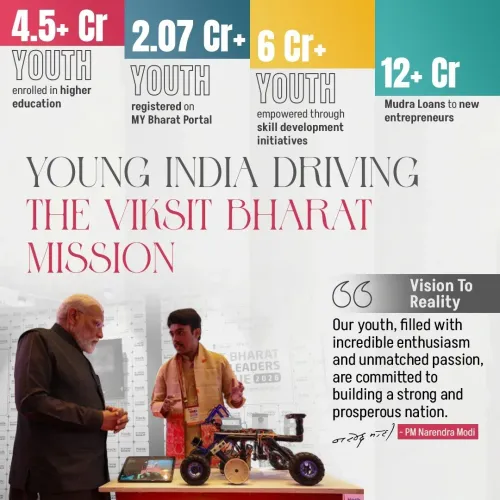
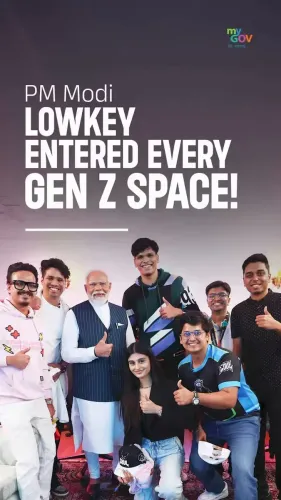
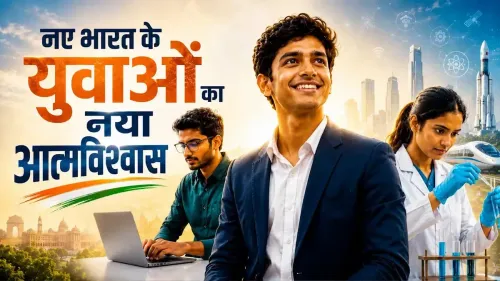
Vaishnaw Marks 12 Years of Yuva Shakti, Youth-Led Viksit Bharat

Synopsis
Union Minister Ashwini Vaishnaw on 13 June 2026 marked 12 years of Yuva Shakti, framing India's youth as the engine of the Viksit Bharat 2047 vision, backed by a decade of skilling and digital infrastructure policy.
Key Takeaways
Union Minister Ashwini Vaishnaw posted on X on 13 June 2026 under the hashtag #12YearsOfYuvaShakti , marking a twelve-year youth-empowerment milestone.
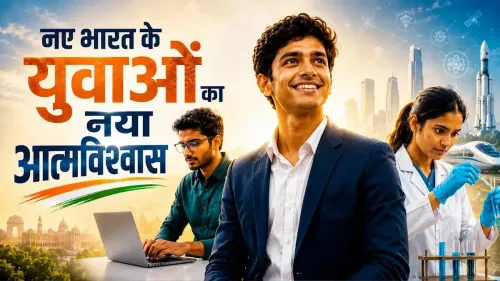
The post's message — 'युवाशक्ति से विकसित भारत की उड़ान' — translates as 'The flight of a developed India, powered by the strength of youth.' The Viksit Bharat vision targets India's transformation into a developed economy by 2047 , with youth participation as a central pillar.
The National Youth Policy 2014 redefined the youth bracket as 15–29 years and prioritised skilling and entrepreneurship.
The Skill India Mission , launched in July 2015 , remains the flagship programme converting demographic dividend into employable human capital.
Upcoming Parliamentary budget discussions on skilling and education outlays will be a key test of how the Yuva Shakti agenda translates into funded policy.
Union Minister Ashwini Vaishnaw on Saturday, 13 June 2026 invoked the spirit of India's youth demographic in a post on X, sharing a video message under the hashtag #12YearsOfYuvaShakti and framing young citizens as the driving force behind the country's aspirations to become a developed nation.
Context
The minister's post — 'युवाशक्ति से विकसित भारत की उड़ान' ('The flight of a developed India, powered by the strength of youth') — marks what the hashtag describes as twelve years of a youth-empowerment push that has run in parallel with the current government's tenure. The accompanying video underlines the centrality of young Indians to the Viksit Bharat vision, the government's official roadmap to transform India into a developed economy by 2047.
The post arrives at a moment when the ruling dispensation has been consolidating its youth-outreach messaging across ministries, positioning the demographic dividend not merely as a statistical advantage but as an active agent of economic and technological transformation.
Policy Backdrop
The government's structured engagement with youth policy dates to the National Youth Policy 2014, which redefined the youth age bracket as 15 to 29 years and placed skilling, entrepreneurship, and civic engagement at its core. That framework was followed in July 2015 by the launch of the Skill India Mission, a flagship programme designed to convert India's demographic dividend into employable, entrepreneurially capable human capital by training millions of young people in vocational and technical skills.
Prime Minister Narendra Modi has consistently framed youth participation as indispensable to the Viksit Bharat goal, weaving the theme through policy announcements ranging from digital infrastructure rollouts to startup incentives. Vaishnaw's post fits squarely within that broader government-wide communication arc.
Stakeholders and Impact
The primary stakeholders are India's estimated 600 million-plus citizens under the age of 25 — one of the largest youth cohorts in the world. For this group, the government's youth-empowerment agenda translates into access to skilling centres, digital public infrastructure, startup funding pipelines, and employment-linked incentive schemes.
Young professionals and first-time entrepreneurs stand to gain most directly from the policy ecosystem that the Yuva Shakti narrative seeks to amplify. Civil society groups and opposition parties have, in parallel, called for greater scrutiny of employment data and the quality of jobs being created under skilling programmes, making the youth agenda a contested but politically significant terrain.
What's Next
Attention will now turn to the next Parliamentary budget session, where revised outlays for skill development and education are expected to be debated. Any new youth advisory mechanisms or programme expansions announced by the Ministry of Youth Affairs and Sports in the coming weeks will be closely watched as a measure of how the government intends to operationalise the Yuva Shakti rhetoric into concrete policy action.
With the 2047 Viksit Bharat deadline anchoring long-term planning, the twelve-year milestone flagged by Vaishnaw signals that the government views youth empowerment not as a campaign moment but as a sustained institutional commitment — one whose outcomes will increasingly be tested against hard economic indicators.
Point of View
Using a twelve-year frame to anchor the current government's entire tenure to a youth-empowerment narrative. By tying Yuva Shakti to the Viksit Bharat 2047 goal, the BJP is signalling that youth policy is not a standalone scheme but the connective tissue linking digital infrastructure, skilling, and startup ecosystems into a single electoral and governance story. The move also pre-empts opposition pressure on employment data by shifting the frame from job numbers to capability-building and aspiration. How the government backs this rhetoric with measurable outcomes in the next budget cycle will determine whether the Yuva Shakti brand retains its political resonance.
NationPress
25 Sept 2026
Frequently Asked Questions
What is Yuva Shakti and why is the 12-year milestone being marked?
Yuva Shakti refers to the government's sustained youth-empowerment push that has run alongside the current administration since 2014. The 12-year milestone, marked under #12YearsOfYuvaShakti, commemorates a decade-plus of policies — from the National Youth Policy 2014 to the Skill India Mission — aimed at converting India's demographic dividend into economic strength.
What is the Viksit Bharat vision that Vaishnaw linked to youth empowerment?
Viksit Bharat is the government's official roadmap to transform India into a fully developed economy by 2047, the centenary of independence. Youth participation in innovation, skilling, and entrepreneurship is positioned as central to achieving that goal.
What is the Skill India Mission and how does it relate to Yuva Shakti?
The Skill India Mission, launched in July 2015, is a flagship programme designed to train millions of young Indians in vocational and technical skills. It is one of the primary policy instruments through which the Yuva Shakti vision is operationalised on the ground.
What did Ashwini Vaishnaw post on 13 June 2026?
Vaishnaw posted a video on X with the Hindi caption meaning 'The flight of a developed India, powered by the strength of youth,' using the hashtag #12YearsOfYuvaShakti to mark twelve years of the government's youth-focused policy agenda.
What should we watch for next on India's youth policy?
Key developments to watch include revised skilling and education budget outlays in the next Parliamentary session and any new youth advisory mechanisms announced by the Ministry of Youth Affairs and Sports, which will indicate how the government plans to move from messaging to measurable action.