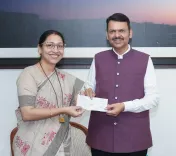
AP Ranks 2nd in Access Equality Index 2026 Among 28 States
Synopsis
Andhra Pradesh secured second place among 28 Indian states in the Access Equality Index 2026 published by the Centre for New Economics Studies at O.P. Jindal Global University, scoring 0.66 — behind only Goa at 0.68. CM Chandrababu Naidu called it a validation of two-and-a-half years of governance.
Key Takeaways
Andhra Pradesh ranked 2nd among 28 states in the Access Equality Index (AEI) 2026 .
The state scored 0.66 ; Goa topped the index at 0.68 .
The index measures equitable access to opportunities, infrastructure, education, healthcare, and social security — not just economic output.
Jindal Global University designated Andhra Pradesh a 'Front Runner' state.
Among all large states in India, Andhra Pradesh achieved the highest rank in this edition.
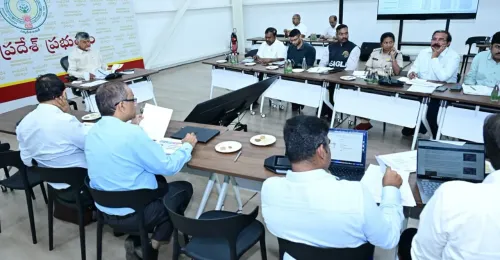
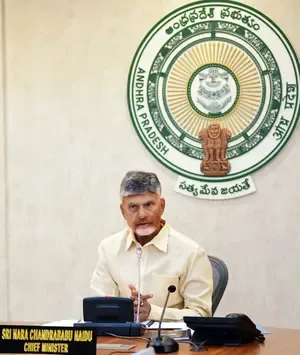
CM Chandrababu Naidu said the ranking reflects his government's governance record over the past two-and-a-half years .
Among India's 28 states, Andhra Pradesh has climbed to the second position in the Access Equality Index (AEI) 2026 — a composite ranking that measures not just a state's economic wealth but how effectively its government converts that wealth into equal opportunities, infrastructure, education, healthcare, and social security for its citizens. The Chief Minister's Office of Andhra Pradesh announced the ranking on Monday, November 9, 2026, citing a report released by the Centre for New Economics Studies (CNES) at O.P. Jindal Global University.
A score of 0.66 — and what it actually measures
Andhra Pradesh posted a score of 0.66, placing it just behind Goa, which topped the index with a score of 0.68. The index goes beyond conventional GDP or revenue metrics: it evaluates how equitably citizens can access opportunities and essential services, and how efficiently governments deploy public resources to deliver them. That framing makes the ranking a sharper governance report card than a standard economic league table.
Sikkim followed at 0.63 and Kerala at 0.60. Tamil Nadu and Telangana both scored 0.57, occupying the positions just below. CNES formally designated Andhra Pradesh a 'Front Runner' state in the report.
Chandrababu Naidu frames it as a governance validation
Chief Minister Nara Chandrababu Naidu responded to the report, calling it a reflection of his government's administrative record over the past two-and-a-half years. He emphasised that the index's methodology — which factors in equitable access alongside wealth creation — aligns with the governing philosophy his administration has pursued since returning to power. The ranking carries particular weight because Andhra Pradesh is classified as a large state; among all large states in the country, it achieved the highest rank in this edition of the index.
Why third-party composite indices matter in Indian politics
Composite indices published by independent research institutions have become a standard instrument in India's policy conversation. They offer opposition parties, analysts, and citizens a framework to evaluate incumbent performance on dimensions — healthcare access, educational equity, infrastructure reach — that headline economic figures often obscure. For Andhra Pradesh, which has seen sharp political alternation between the TDP and YSRCP in recent cycles, an external validation of governance quality carries particular political and administrative resonance.
The Centre for New Economics Studies, the index's author, is a research unit housed within O.P. Jindal Global University in Haryana and has produced comparative state-level research across multiple policy domains. Future state budget cycles and welfare scheme announcements from Amaravati will likely cite this ranking as a benchmark — and states like Kerala and Tamil Nadu, ranked lower despite their strong human development reputations, may respond with their own counter-analysis.
A second-place finish in a 28-state field, labelled a 'Front Runner' by an independent research centre — that is the number Chandrababu Naidu will carry into every governance debate for the next budget season.
Point of View
The CMO is signalling a deliberate pivot toward welfare-state credibility — a space traditionally claimed by Congress-aligned southern states like Kerala and Tamil Nadu, both of which scored lower. The 'Front Runner' designation from an independent academic institution is harder to dismiss than self-reported government statistics, making it a durable political asset. The rankings will intensify scrutiny on Andhra Pradesh's upcoming budget allocations, as any retreat in social-sector spending would directly contradict the index's premise.
NationPress
9 Nov 2026
Frequently Asked Questions
What is the Access Equality Index 2026?
The Access Equality Index (AEI) 2026 is a composite state-level ranking published by the Centre for New Economics Studies (CNES) at O.P. Jindal Global University. It evaluates how equitably Indian states provide citizens with access to opportunities, infrastructure, education, healthcare, and social security, and how efficiently governments deploy their economic resources to deliver these services.
What rank did Andhra Pradesh get in AEI 2026?
Andhra Pradesh ranked 2nd among 28 Indian states in the AEI 2026 with a score of 0.66. It was also designated a 'Front Runner' state by CNES and achieved the highest rank among all large states in the country.
Which state topped the Access Equality Index 2026?
Goa topped the Access Equality Index 2026 with a score of 0.68, followed by Andhra Pradesh at 0.66, Sikkim at 0.63, Kerala at 0.60, and Tamil Nadu and Telangana both at 0.57.
What did Chandrababu Naidu say about the AEI 2026 ranking?
Chief Minister Nara Chandrababu Naidu said the AEI 2026 report reflects his government's governance record over the past two-and-a-half years. He noted that the index evaluates both wealth creation and how equitably that wealth is used to provide services to citizens.
Who publishes the Access Equality Index?
The Access Equality Index is published by the Centre for New Economics Studies (CNES), a research unit at O.P. Jindal Global University, a private university located in Haryana.