Andhra Pradesh to launch monthly economic report, CM Naidu says state-first move
Synopsis
Andhra Pradesh is positioning itself as India's first state to publish a monthly economic report — tracking GSDP, revenue, and departmental performance in real time. With AI-driven tools already delivering a 24% revenue jump and 7.2 million Pattadar Passbooks still pending, CM Naidu is betting that data transparency can rebuild both governance credibility and investor confidence lost under the previous administration.
Key Takeaways
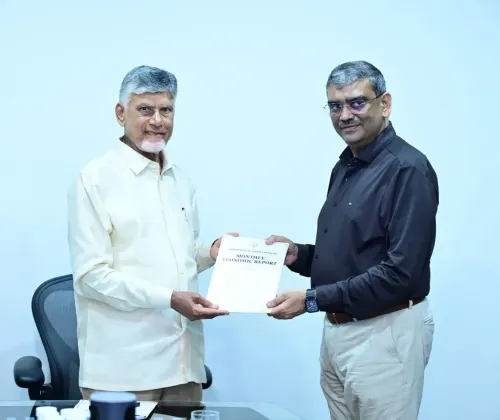
Chandrababu Naidu announced a monthly economic report on 14 July , claiming Andhra Pradesh is the first state in India to introduce one.
The report will track GSDP , revenue receipts, and departmental performance to enable timely corrective action.
AI-based governance tools have contributed to a 24 per cent increase in revenue collections across departments.
The state recorded nearly 20 per cent growth over 2017 levels in the previous year.
7.2 million Pattadar Passbooks are yet to be distributed to resolve long-pending land disputes.
Andhra Pradesh has held 19 SIPB meetings and 57 Cabinet meetings to attract investment since the current government took office.
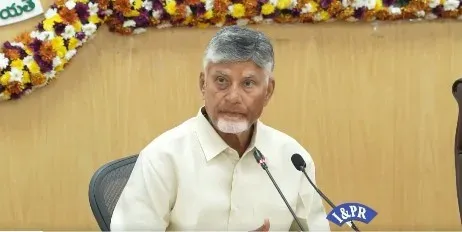
Andhra Pradesh Chief Minister N. Chandrababu Naidu on Tuesday, 14 July announced that the state government will introduce a monthly economic report to track growth indicators in real time and drive data-led governance reforms. Andhra Pradesh claims to be the first state in India to adopt such a monthly economic monitoring mechanism.
What the Monthly Report Will Cover
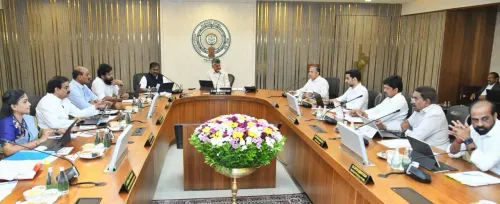
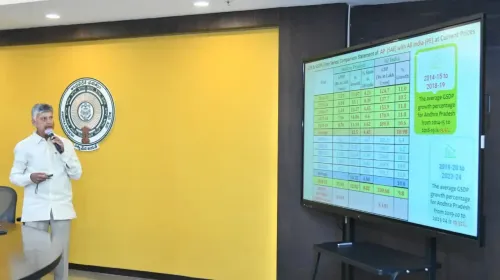
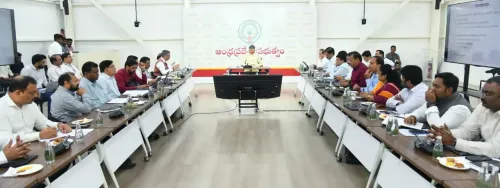
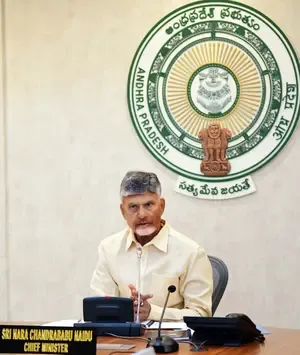
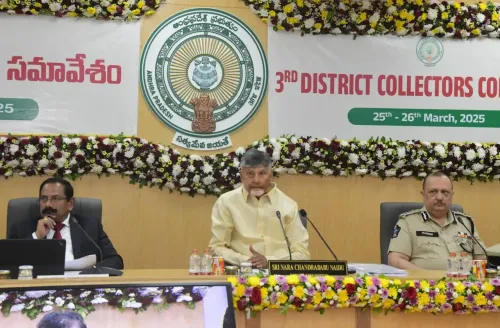
Addressing Ministers, Secretaries, and Heads of Departments (HoDs) at the Secretariat in Amaravati, Naidu said the report will include monthly assessments of Gross State Domestic Product (GSDP), revenue receipts, and departmental performance. The aim, he said, is to identify governance gaps early and enable timely corrective action.
Performance and skill evaluations of government employees and officials will also be conducted regularly as part of the initiative. Naidu urged senior officials to undertake regular field visits to understand ground-level realities and improve citizen service delivery.
Technology and Revenue Growth
The Chief Minister highlighted that the government has deployed Artificial Intelligence-based tools to streamline governance and boost revenue collection. These measures have reportedly contributed to a 24 per cent increase in revenue collections across government departments.
He also noted that the state recorded nearly 20 per cent growth over 2017 levels during the previous year, and commended officials for their efforts. The government, he said, is committed to making administration more efficient, transparent, and outcome-oriented through technology and real-time data.
Grievance Redressal and Land Records
Expressing concern over a rising volume of public complaints against certain departments, Naidu directed officials to resolve grievances swiftly through the Public Grievance Redressal System (PGRS). He called for zero pendency in complaint disposal and asked departments to examine whether rule changes or legal amendments were needed to permanently address recurring issues.
On land records, the Chief Minister noted that the Revenue Department had inherited a significant backlog of complaints stemming from the previous government's policies. The state has been distributing Pattadar Passbooks every month across districts to resolve long-pending land disputes. While many cases have been settled, 7.2 million Pattadar Passbooks are yet to be distributed.
Investment Push and Industrial Ambitions
Naidu said Andhra Pradesh has re-established itself as one of India's most preferred investment destinations after what he described as a loss of credibility during the previous administration. The government has held 19 State Investment Promotion Board (SIPB) meetings and 57 Cabinet meetings to facilitate major investments and employment generation.
The Chief Minister outlined a dual economic vision — strengthening agriculture while building a robust industrial base. He pointed to Rayalaseema's potential in horticulture and mining, specifically citing rare earth minerals, silica, and Chimakurthy granite as resources ripe for value-added development. How the monthly economic report translates into measurable policy outcomes will be the real test of this governance initiative.
Point of View
But its value depends entirely on what happens after the numbers are published. Andhra Pradesh has historically struggled with data credibility — the dispute over GSDP figures between successive state governments is well documented. A real-time dashboard means little without an independent audit mechanism and public disclosure. The 24 per cent revenue growth figure, attributed to AI tools, also lacks a baseline comparison that would make it verifiable. The bigger structural question is whether data transparency alone can accelerate the 7.2 million pending Pattadar Passbook distributions — a land-record backlog that has real consequences for farmers and property rights, not just governance optics.
NationPress
13 Oct 2026
Frequently Asked Questions
What is the monthly economic report announced by Andhra Pradesh CM Chandrababu Naidu?
It is a state government initiative to publish monthly assessments of GSDP, revenue receipts, and departmental performance, announced on 14 July by Chief Minister N. Chandrababu Naidu. Andhra Pradesh claims to be the first state in India to introduce such a report.
Why is Andhra Pradesh introducing a monthly economic report?
The government says the report will help identify governance gaps early, enable timely corrective measures, and make administration more transparent and outcome-oriented through real-time data and technology.
How many Pattadar Passbooks are still pending distribution in Andhra Pradesh?
According to CM Naidu, 7.2 million Pattadar Passbooks remain to be distributed. The state has been issuing them monthly across districts to resolve land disputes inherited from the previous government's policies.
What role has AI played in Andhra Pradesh's governance?
The state government has developed AI-based tools to simplify governance and improve revenue collection, which officials say has contributed to a 24 per cent increase in revenue collections across departments.
What is Andhra Pradesh's investment and industrial strategy?
CM Naidu said the state aims to combine an agriculture-led economy with industrial growth, leveraging natural resources in Rayalaseema — including rare earth minerals, silica, and Chimakurthy granite — for value-added development. The government has held 19 SIPB meetings and 57 Cabinet meetings to facilitate investments.