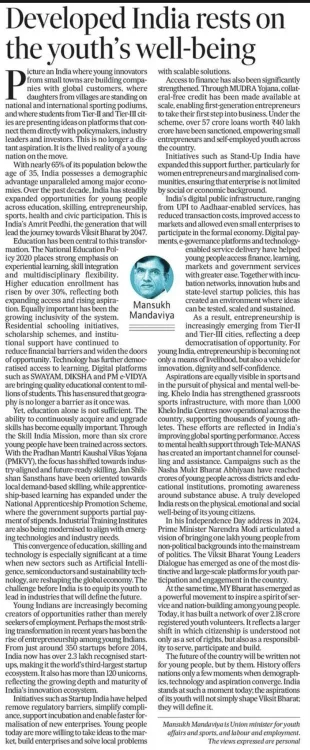
Mandaviya writes on youth well-being as pillar of Viksit Bharat
Synopsis
Union Minister Mansukh Mandaviya has authored an article asserting that PM Modi's Viksit Bharat 2047 vision rests on youth well-being, citing 12 years of Yuva Shakti-driven programmes in skills, sports, and employment as the foundation for India's development ambitions.
Key Takeaways
Union Minister Mansukh Mandaviya published an opinion article on 18 June 2026 on youth well-being and national development.
The article frames Viksit Bharat 2047 — India's goal of becoming a developed economy by the centenary of independence — as dependent on the country's youth.
Mandaviya credits PM Narendra Modi 's belief in Yuva Shakti as the guiding force behind 12 years of youth-focused policy.
Key programmes cited in the policy backdrop include Skill India Mission (PMKVY) , launched in 2015 , and the Khelo India programme, launched in 2016 .
The National Youth Policy was revised in 2014 to align youth development with education, skilling, and entrepreneurship.
Next Union Budget allocations for youth and sports will be a key indicator of whether the stated vision is backed by resources.
Union Labour and Sports Minister Mansukh Mandaviya on Thursday, 18 June 2026, published an opinion article arguing that a developed India cannot be achieved without prioritising the well-being of its youth, framing Prime Minister Narendra Modi's vision of Viksit Bharat 2047 as fundamentally dependent on the country's young population.
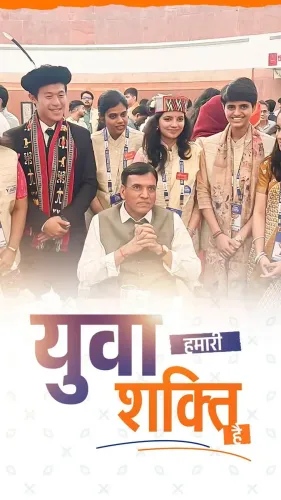
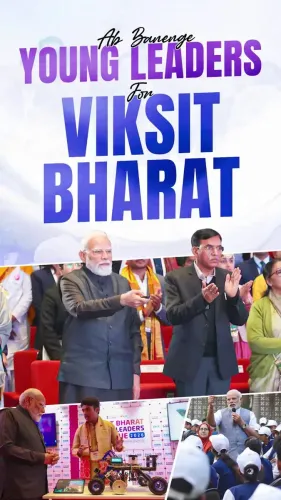
In the article, Mandaviya writes that PM Modi holds a 'firm belief that our youth will be the driving force behind Viksit Bharat,' and traces how the concept of Yuva Shakti (youth power) has been channelled over the last 12 years to generate opportunities, build aspirations, and deliver nation-building outcomes.
Context
The article arrives as the government intensifies its communication around the Viksit Bharat 2047 roadmap — a long-term national vision to transform India into a fully developed economy by the centenary of independence. Mandaviya, who holds the portfolios of Labour and Employment as well as Youth Affairs and Sports, is one of the senior cabinet voices tasked with translating that vision into programme delivery for young Indians.
The piece positions India's demographic profile — a median age well below that of most major economies — not merely as a statistical advantage but as a policy responsibility, one that demands sustained investment in health, skills, and opportunity.
Policy Backdrop
The government's youth-focused policy architecture has been built incrementally since 2014. The National Youth Policy was revised that year to align development goals with education, skilling, and entrepreneurship. A year later, the Skill India Mission, anchored by the Pradhan Mantri Kaushal Vikas Yojana (PMKVY), was rolled out to provide vocational training to millions of young Indians annually.
On the sports side, the Khelo India programme, launched in 2016, expanded grassroots infrastructure and created competitive pathways for young athletes from smaller towns and rural areas. Together, these initiatives reflect a deliberate strategy to convert India's population numbers into productive human capital — an approach that mirrors demographic-dividend strategies seen in East Asian economies, adapted to India's federal scale.
Stakeholders and Impact
The primary stakeholders are India's estimated 600 million-plus citizens under the age of 25, whose employment prospects, physical well-being, and civic participation are directly shaped by the programmes Mandaviya oversees. Employers, skilling partners, sports federations, and state governments are secondary actors whose cooperation determines whether central schemes translate into ground-level outcomes.
The article's framing — linking youth well-being to national development rather than treating it as a welfare obligation — also signals a political positioning ahead of future budget cycles, where allocations for youth and sports schemes will be closely watched.
What's Next
Attention will now turn to the next Union Budget and whether allocations for youth affairs, sports infrastructure, and skill development reflect the ambition outlined in Mandaviya's article. Any revision of the National Youth Policy before 2027, or parliamentary committee reports on youth employment outcomes, will serve as concrete markers of whether the government's stated priorities are being matched with resources.
As Viksit Bharat 2047 moves from vision document to implementation, the well-being of India's youth — measured in jobs, skills, and sporting achievement — will increasingly become a benchmark for the government's broader development claims.
Point of View
The minister reinforces the BJP's broader electoral and ideological messaging that positions the party as the architect of India's demographic dividend. The article also serves a bureaucratic purpose: framing Labour, Youth Affairs, and Sports as a unified development portfolio rather than three separate administrative silos. Whether the rhetoric translates into measurable outcomes — jobs created, athletes supported, workers skilled — will determine its long-term political value.
NationPress
19 Sept 2026
Frequently Asked Questions
What did Mansukh Mandaviya write about in his article?
Mandaviya argued that achieving a developed India under the Viksit Bharat 2047 vision depends on the well-being of Indian youth, highlighting PM Modi's belief in Yuva Shakti and 12 years of youth-focused government programmes.
What is Viksit Bharat 2047?
Viksit Bharat 2047 is the Indian government's long-term vision to transform the country into a fully developed economy by 2047, the centenary of independence.
What is Yuva Shakti?
Yuva Shakti, meaning 'youth power' in Hindi, is a concept the Modi government has used to describe the collective potential of India's young population as a driver of national development.
Which youth schemes has the government launched in the last 12 years?
Key schemes include the Skill India Mission with PMKVY launched in 2015, the Khelo India programme for grassroots sports launched in 2016, and a revised National Youth Policy introduced in 2014.
What should we watch for next on India's youth policy?
The next Union Budget's allocations for youth affairs, sports infrastructure, and skill development will be the clearest indicator of whether the government's stated ambitions are matched by financial commitment.