Pilot invites students to Rahul Gandhi's NEET 2026 dialogue in Kota
Synopsis
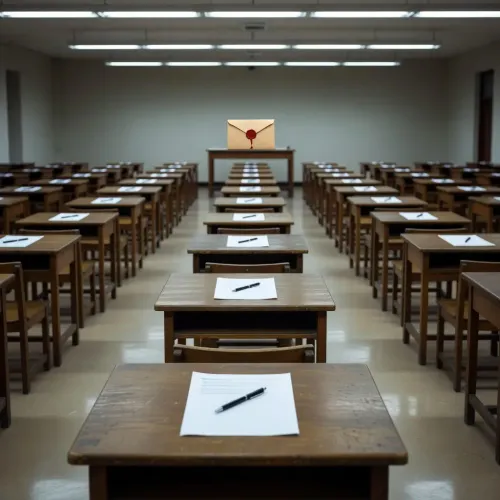
Congress general secretary Sachin Pilot has called on students to attend a public dialogue led by Leader of the Opposition Rahul Gandhi in Kota on 17 June 2026, centred on the alleged NEET 2026 paper leak said to have affected over 22 lakh students and disruptions in CBSE evaluation.
Key Takeaways
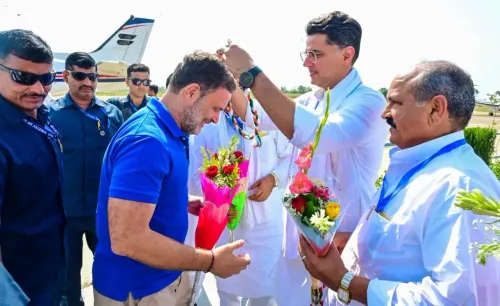
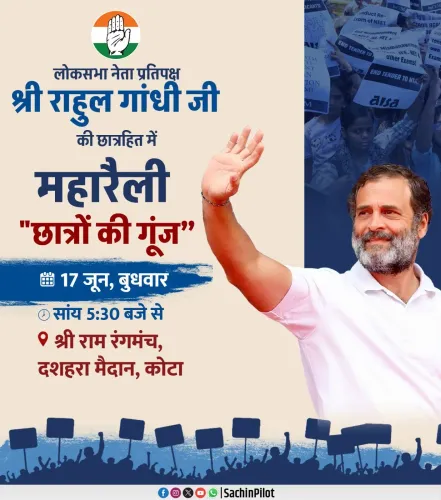
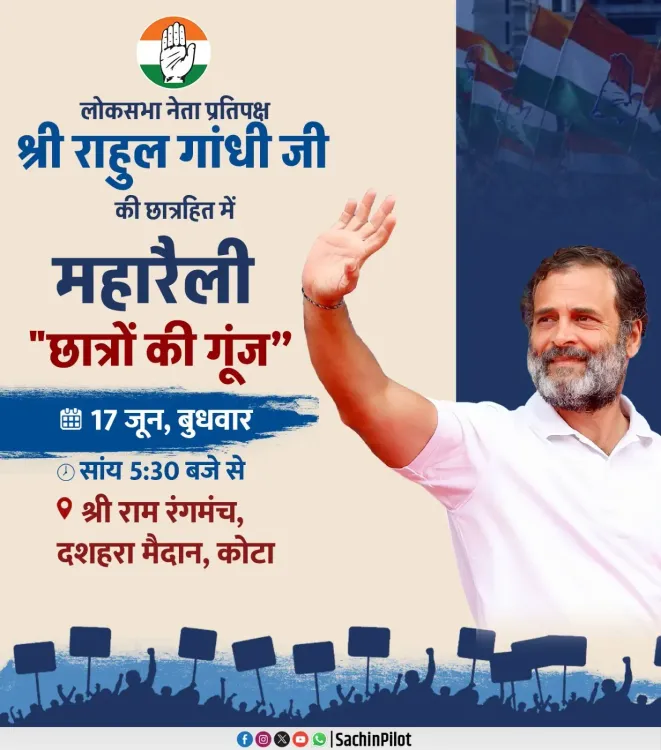
Congress leader Sachin Pilot announced that Rahul Gandhi will interact with students at Dashehra Maidan, Kota on 17 June 2026 .
The dialogue is focused on the alleged NEET 2026 paper leak and concerns over the CBSE evaluation system .
Pilot cited that more than 22 lakh students were affected by the alleged paper leak.
Kota, Rajasthan — India's largest coaching hub — was chosen as the venue, amplifying the political significance of the event.
The Congress is mobilising under the hashtag #ChhatronKiGoonj ('voice of students') to demand accountability and fairness in national examinations.
The event is expected to shape the opposition's stance on examination reform ahead of the monsoon session of Parliament .
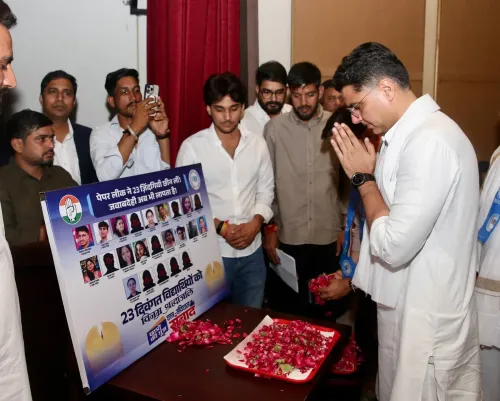
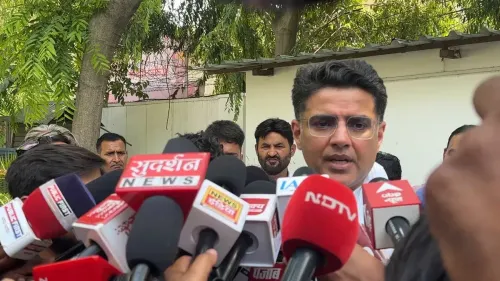
Congress leader Sachin Pilot, general secretary of the Indian National Congress and Chhattisgarh in-charge, on Tuesday, 16 June 2026, called on students and young people across the country to join Leader of the Opposition Rahul Gandhi at a public dialogue in Kota, Rajasthan, focused on the alleged NEET 2026 paper leak and broader concerns about examination fairness.
Context
Pilot posted in both Hindi and English, urging students to gather at Dashehra Maidan, Kota, on 17 June 2026 for what the party is billing as a structured interaction between Gandhi and affected youth. In his post, Pilot stated that 'chhatron ki goonj' — loosely, 'the voice of students' — must be amplified, and described the alleged leak as 'deeply concerning.' He specifically cited that more than 22 lakh students were affected by the paper being leaked, and noted that additional lakhs suffered due to disruptions in the CBSE evaluation system.
Kota, long established as India's foremost hub for medical and engineering entrance coaching, concentrates hundreds of thousands of aspirants in a single city, making it a natural focal point for any mobilisation around examination grievances.
Policy Backdrop
NEET — the National Eligibility cum Entrance Test — is the sole gateway to undergraduate medical admissions across India, administered centrally and carrying enormous stakes for millions of families. The examination has faced scrutiny over alleged irregularities before: in 2024, NEET-UG was at the centre of paper-leak allegations that triggered CBI probes, multiple Supreme Court hearings, and widespread student protests in several states.
The CBSE evaluation controversy referenced by Pilot adds a second layer of concern, suggesting that disruptions to board-level assessments have compounded the distress of students already navigating a high-pressure examination cycle. Recurrent disputes over paper security and evaluation consistency have repeatedly placed the central government's examination regulatory architecture under opposition scrutiny.
Stakeholders and Impact
The most directly affected group is medical aspirants — students who have invested years and significant financial resources in coaching, and whose career timelines are entirely dependent on a single national examination. Pilot's figure of over 22 lakh students affected by the alleged NEET 2026 leak, if accurate, would represent one of the largest examination integrity failures in the country's history.
Coaching institutes and families in Kota and cities like it stand at the intersection of this crisis: the city's economy and identity are built around entrance exam preparation, and any systemic failure in those exams reverberates acutely there. The Congress party, by choosing Kota as the venue, is deliberately anchoring a national political message in the geography most associated with student aspiration and, at times, student distress.
What's Next
The 17 June event at Dashehra Maidan is positioned as the beginning of a broader accountability campaign under the hashtag #ChhatronKiGoonj. Rahul Gandhi's direct engagement with students on the NEET issue is expected to sharpen the opposition's legislative posture heading into the monsoon session of Parliament, where questions on examination regulatory reform and central oversight of testing bodies are likely to be raised.
Rajasthan's state education authorities and the central government's response — particularly from the body overseeing NEET — will be closely watched. Any formal demand for a judicial inquiry or a parliamentary standing committee review of examination security could emerge from the Kota dialogue as a concrete political output.
Point of View
A tactic that gained significant traction during the 2024 NEET-UG controversy. Sachin Pilot's personal appeal, grounded in his Rajasthan political base, adds a regional credibility layer to what is fundamentally a national accountability argument. The event's output — whether a formal demand, a petition, or a parliamentary question — will determine whether this translates into legislative pressure or remains a one-day headline.
NationPress
15 Sept 2026
Frequently Asked Questions
What is the NEET 2026 paper leak controversy?
The NEET 2026 paper leak refers to allegations that the question paper for the National Eligibility cum Entrance Test for undergraduate medical admissions was leaked ahead of the examination, reportedly affecting over 22 lakh students according to Congress leader Sachin Pilot's post.
Why is Rahul Gandhi visiting Kota on 17 June 2026?
Leader of the Opposition Rahul Gandhi is visiting Kota on 17 June 2026 to interact with students and young people about the alleged NEET 2026 paper leak and CBSE evaluation concerns, as announced by Congress general secretary Sachin Pilot.
Where exactly is the Rahul Gandhi student dialogue in Kota being held?
The event is being held at Dashehra Maidan in Kota, Rajasthan, on 17 June 2026.
How many students were affected by the NEET 2026 paper leak?
Congress leader Sachin Pilot stated in his post that more than 22 lakh students were affected by the alleged NEET 2026 paper leak, though this figure has not been independently verified.
What is #ChhatronKiGoonj?
'ChhatronKiGoonj' translates to 'the voice of students' in English, and is the hashtag the Indian National Congress is using to mobilise support for accountability and fairness in national examinations following the alleged NEET 2026 paper leak.