Pilot invites students to Rahul Gandhi's Kota NEET talk
Synopsis
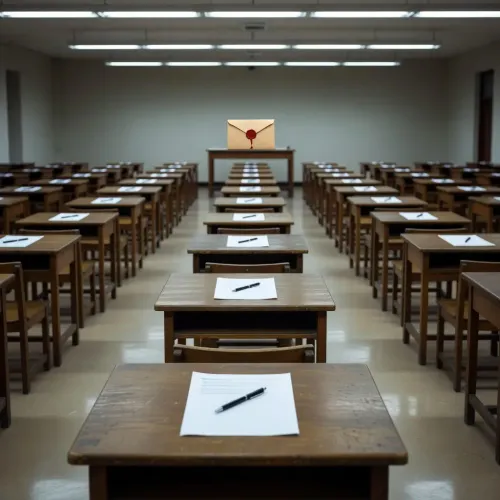
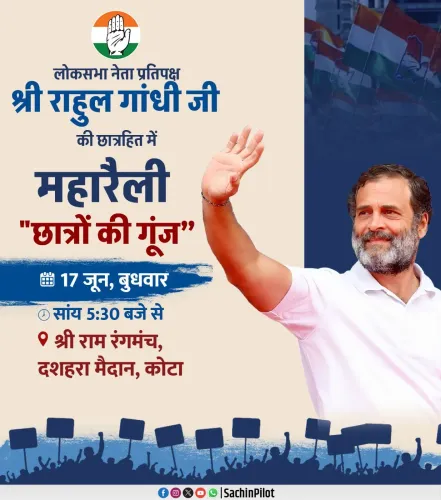
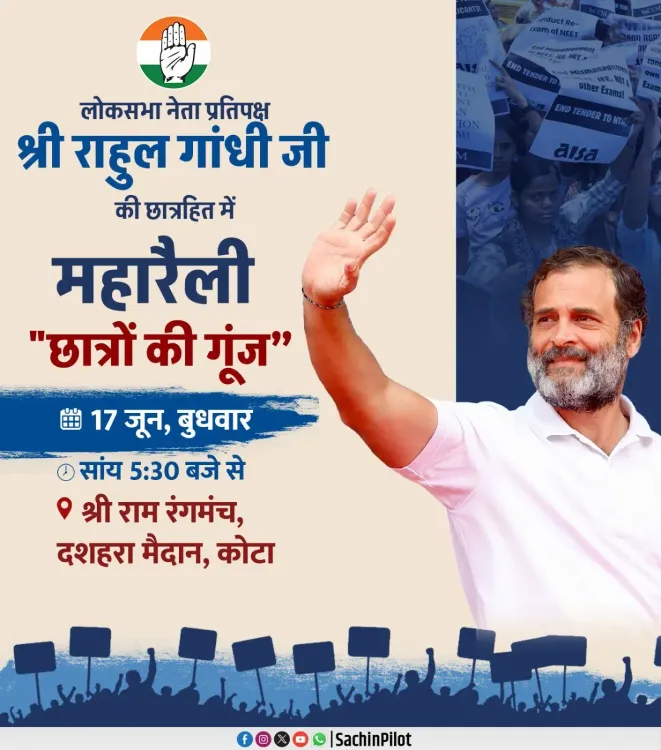
Congress leader Sachin Pilot has called on students to attend a 17 June public dialogue in Kota where Leader of Opposition Rahul Gandhi will address the alleged NEET 2026 paper leak said to have affected over 22 lakh students, and concerns over the CBSE evaluation system.
Key Takeaways
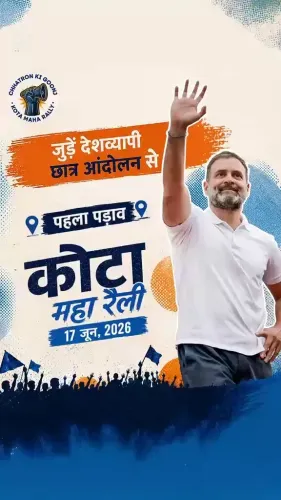
Congress leader Sachin Pilot invited students to a public interaction in Kota, Rajasthan on 17 June 2026 .
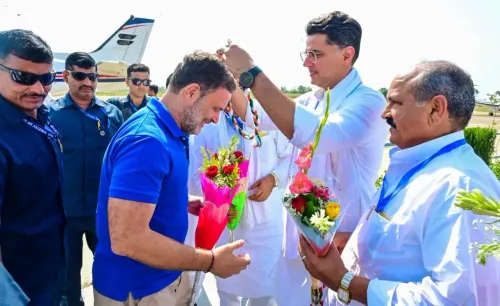
Leader of Opposition Rahul Gandhi will lead the dialogue at Dashahara Maidan, Kota .
Pilot cited more than 22 lakh students as being affected by the alleged NEET 2026 paper leak.
Additional lakhs of students are said to have been impacted by issues in the CBSE evaluation system .
The event is part of Congress's #ChhatronKiGoonj campaign demanding accountability and fairness in national examinations.
Kota — India's largest coaching hub for NEET and JEE — was chosen as the venue, underscoring the symbolic stakes for medical aspirants.
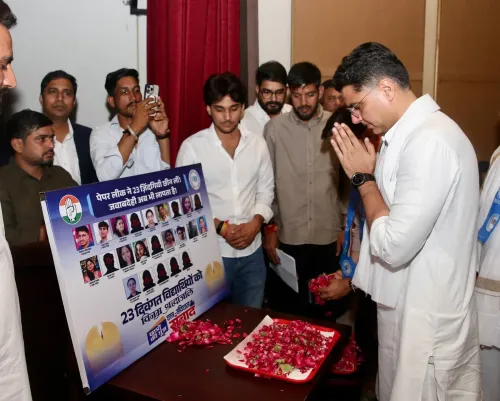
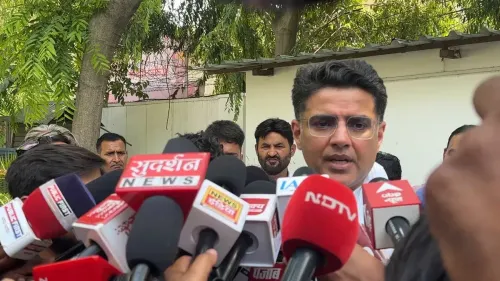
Congress leader Sachin Pilot, general secretary and Chhattisgarh in-charge of the Indian National Congress, on Tuesday, 16 June 2026, called on students and young people across the country to join Leader of Opposition Rahul Gandhi at a public dialogue in Kota, Rajasthan, centred on the alleged NEET 2026 paper leak and other pressing concerns facing youth today.
Context
Pilot posted in both Hindi and English, urging students to attend the interaction scheduled for 17 June at Dashahara Maidan, Kota. In his post, he stated that 'chhatron ki goonj' (the echo of students' voices) must be heard, and called the event an opportunity to 'give strength to the demand for accountability and fairness.' He cited that more than 22 lakh students were affected by the alleged paper leak, with additional lakhs impacted by issues in the CBSE evaluation system.
The hashtag #ChhatronKiGoonj accompanied the post, signalling a coordinated Congress campaign around student grievances ahead of and following the examination cycle.
Policy Backdrop
NEET — the National Eligibility cum Entrance Test — has been the sole gateway to undergraduate medical admissions in India since it was introduced nationwide in 2013, replacing a patchwork of state-level tests following Supreme Court directions. The examination is conducted by the National Testing Agency (NTA).
Allegations of paper leaks are not new to NEET. In 2024, widespread protests erupted after leak allegations in the NEET-UG cycle prompted CBI investigations, Supreme Court hearings on grace marks, and demands for a re-examination. Congress and other opposition parties used those developments to question the NTA's credibility and call for independent oversight of national entrance exams. The current allegations around NEET 2026 follow that pattern.
CBSE, which oversees Class 10 and Class 12 board examinations, has also faced recurring criticism over its evaluation and moderation practices, with students and parents alleging inconsistency in marking. Pilot's post links both concerns — NEET and CBSE — as part of a wider crisis of confidence in the examination ecosystem.
Stakeholders and Impact
Kota is India's largest coaching hub for NEET and JEE aspirants, hosting a transient student population estimated in the lakhs who travel from across the country to prepare for competitive entrance exams. Holding the dialogue there gives the event direct symbolic weight: the city embodies both the aspirations and the anxieties of India's medical and engineering hopefuls.
If the figure of 22 lakh affected students cited by Pilot is borne out, it would represent one of the largest single-exam disruptions in Indian educational history. Medical aspirants who have spent years and significant financial resources preparing for NEET stand to lose an academic year if re-examinations or legal proceedings delay admissions. Coaching institutes, whose livelihoods depend on student enrolments, also have a direct stake in the resolution of the controversy.
The CBSE evaluation grievance adds a secondary layer, bringing board-exam students — a far larger cohort — into the political conversation Congress is seeking to build.
What's Next
All eyes will be on the 17 June Dashahara Maidan event: student turnout will determine how much political momentum Congress can build around the issue. Demands articulated at the dialogue are expected to feed into follow-up parliamentary questions, potential Public Interest Litigations, and calls for an independent probe into the NTA's examination conduct.
With Rahul Gandhi personally leading the outreach, Congress is signalling that education and examination integrity will remain central to its opposition agenda. Whether the government responds with structural reforms to the NTA or a re-examination framework will shape the political narrative around youth and education policy in the months ahead.
Point of View
Congress is making a calculated bid to own the examination-integrity issue at its emotional epicentre — the city that symbolises the pressure-cooker reality of India's medical aspirants. The move follows a well-worn opposition playbook of converting student grievances into sustained political capital, as seen after the 2024 NEET-UG controversy. The invocation of both NEET and CBSE in a single campaign broadens the coalition of affected youth beyond just medical aspirants, potentially amplifying electoral resonance. Whether Congress can translate street-level solidarity into concrete policy outcomes — such as NTA reform or independent oversight — will determine the longevity of the '#ChhatronKiGoonj' moment.
NationPress
15 Sept 2026
Frequently Asked Questions
What is the NEET 2026 paper leak controversy?
Allegations have emerged that the NEET 2026 question paper was leaked before the examination, with Congress leader Sachin Pilot stating that more than 22 lakh students were affected. The claims echo similar controversies around the 2024 NEET-UG cycle that triggered CBI probes and Supreme Court hearings.
Why is Rahul Gandhi holding a dialogue in Kota?
Kota is India's largest coaching hub for NEET and JEE aspirants, making it the symbolic centre of student anxiety around competitive entrance exams. Leader of Opposition Rahul Gandhi is meeting students there on 17 June 2026 to discuss the alleged NEET 2026 paper leak and CBSE evaluation concerns.
What is the Congress campaign #ChhatronKiGoonj?
'ChhatronKiGoonj' translates to 'the echo of students' voices.' It is a Congress campaign hashtag used to mobilise student participation in the 17 June Kota event and to demand government accountability over alleged examination irregularities.
How many students were affected by the NEET 2026 paper leak according to Sachin Pilot?
Sachin Pilot stated in his post that more than 22 lakh students were affected by the alleged NEET 2026 paper leak. He also noted that additional lakhs of students suffered due to issues with the CBSE evaluation system.
What is NEET and who conducts it?
NEET — the National Eligibility cum Entrance Test — is India's single national entrance examination for undergraduate medical admissions. It has been conducted by the National Testing Agency (NTA) since 2013, when it replaced multiple state-level medical entrance tests following Supreme Court directions.