Pilot backs Rahul Gandhi's Kota rally on exam integrity
Synopsis
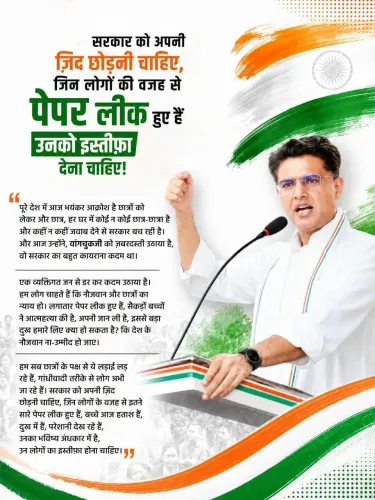
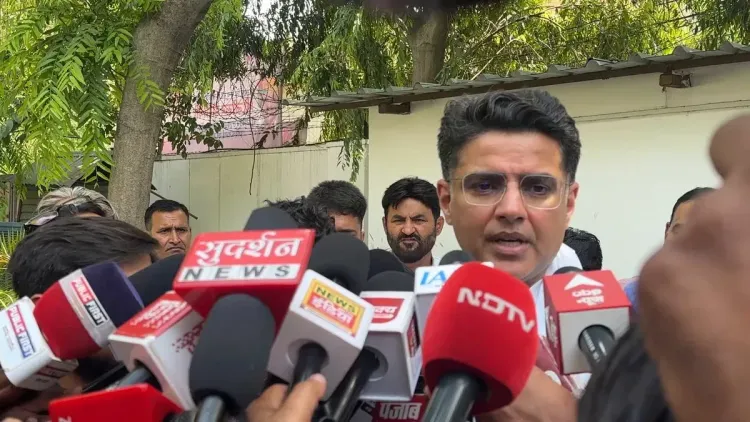
Congress general secretary Sachin Pilot has backed Rahul Gandhi's Kota rally, saying it was held to address student anxiety over paper leaks, evaluation irregularities, and opaque selection processes, and to demand a transparent, fair examination system for India's youth.
Key Takeaways
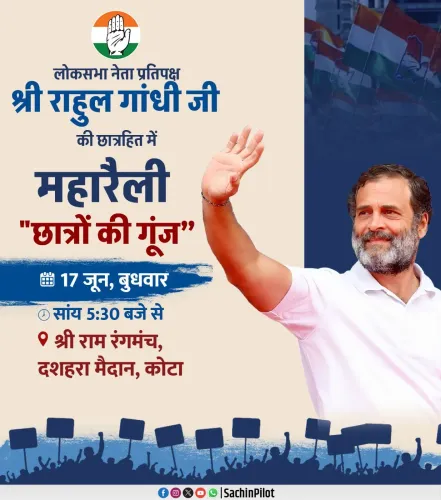
Sachin Pilot publicly endorsed Rahul Gandhi's rally in Kota , Rajasthan's coaching capital, on June 18, 2026 .
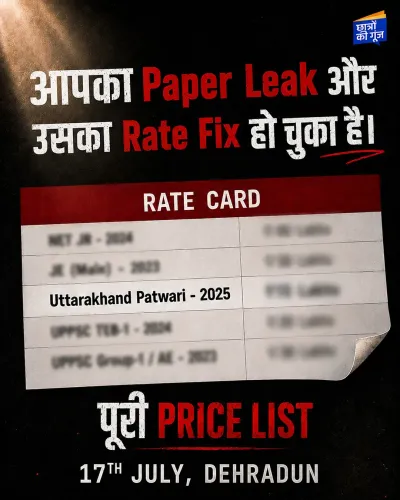
The rally's stated aim was to address paper leaks, evaluation irregularities, and frequent changes in competitive examination processes.
Pilot highlighted that middle-class and underprivileged families spend lakhs of rupees annually on coaching, only to face systemic failures.
Congress is demanding fully transparent, impartial, and trustworthy recruitment and examination processes.
Rahul Gandhi's stated vision, as relayed by Pilot, is a 'positive and conducive educational environment' where no youth has to compromise on their dreams.
The issue is expected to feature in upcoming parliamentary discussions and potential state-level examination reform debates.
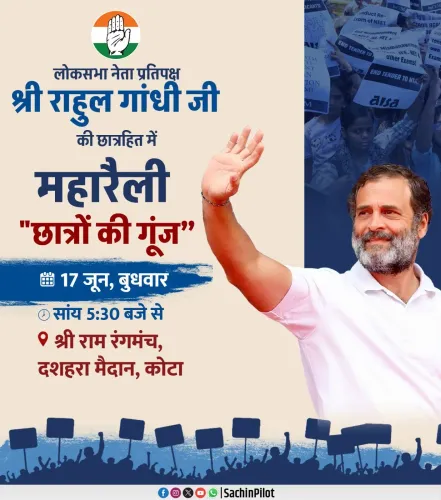
Congress leader and party general secretary Sachin Pilot on Thursday, June 18, 2026, backed Rahul Gandhi's mega rally in Kota, Rajasthan, saying it was organised to address the deepening anxiety among students caused by paper leaks, evaluation irregularities, and constant changes in selection processes.
Context
In his post, Pilot explained the purpose of the Kota rally: 'पेपर लीक, मूल्यांकन में अनियमितताएं और चयन प्रक्रिया में लगातार बदलाव' ('paper leaks, irregularities in evaluation, and constant changes in the selection process') have created 'disappointment and insecurity' among students and youth. He stated that Rahul Gandhi's vision is to build a 'positive and conducive educational environment' so that no young person is forced to compromise on their future and dreams.
Kota is India's largest hub for competitive-examination coaching, drawing lakhs of aspirants every year for IIT-JEE and NEET preparation. The city has long been a symbol of both the aspirations and the pressures borne by India's student community.
Policy Backdrop
Pilot's post highlights a pattern that has drawn sustained political attention: recurring paper leaks and abrupt procedural changes in high-stakes examinations have repeatedly disrupted the plans of lakhs of aspirants. The National Education Policy 2020 had recommended structural reforms in assessment systems to improve transparency and reduce student stress, but implementation has been uneven across states.
Pilot noted that 'many middle-class and underprivileged families spend lakhs of rupees every year in pursuit of a better future for their children.' He added that when youth do not receive opportunities despite years of hard work, 'frustration and disappointment are a natural outcome.'
Stakeholders and Impact
The families most affected are those from middle-class and economically weaker backgrounds who invest heavily — financially and emotionally — in competitive examination preparation. For them, a paper leak or a last-minute rule change is not a procedural setback but a direct blow to social mobility.
Opposition parties, including Congress, have framed such examination failures as governance failures, arguing that the state's inability to conduct fair, transparent recruitment and entrance tests is denying an entire generation its rightful opportunities. Pilot, as Congress's Chhattisgarh in-charge and a former Deputy Chief Minister of Rajasthan, brings direct administrative experience to this critique.
What's Next
The Kota rally and Pilot's amplification of its message signal that Congress intends to sustain pressure on examination integrity as a core political issue ahead of upcoming state and national elections. Lawmakers and student groups will be watching for any movement on a central anti-paper-leak law or state-level examination reform legislation in coming parliamentary and assembly sessions.
The party's broader demand — that recruitment and examination processes be conducted with 'complete transparency, impartiality, and trust' — sets a benchmark against which any future policy action will be measured.
Point of View
Opaque selection rules, and the financial burden on middle-class families — Congress is attempting to convert a governance critique into an emotional compact with aspirational India. Sachin Pilot's amplification of Rahul Gandhi's message is deliberate: it positions the party's top leadership as responsive to youth anxiety at a time when examination credibility has become a live political fault line. The framing of exam failures as a social-mobility crisis, rather than mere administrative lapses, is a sharper and potentially more durable electoral argument. Whether it translates into concrete legislative proposals — such as a central anti-paper-leak law — will determine if this remains political signalling or becomes substantive policy pressure.
NationPress
18 Sept 2026
Frequently Asked Questions
Why did Rahul Gandhi hold a rally in Kota?
According to Sachin Pilot, the Kota rally was organised to address student anxiety caused by paper leaks, evaluation irregularities, and frequent changes in competitive examination selection processes, and to demand a transparent and fair system for India's youth.
What did Sachin Pilot say about the Kota rally?
Sachin Pilot said the rally reflected Rahul Gandhi's vision of building a positive educational environment so that no young person has to compromise on their future, and highlighted the financial burden borne by middle-class families investing lakhs in their children's preparation.
What is the paper leak problem in India's competitive exams?
Paper leaks refer to the illegal pre-exam circulation of question papers for high-stakes tests such as NEET and various recruitment examinations, which compromises fairness and demoralises lakhs of aspirants who spend years and significant money preparing.
What is Congress demanding on examination reform?
Congress is demanding that all recruitment and examination processes be conducted with complete transparency, impartiality, and public trust, so that deserving students from all backgrounds receive fair opportunities.
Why is Kota significant in India's education debate?
Kota in Rajasthan is India's largest coaching hub, attracting lakhs of students every year for IIT-JEE and NEET preparation, making it a focal point for discussions on student welfare, examination stress, and the pressures of competitive education.